
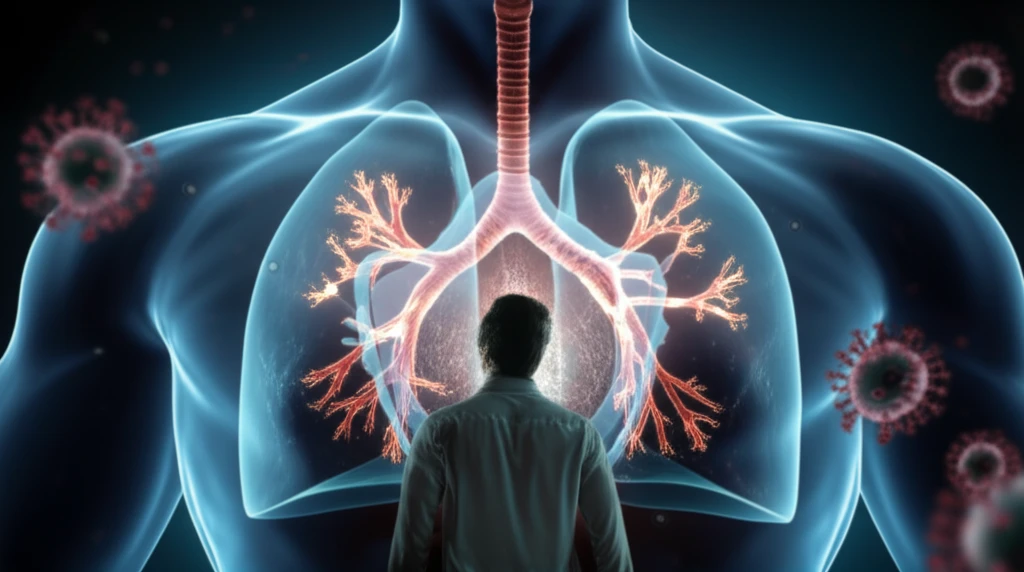
Digital illustration of lungs protected by an antiviral shield against RSV viruses.

Can Oral Ribavirin Help Fight Severe RSV? A Promising Case Study

"Discover how an 81-year-old patient's successful recovery from severe RSV-induced ARDS using oral ribavirin is changing perceptions and offering new hope."


Respiratory Syncytial Virus (RSV) is a common virus that typically causes mild, cold-like symptoms. Most people recover within a week or two, but RSV can sometimes lead to more severe infections, especially in infants, older adults, and individuals with weakened immune systems. In rare cases, RSV can cause severe pneumonia or Acute Respiratory Distress Syndrome (ARDS) in otherwise healthy adults, a condition that has been challenging to treat effectively.

While there's no specific cure for RSV, supportive care, such as oxygen therapy and mechanical ventilation, is crucial in severe cases. Recently, a case study has brought new hope to the treatment of severe RSV infections. Published in the Journal of Medical Case Reports, the study details the successful use of orally administered ribavirin in an 81-year-old immunocompetent man who developed RSV-induced ARDS.

This case is particularly significant because severe RSV infections are uncommon in healthy adults, and optimal treatment strategies are still being developed. The successful outcome in this case suggests that oral ribavirin could be a valuable therapeutic option for severe RSV infections, offering a less invasive and more accessible treatment approach.

The Case: An 81-Year-Old's Fight Against RSV-Induced ARDS

Digital illustration of lungs protected by an antiviral shield against RSV viruses.

The patient, an 81-year-old Korean man with no significant medical history, presented with symptoms of cough, shortness of breath, and fever. Initial assessments indicated a community-acquired pneumonia. Despite treatment with antibiotics and supportive care, his condition rapidly deteriorated, leading to hypoxemia (low blood oxygen levels) and the need for mechanical ventilation.

Further investigation revealed the presence of RSV type B through a multiplex real-time reverse transcriptase-polymerase chain reaction (RT-PCR) test, which detects respiratory viruses. Based on these findings, the medical team diagnosed RSV-induced ARDS, a severe condition characterized by widespread inflammation and fluid buildup in the lungs.

Given the severity of the patient's condition and the lack of established treatment protocols, the medical team decided to administer oral ribavirin, an antiviral medication, along with intravenous methylprednisolone, a corticosteroid to reduce inflammation. The treatment plan involved:
  • Oral ribavirin: 400 mg every 12 hours
  • Intravenous methylprednisolone: 30 mg every 24 hours
Following the initiation of antiviral therapy, the patient's condition gradually improved. His hypoxemia decreased, and lung lesions began to resolve. After nearly two weeks of mechanical ventilation, he was successfully extubated and transitioned to oral prednisolone. By day 27, the patient was discharged without complications, with oral ribavirin treatment continuing until his discharge. This remarkable recovery highlights the potential of oral ribavirin in combating severe RSV infections.

What Does This Mean for RSV Treatment?

This case study suggests that oral ribavirin may be a viable and accessible option for treating severe RSV infections, particularly in situations where other forms of ribavirin are not readily available. Early suspicion, active use of diagnostic tools like multiplex real-time RT-PCR tests, and timely administration of oral ribavirin could significantly improve outcomes for patients with RSV-induced ARDS. More studies are needed to determine its effectiveness for broader patient populations.

About this Article -

This article was crafted using a human-AI hybrid and collaborative approach. AI assisted our team with initial drafting, research insights, identifying key questions, and image generation. Our human editors guided topic selection, defined the angle, structured the content, ensured factual accuracy and relevance, refined the tone, and conducted thorough editing to deliver helpful, high-quality information.See our About page for more information.

This article is based on research published under:

DOI-LINK: 10.1186/s13256-017-1514-x, Alternate LINK

Title: Possible Therapeutic Effect Of Orally Administered Ribavirin For Respiratory Syncytial Virus-Induced Acute Respiratory Distress Syndrome In An Immunocompetent Patient: A Case Report

Subject: General Medicine

Journal: Journal of Medical Case Reports

Publisher: Springer Science and Business Media LLC

Authors: Byung Woo Yoon, Seung Hyeun Lee

Published: 2017-12-01

Everything You Need To Know

1

What is Respiratory Syncytial Virus (RSV) and why is it a concern?

Respiratory Syncytial Virus, or RSV, is a common virus that typically causes mild, cold-like symptoms. While most people recover without issue, RSV can lead to severe infections like pneumonia or Acute Respiratory Distress Syndrome (ARDS), especially in infants, older adults, and individuals with weakened immune systems. The concern arises when RSV induces severe complications requiring intensive medical intervention.

2

How was the 81-year-old patient treated for severe RSV-induced ARDS in the case study?

The 81-year-old patient was treated with a combination of oral ribavirin at a dosage of 400 mg every 12 hours and intravenous methylprednisolone at 30 mg every 24 hours. Oral ribavirin is an antiviral medication, while intravenous methylprednisolone is a corticosteroid used to reduce inflammation associated with Acute Respiratory Distress Syndrome.

3

Why is the successful use of oral ribavirin in treating RSV-induced ARDS significant?

The successful use of oral ribavirin is significant because severe RSV infections are uncommon in otherwise healthy adults, and there are no established treatment protocols. The successful outcome suggests that oral ribavirin could be a valuable therapeutic option for severe RSV infections, offering a less invasive and more accessible treatment approach. This case also highlights the importance of using diagnostic tools like multiplex real-time RT-PCR tests to identify the specific cause of respiratory distress early.

4

What role did the multiplex real-time reverse transcriptase-polymerase chain reaction (RT-PCR) test play in the diagnosis and treatment of the patient?

The multiplex real-time reverse transcriptase-polymerase chain reaction (RT-PCR) test was crucial in identifying the presence of RSV type B in the patient. This diagnostic test allowed the medical team to accurately diagnose RSV-induced ARDS after initial treatments for community-acquired pneumonia proved ineffective. Early and accurate diagnosis enabled the team to initiate targeted antiviral therapy with oral ribavirin, contributing to the patient's recovery.

5

What are the implications of the case study regarding the potential future treatment of severe RSV infections, and what further research is needed?

This case study suggests that early diagnosis using tools like multiplex real-time RT-PCR tests, combined with the timely administration of oral ribavirin, could significantly improve outcomes for patients with RSV-induced ARDS. The case opens the door for oral ribavirin as a viable treatment option, especially where other forms are less accessible. Further research is needed to determine the effectiveness of oral ribavirin for broader patient populations, including diverse age groups, immune statuses, and those with varying degrees of disease severity. Understanding the optimal dosage, duration of treatment, and potential side effects in these populations will be crucial for establishing evidence-based treatment guidelines.

Newsletter Subscribe

Subscribe to get the latest articles and insights directly in your inbox.