
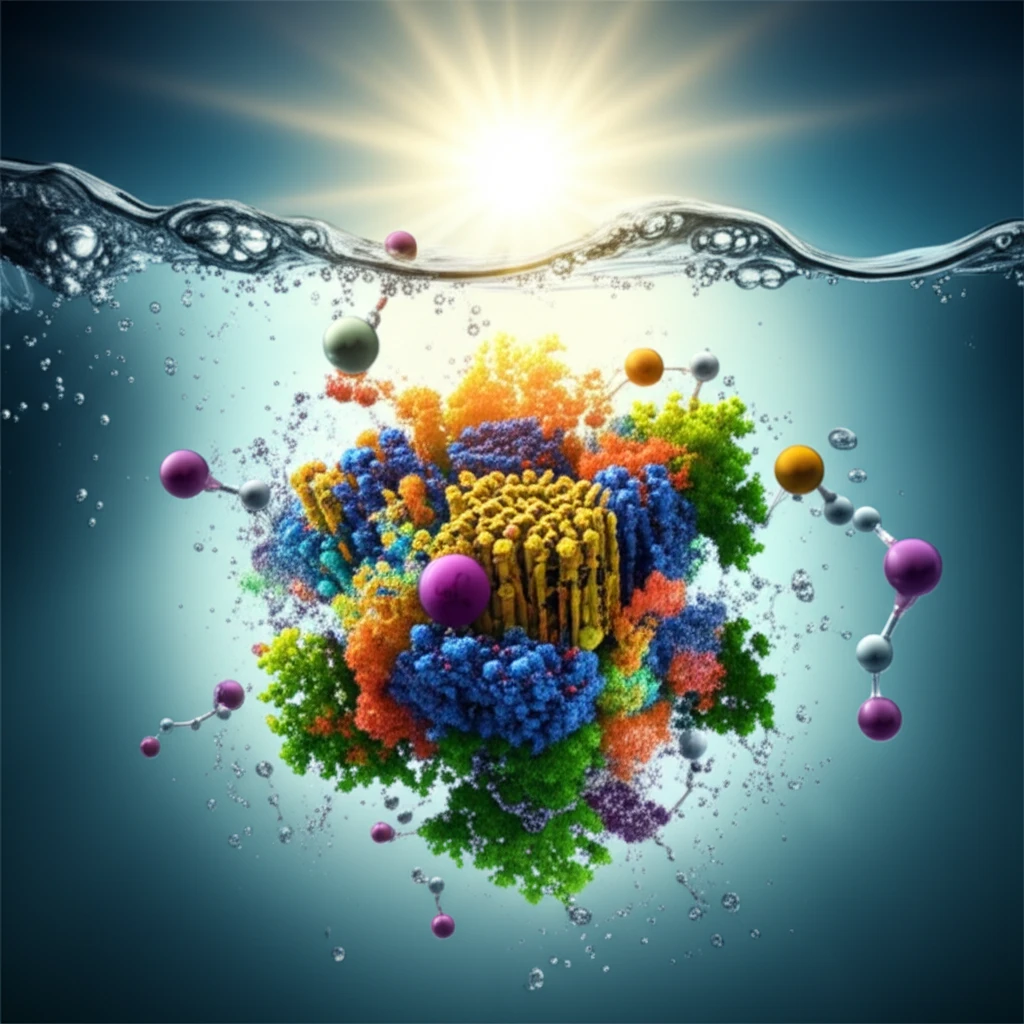
Can Nanotechnology Clean Up Bisphenol A (BPA) Pollution?

"A breakthrough nanocomposite offers a sustainable solution to degrade BPA, a common endocrine disruptor, using sunlight."
In an era marked by increasing industrialization and environmental concerns, the presence of pollutants like organic dyes, heavy metals, and endocrine-disrupting compounds (EDCs) poses a significant threat to both wildlife and human health. Bisphenol A (BPA), a particularly potent EDC, has garnered attention due to its potential to induce endocrine disorders, hereditary diseases, and even cancer. Used extensively in the manufacturing of epoxy resins and polycarbonate plastics, BPA's widespread application has led to its ubiquitous presence in aquatic environments.
Traditional methods for removing BPA from water sources often fall short, highlighting the urgent need for innovative and sustainable solutions. Researchers have been exploring advanced oxidation processes, with photocatalysis emerging as a promising contender. This technique utilizes photocatalysts to accelerate the degradation of pollutants under light exposure, offering a cost-effective and environmentally friendly approach.
A recent study published in the International Journal of Biological Macromolecules introduces a novel nanocomposite material capable of efficiently degrading BPA in aqueous solutions under visible light. This groundbreaking research explores the fabrication and application of a nitrogen/sulfur (N/S) co-doped carbon material embedded with zinc sulfide (ZnS) nanoparticles. This has the potential to revolutionize BPA removal and water treatment processes.
The Science Behind the Nanocomposite: How Does it Work?
The innovative nanocomposite, dubbed ZnS/NSDC, owes its effectiveness to a unique combination of materials and properties. Scientists successfully fabricated it by incorporating nitrogen and sulfur-doped porous carbon with ZnS nanoparticles, creating a synergistic effect that enhances photocatalytic activity. The material's porous structure provides a large surface area, promoting better interaction with BPA molecules and facilitating the degradation process.
- Nitrogen and Sulfur-Doped Porous Carbon: This carbon matrix enhances the material's electrical conductivity, facilitating the transfer of electrons generated during light exposure. The doping with nitrogen and sulfur further improves its catalytic activity.
- Zinc Sulfide (ZnS) Nanoparticles: ZnS acts as a semiconductor photocatalyst, absorbing light energy and generating electron-hole pairs that drive the degradation of BPA.
- Visible Light Activation: The nanocomposite is designed to work efficiently under visible light, making it suitable for solar-powered applications and reducing the need for UV radiation.
- High Porosity: A high surface area (642.24 m²/g) ensures a greater number of active sites for BPA molecules to interact with the catalyst.
A Promising Step Towards Cleaner Water
The development of this ZnS/NSDC nanocomposite represents a significant advancement in the field of photocatalytic degradation of BPA. By harnessing the power of sunlight and utilizing a unique combination of materials, this technology offers a sustainable and efficient solution for addressing BPA pollution in water sources. While further research and optimization are necessary, the potential for large-scale application and environmental impact is substantial.