
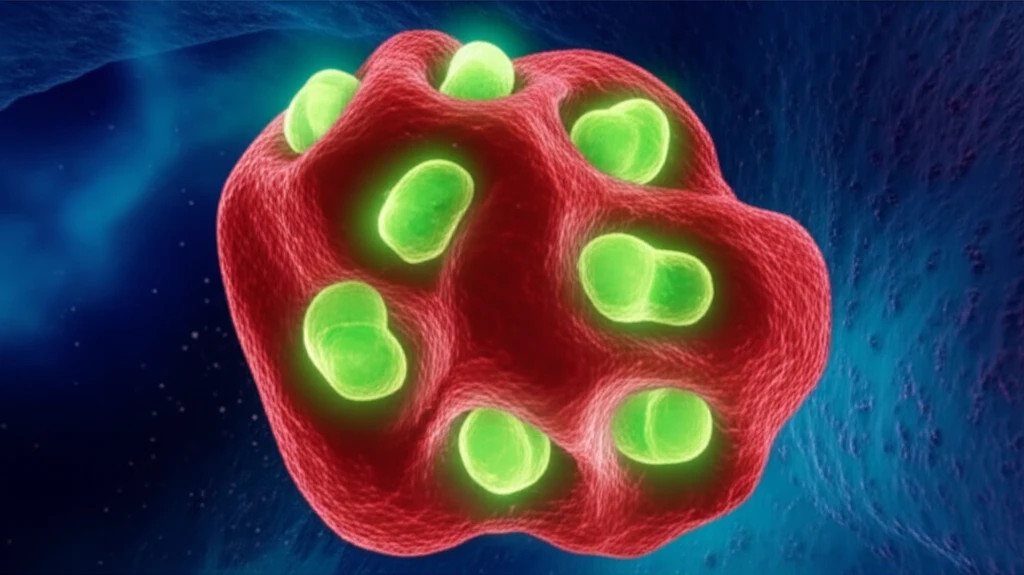
Can Modified Staphylokinase Revolutionize Clot Dissolution?

"Exploring the Potential of Lipid-Modified Staphylokinase in Enhancing Thrombolytic Therapy"
Thrombotic disorders, leading to stroke and myocardial infarction, remain a major global health challenge. Traditional treatments involve thrombolytic agents, but these come with limitations, including short circulatory life and potential side effects.
Staphylokinase (SAK) has emerged as a promising alternative due to its fibrin specificity and reduced inhibition. However, SAK's instability has spurred researchers to explore modifications that could enhance its therapeutic potential.
One innovative approach involves lipid modification, where scientists alter SAK at the molecular level to improve its stability and activity. This method aims to make SAK a more effective and reliable agent for dissolving blood clots.
Lipid Modification: A Novel Approach to Enhancing Staphylokinase
Researchers at the Vellore Institute of Technology and the Department of Science and Technology, India, have been investigating lipid modification of staphylokinase. Their work focuses on improving the stability and activity of SAK by attaching lipid molecules to it.
- Enhanced Stability: LMSAK exhibited a higher denaturation temperature compared to native SAK.
- Improved Activity: In heated plasma agar plate assays, LMSAK demonstrated greater thrombolytic activity.
- In Vivo Efficacy: Mouse tail bleeding tests indicated improved clotting times with LMSAK.
The Future of Thrombolytic Therapy
These initial findings suggest that lipid modification could significantly improve SAK's potential as a thrombolytic agent. While further research is needed to fully understand LMSAK's effects and long-term stability, this approach offers a promising direction for developing more effective treatments for thrombotic disorders.