
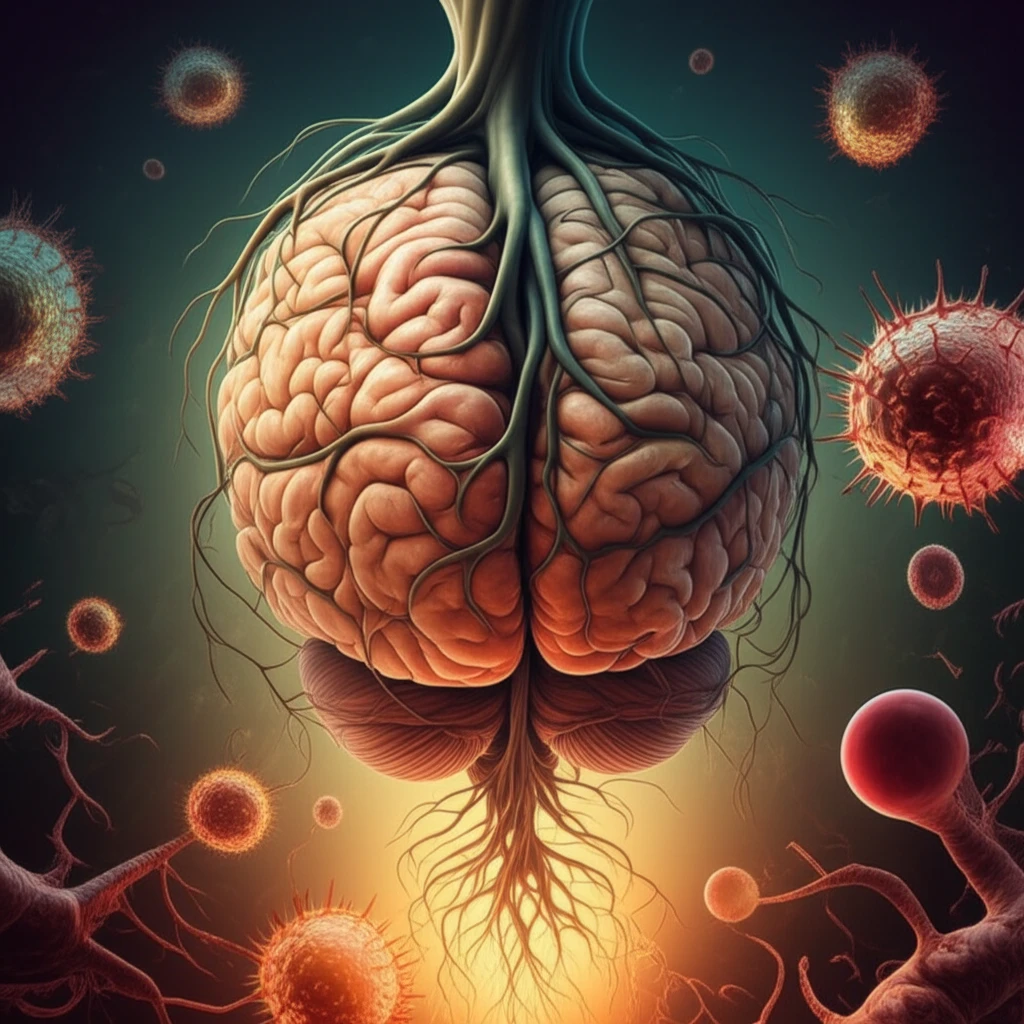
Mangiferin and brain cancer therapy concept art.

Can Mangiferin Improve Radiation Therapy for Brain Cancer?

"New Research Suggests a Natural Compound May Enhance Glioblastoma Treatment"


Glioblastoma multiforme (GBM) is a highly aggressive form of brain cancer, notorious for its resistance to treatment and high recurrence rates. While surgery and high-dose radiotherapy remain the standard treatments, their effectiveness is often limited, leading to palliative care rather than a cure. The challenge lies in the cancer's ability to repair DNA damage caused by radiation, making it crucial to find ways to enhance the tumor's sensitivity to radiotherapy.

Emerging research has focused on DNA double-strand break (DSB) repair pathways, which play a significant role in cancer cells' resistance to radiation. Among these pathways, non-homologous end-joining (NHEJ) and homologous recombination (HR) are key targets for potential therapeutic interventions. Scientists are exploring novel strategies to inhibit these repair mechanisms, thereby increasing the cancer cells' vulnerability to radiation.

A promising avenue of research involves mangiferin, a natural compound found in various plants, including Mangiferina indica. Known for its antioxidant and anti-inflammatory properties, mangiferin has also demonstrated anti-neoplastic effects in several cancers. Recent studies have investigated its role in enhancing radiosensitivity in GBM cells, offering new hope for improving treatment outcomes.

How Does Mangiferin Enhance Radiosensitivity in Glioblastoma?

Mangiferin and brain cancer therapy concept art.

A recent study published in Oncology Reports explored the effects of mangiferin on GBM cells' response to radiation. The researchers found that mangiferin inhibits the non-homologous end-joining (NHEJ) DNA repair pathway, which is predominantly used by GBM cells to repair radiation-induced DNA damage. By disrupting this repair mechanism, mangiferin makes cancer cells more susceptible to the effects of radiation.

The study's key findings include:

  • Reduced Cell Proliferation: GBM cells pretreated with mangiferin showed decreased proliferation rates following radiation.
  • Increased DNA Damage: Mangiferin led to increased DNA damage in GBM cells after radiation exposure.
  • NHEJ Inhibition: Mangiferin inhibited the NHEJ DSB repair pathway, crucial for repairing damaged DNA in cancer cells.
  • Protein Phosphorylation: Mangiferin inhibited the phosphorylation of key proteins in the NHEJ pathway, such as serine-protein kinase ATM, TP53-binding protein 1, and γ-H2AX.
Importantly, the study also found that mangiferin selectively inhibited DSB repair in GBM cells without triggering the same effect in normal neuronal Schwann cells. This suggests that mangiferin could potentially increase tumor sensitivity to radiotherapy while minimizing damage to healthy brain tissue.

A Promising Future for Glioblastoma Treatment?

The study's findings offer compelling evidence that mangiferin may be a valuable addition to glioblastoma treatment. By increasing the sensitivity of cancer cells to radiation and selectively targeting tumor tissue, mangiferin holds the potential to improve patient outcomes and reduce the risk of recurrence. While further research is needed to fully understand its mechanisms and optimize its use, mangiferin represents a promising new therapeutic avenue for this challenging cancer.

About this Article -

This article was crafted using a human-AI hybrid and collaborative approach. AI assisted our team with initial drafting, research insights, identifying key questions, and image generation. Our human editors guided topic selection, defined the angle, structured the content, ensured factual accuracy and relevance, refined the tone, and conducted thorough editing to deliver helpful, high-quality information.See our About page for more information.

Everything You Need To Know

1

What is Glioblastoma Multiforme (GBM) and why is it so difficult to treat?

Glioblastoma multiforme (GBM) is a highly aggressive form of brain cancer, notorious for its resistance to treatment and high recurrence rates. Current standard treatments like surgery and high-dose radiotherapy often have limited effectiveness. The main challenge lies in the cancer's ability to repair DNA damage caused by radiation, making it crucial to find ways to enhance the tumor's sensitivity to radiotherapy. GBM's aggressive nature and its ability to repair DNA damage contribute to its difficulty in treatment.

2

How does Mangiferin work to improve the effectiveness of radiation therapy for GBM?

Mangiferin enhances radiosensitivity in Glioblastoma by inhibiting the non-homologous end-joining (NHEJ) DNA repair pathway. This pathway is predominantly used by GBM cells to repair radiation-induced DNA damage. By disrupting this repair mechanism, mangiferin makes cancer cells more susceptible to the effects of radiation. The study found that mangiferin selectively inhibited DSB repair in GBM cells without triggering the same effect in normal neuronal Schwann cells.

3

What are the key findings from the study on Mangiferin and Glioblastoma?

The study revealed several key findings. Firstly, GBM cells pretreated with mangiferin showed decreased proliferation rates following radiation. Secondly, mangiferin led to increased DNA damage in GBM cells after radiation exposure. Thirdly, Mangiferin inhibited the NHEJ DSB repair pathway, crucial for repairing damaged DNA in cancer cells. Finally, mangiferin inhibited the phosphorylation of key proteins in the NHEJ pathway, such as serine-protein kinase ATM, TP53-binding protein 1, and γ-H2AX.

4

How does Mangiferin specifically target DNA repair mechanisms in GBM cells?

Mangiferin specifically targets the non-homologous end-joining (NHEJ) DNA repair pathway, which is the primary mechanism GBM cells use to repair DNA damage caused by radiation. The study showed that mangiferin inhibits the phosphorylation of key proteins involved in the NHEJ pathway. This disruption prevents the efficient repair of radiation-induced DNA double-strand breaks (DSBs), making the cancer cells more vulnerable to radiation therapy.

5

What is the potential impact of Mangiferin on the future of Glioblastoma treatment, and what further research is needed?

The study's findings suggest that mangiferin holds significant promise for Glioblastoma treatment by increasing the sensitivity of cancer cells to radiation and selectively targeting tumor tissue. This could potentially improve patient outcomes and reduce the risk of recurrence. While the results are encouraging, further research is needed to fully understand its mechanisms and optimize its use. This includes more clinical trials to evaluate its efficacy and safety in humans, as well as investigations into the optimal dosage and administration of mangiferin in combination with radiation therapy.

Newsletter Subscribe

Subscribe to get the latest articles and insights directly in your inbox.