
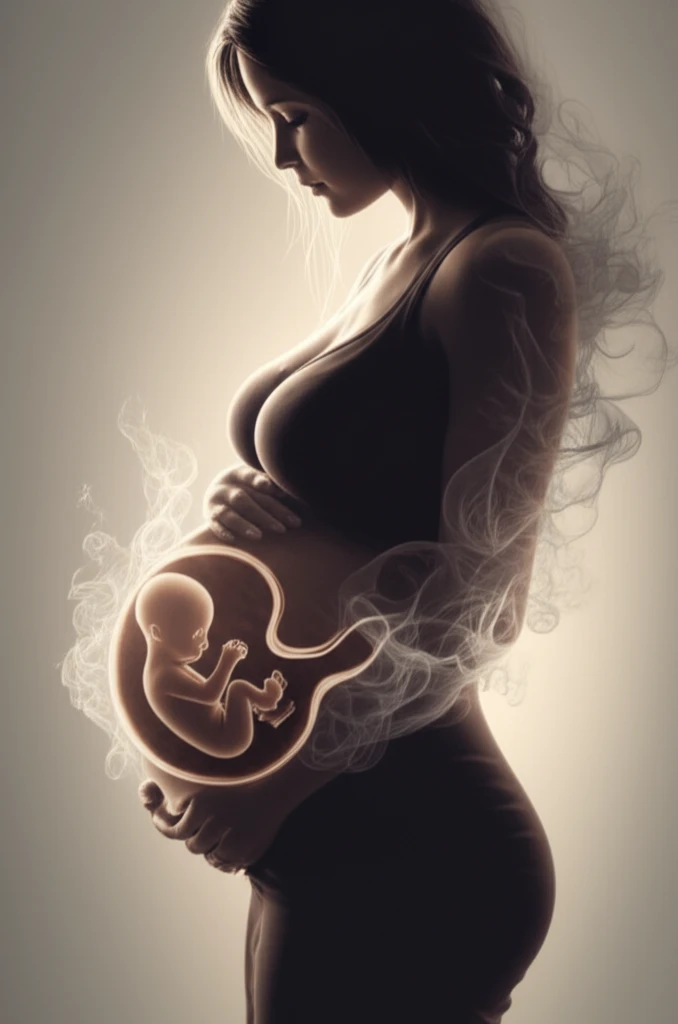
Illustration showing the connection between household air pollution and placental health during pregnancy.

Can Household Air Pollution During Pregnancy Affect Your Baby's Health?

"New research links air pollution from cooking fuels to placental issues, potentially impacting fetal development."


For nearly half the world’s population, cooking isn’t as simple as turning on a stove. Many rely on burning solid biomass fuels like wood, charcoal, and crop residues, filling their homes with smoke. While seemingly benign, this smoke is a cocktail of harmful pollutants, including carbon monoxide, fine particulate matter (PM2.5), and other dangerous substances.

We already know that exposure to biomass cooking smoke during pregnancy can lead to lower birth weights, premature births, and even stillbirth. But what’s happening inside the mother's body to cause these outcomes? A groundbreaking study is shedding light on the potential mechanisms, focusing on the placenta – the vital organ that nourishes a developing fetus.

Researchers are exploring the link between household air pollution and specific placental pathologies. By examining placentas from pregnant women exposed to cooking smoke, scientists hope to pinpoint the underlying issues and identify potential targets for intervention, potentially reducing the risk of adverse pregnancy outcomes.

Placental Pathology: The Missing Link?

Illustration showing the connection between household air pollution and placental health during pregnancy.

The placenta acts as the lifeline between mother and baby, providing oxygen and nutrients while removing waste. If the placenta isn't functioning correctly, it can have serious consequences for the developing fetus. This study focused on identifying specific types of placental damage associated with household air pollution.

Researchers in Tanzania measured personal exposure to fine particulate matter (PM2.5) and carbon monoxide (CO) in pregnant women who primarily cooked with charcoal. After delivery, the placentas were examined for various pathologies, including:

  • Inflammatory lesions: Signs of inflammation within the placental tissue.
  • Hypoxic lesions: Changes indicating a lack of oxygen.
  • Ischemic/hypertensive lesions: Damage related to reduced blood flow.
  • Infectious lesions: Evidence of infection.
  • Thrombotic lesions: Blood clots in the placental vessels.
The study revealed a significant association between exposure to PM2.5 and CO and an increased risk of fetal thrombotic vasculopathy (FTV). This condition involves blood clots in the fetal vessels of the placenta, potentially disrupting blood flow and nutrient delivery to the fetus.

Protecting Future Generations: What Can We Do?

While more research is needed to confirm these findings and explore the underlying mechanisms, this study highlights the importance of reducing household air pollution, especially during pregnancy. Simple steps like improving ventilation, using cleaner cooking fuels, and spending more time outdoors can significantly reduce exposure. Prioritizing clean air is not just about environmental health; it’s about investing in the health and well-being of future generations.

About this Article -

This article was crafted using a human-AI hybrid and collaborative approach. AI assisted our team with initial drafting, research insights, identifying key questions, and image generation. Our human editors guided topic selection, defined the angle, structured the content, ensured factual accuracy and relevance, refined the tone, and conducted thorough editing to deliver helpful, high-quality information.See our About page for more information.

Everything You Need To Know

1

What specific pollutants from cooking fuels are most concerning regarding pregnancy?

The most concerning pollutants from cooking fuels, specifically solid biomass fuels like wood and charcoal, are fine particulate matter (PM2.5) and carbon monoxide (CO). These pollutants have been linked to placental issues and adverse pregnancy outcomes. Exposure to these pollutants, especially during pregnancy, has been associated with increased risk of fetal thrombotic vasculopathy (FTV), which can disrupt blood flow and nutrient delivery to the fetus.

2

How does household air pollution affect the placenta, and why is this significant?

Household air pollution, originating from cooking with biomass fuels, can lead to several placental pathologies. Researchers have identified links between exposure to pollutants like PM2.5 and CO and specific placental damages, including inflammatory lesions, hypoxic lesions, ischemic/hypertensive lesions, infectious lesions, and thrombotic lesions. The placenta acts as a lifeline for the developing fetus, supplying oxygen and nutrients while removing waste. When the placenta is damaged, as indicated by these pathologies, it can lead to serious consequences, including lower birth weights, premature births, stillbirths, and impaired fetal development, highlighting the importance of protecting placental health.

3

What is fetal thrombotic vasculopathy (FTV), and how does it relate to household air pollution?

Fetal thrombotic vasculopathy (FTV) is a condition involving blood clots in the fetal vessels of the placenta. It has been significantly associated with exposure to fine particulate matter (PM2.5) and carbon monoxide (CO) from household air pollution, specifically when cooking with charcoal. These pollutants can damage the placenta, leading to the formation of blood clots. The presence of blood clots can disrupt the normal blood flow and nutrient delivery to the fetus, which in turn can lead to various adverse pregnancy outcomes.

4

Beyond the study findings, what are some practical steps to reduce exposure to household air pollution during pregnancy?

Several practical steps can be taken to reduce exposure to household air pollution during pregnancy. Improving ventilation in the home is a simple yet effective measure, which includes opening windows and doors to allow fresh air to circulate. Using cleaner cooking fuels, such as electricity or gas, is another important step. Spending more time outdoors, especially in areas with clean air, can also reduce exposure. These measures can significantly lower exposure to harmful pollutants like PM2.5 and CO, thereby reducing the risk of placental issues and promoting healthier pregnancy outcomes.

5

What are the implications of the study linking household air pollution to placental health, and what does this mean for future generations?

The study highlights the importance of reducing household air pollution, particularly during pregnancy, for the health of both the mother and the developing baby. The findings suggest a direct link between exposure to pollutants like PM2.5 and CO and placental pathologies, potentially leading to adverse pregnancy outcomes. By reducing exposure, future generations' health and well-being are prioritized, helping to reduce risks of lower birth weights, premature births, and other developmental issues, thereby investing in a healthier future.

Newsletter Subscribe

Subscribe to get the latest articles and insights directly in your inbox.