
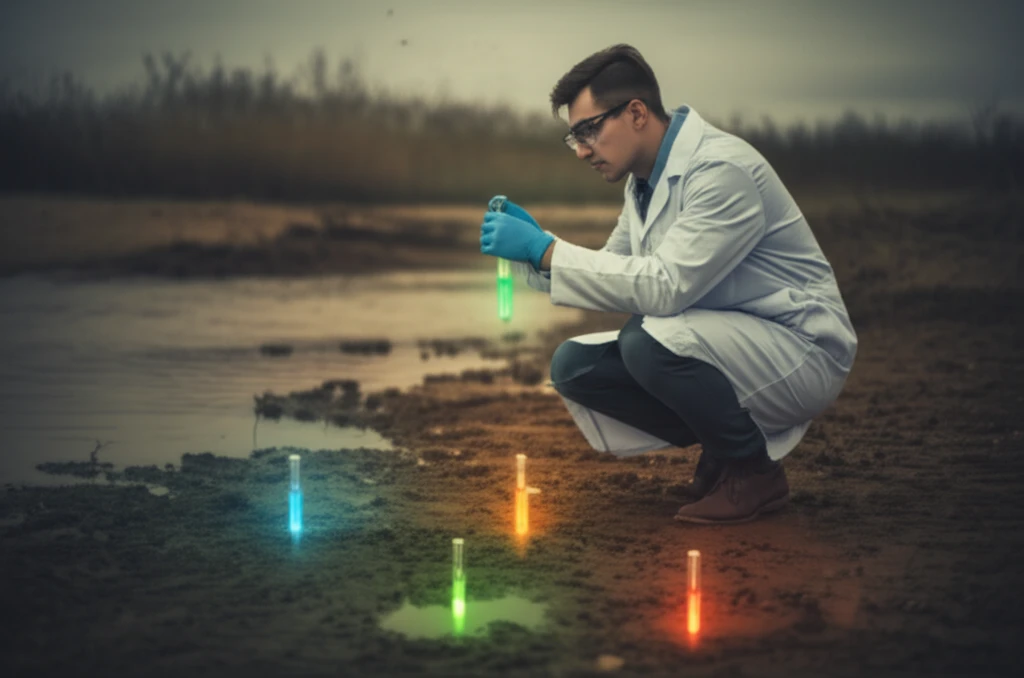
Detective examining polluted riverbed.

Can Forensic Ecotoxicology Clean Up Environmental Crimes?

"Using sediment analysis to track pollution and hold polluters accountable."


Industrial pollution is a major source of environmental degradation, with waterways often bearing the brunt. Traditional methods of addressing pollution, primarily administrative actions, are proving insufficient. A growing trend involves treating severe pollution as a criminal act, demanding more robust methods of detection and prosecution.

Environmental forensics is stepping up, using scientific tools to investigate and build cases against polluters. A key area is ecotoxicology, which assesses the impact of pollutants on living organisms. This field is gaining traction due to its practicality, cost-effectiveness, and ability to provide clear evidence of environmental harm, aligning with environmental protection laws.

Focusing on sediment analysis, researchers are exploring how toxicity tests on sediment samples can pinpoint water pollution sources, specifically from tannery effluents. The study aims to evaluate the effectiveness of these methods in environmental forensic investigations, contributing to stronger enforcement and accountability.

Sediment Sleuthing: Uncovering Pollution's Impact

Detective examining polluted riverbed.

The study, conducted in a disturbed urban area in Minas Gerais, Brazil, focused on streams receiving tannery effluents. Researchers collected sediment samples from various points, including sites directly receiving effluent (PA, PB, PC), a control site upstream of pollution sources (CC), and a downstream site (PD) to assess the spread of contamination.

To evaluate the sediment quality, the team employed a multi-pronged approach:

  • Ecotoxicological Evaluation: Acute and chronic toxicity tests were performed using Chironomus xanthus (a midge larvae) and Ceriodaphnia silvestrii (a water flea), respectively, to assess the direct toxic effects of the sediment.
  • Benthic Macrofauna Assessment: The diversity and density of benthic organisms (invertebrates living in the sediment) were analyzed to determine the ecological health of the streams. Deformities in Chironomidae larvae were also noted as indicators of stress.
  • Chemical Analysis: Sediment samples were analyzed for chromium, cadmium, and lead, common pollutants in tannery wastewater.
  • Sediment Quality Triad (SQT): The data from the toxicity tests, macrofauna assessment, and chemical analysis were integrated using the Sediment Quality Triad to provide a comprehensive assessment of sediment quality.
The results revealed a clear pattern: sediment samples from sites receiving tannery effluents (PA, PB, PC) exhibited significant toxicity, reduced biodiversity of benthic macrofauna, and elevated levels of chromium. The downstream site (PD) also showed signs of pollution, indicating the spread of contaminants. Notably, a high concentration of chromium (4365 mg/kg) was found in the effluent from one tannery (EPC).

Turning Science into Justice for Polluted Waters

The study demonstrates the effectiveness of using sediment ecotoxicological evaluations to identify sources of pollution and assess their impact on aquatic ecosystems. By combining toxicity tests, biological assessments, and chemical analyses, a strong case can be built against polluters, supporting legal action and environmental remediation.

While the study focused on tannery effluents, the methods can be applied to other industrial discharges and pollution sources. The key is to adapt the approach to the specific pollutants and environmental conditions of the area under investigation.

As environmental regulations become stricter and forensic science advances, expect to see greater use of ecotoxicological assessments in prosecuting environmental crimes. This approach not only helps to hold polluters accountable but also contributes to the restoration and protection of vital water resources.

About this Article -

This article was crafted using a human-AI hybrid and collaborative approach. AI assisted our team with initial drafting, research insights, identifying key questions, and image generation. Our human editors guided topic selection, defined the angle, structured the content, ensured factual accuracy and relevance, refined the tone, and conducted thorough editing to deliver helpful, high-quality information.See our About page for more information.

This article is based on research published under:

DOI-LINK: 10.1590/1519-6984.02214, Alternate LINK

Title: Ecotoxicological Evaluation Of Sediments Applied To Environmental Forensic Investigation

Subject: General Agricultural and Biological Sciences

Journal: Brazilian Journal of Biology

Publisher: FapUNIFESP (SciELO)

Authors: R. H. Alves, A. C. Rietzler

Published: 2015-11-10

Everything You Need To Know

1

What is ecotoxicology and why is it important in environmental forensics?

Ecotoxicology assesses the impacts of pollutants on living organisms, providing crucial evidence of environmental harm. It's important because it offers a practical, cost-effective way to investigate and build cases against polluters. By evaluating the toxicity of substances, like those found in tannery effluents, ecotoxicology helps determine the extent of damage to aquatic ecosystems, supporting legal actions and environmental remediation efforts. This is particularly significant when traditional administrative methods are insufficient to address severe pollution, making ecotoxicology a key tool in environmental forensics.

2

How does sediment analysis contribute to the investigation of environmental crimes?

Sediment analysis is a vital tool in environmental forensics because it helps track and understand the impact of pollution. Researchers collect sediment samples, like those from streams receiving tannery effluents, and analyze them using various methods. These include ecotoxicological evaluations with organisms such as Chironomus xanthus and Ceriodaphnia silvestrii to assess toxicity; benthic macrofauna assessments to evaluate ecological health; and chemical analyses to identify specific pollutants such as chromium, cadmium, and lead. By studying the sediment, scientists can pinpoint pollution sources, assess the spread of contaminants, and measure the harm to aquatic life. This data is essential for building strong cases against polluters and promoting environmental protection.

3

What is the Sediment Quality Triad and what is its significance?

The Sediment Quality Triad (SQT) integrates multiple data points to provide a comprehensive assessment of sediment quality. It combines the results of toxicity tests (using organisms like Chironomus xanthus and Ceriodaphnia silvestrii), benthic macrofauna assessments (evaluating the diversity and density of organisms in the sediment), and chemical analyses (measuring pollutant levels). This integrated approach provides a holistic view of the sediment's condition, helping researchers understand the overall impact of pollution. In the context of the study, the SQT helps identify the extent of damage from tannery effluents and supports the building of strong evidence for legal actions.

4

What are tannery effluents and why are they a concern?

Tannery effluents are wastewater discharges from tanneries, often containing harmful pollutants such as chromium, cadmium, and lead. In the study, these effluents were found to significantly impact aquatic ecosystems. Sediment samples from sites receiving tannery effluents (PA, PB, PC) showed significant toxicity, reduced biodiversity of benthic macrofauna, and elevated levels of chromium. These findings underscore the need for effective monitoring and enforcement to prevent pollution and protect water resources. This data is crucial for legal action against polluters and contributes to environmental remediation.

5

Why are Chironomus xanthus and Ceriodaphnia silvestrii used in this study?

Chironomus xanthus and Ceriodaphnia silvestrii are key organisms used in ecotoxicological evaluations of sediment. Chironomus xanthus, a midge larvae, and Ceriodaphnia silvestrii, a water flea, are used in acute and chronic toxicity tests, respectively, to assess the direct toxic effects of pollutants in the sediment. These organisms' responses to pollutants, such as those found in tannery effluents, provide crucial evidence of environmental harm. The presence of deformities in Chironomidae larvae, for example, serves as an indicator of stress. The use of these organisms enables scientists to measure the impact of pollution on aquatic life and build robust cases against polluters, contributing to legal actions and environmental remediation.

Newsletter Subscribe

Subscribe to get the latest articles and insights directly in your inbox.