
Can Energy Storage Solve the Renewable Energy Puzzle? A Deep Dive into Frequency Regulation

"Unlock the secrets of energy storage and how it balances the grid, making wind and solar power reliable for our future."
As the world races towards a greener future, renewable energy sources like wind and solar power are taking center stage. However, these sources come with a unique challenge: intermittency. The sun doesn't always shine, and the wind doesn't always blow, leading to fluctuations in the electrical grid. This is where energy storage steps in, acting as the unsung hero of the renewable energy revolution.
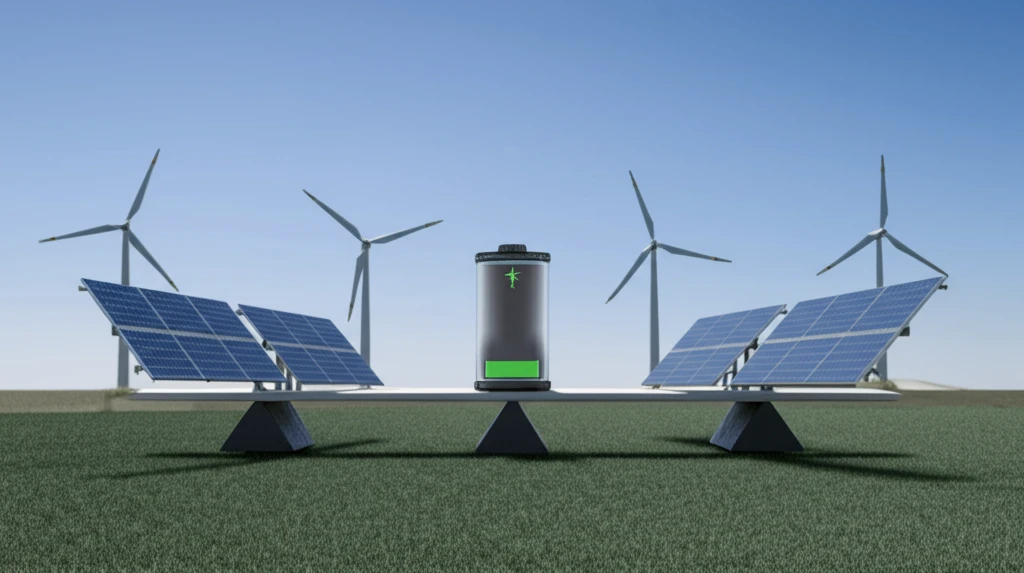
Imagine a seesaw: on one side, you have the fluctuating supply of renewable energy, and on the other, the constant demand from homes and businesses. Energy storage systems act as the fulcrum, balancing the grid by storing excess energy when production is high and releasing it when demand exceeds supply. This process, known as frequency regulation, is crucial for maintaining a stable and reliable power grid.
This article delves into the fascinating world of energy storage and frequency regulation, exploring the technologies, economic considerations, and policies that are shaping the future of our power grid. Join us as we uncover how these innovations are making renewable energy a practical and dependable solution for a sustainable future.
Energy's Central Role in Modern Civilization
Energy is defined as the ability to do work, and modern civilization depends on the capacity to change energy from one form to another to perform useful work. Per capita energy consumption varies significantly by region; for example, Arizona's per capita energy consumption is less than that of almost four-fifths of U.S. states, partly due to its mild winter climate and seasonal residency patterns. Energy is a quantitative property transferred to physical systems, manifesting as the capacity to do work and to produce heat and light. These foundational definitions underscore why managing energy—particularly through storage and frequency regulation—is critical for grid stability and the broader renewable energy transition.
Conventional Grid Management and Emerging Challenges
Traditional frequency regulation relies on adjusting the output of dispatchable generators—such as natural gas turbines—to match real-time electricity demand and maintain grid frequency within narrow bands. While this approach has served grids well for decades, it faces growing limitations as variable renewable sources like wind and solar increase their share of generation. These limitations include slower response times of conventional generators, increased wear and tear from frequent ramping, and difficulty compensating for the rapid fluctuations inherent in renewable output. As a result, energy storage technologies are being explored as a faster, more flexible complement to conventional frequency regulation methods.
Defining Energy: From Physics to the Grid
Energy is fundamentally the capacity to perform work, whereas power represents the time rate of doing work or delivering energy. In the International System of Units, energy is measured in joules, with one joule equal to the work done by a one-newton force acting over a one-meter distance. These precise definitions, established through centuries of physics research, form the scientific foundation for all energy technologies, including modern storage systems. Understanding the distinction between energy (total capacity) and power (rate of delivery) is essential for evaluating how storage devices can contribute to frequency regulation on power grids.
What is Frequency Regulation and Why Does It Matter?
The modern electrical grid operates on a delicate balance between supply and demand. When this balance is disrupted, the frequency of the grid fluctuates. Think of frequency as the heartbeat of the power grid; maintaining a steady frequency (typically 50 or 60 Hz) is vital for the reliable operation of all connected devices.
- Sensing Imbalances: Grid operators continuously monitor the grid's frequency.
- Reacting Instantly: When a deviation occurs, energy storage systems respond in milliseconds, either injecting or absorbing power to correct the imbalance.
- Maintaining Stability: This rapid response prevents frequency fluctuations that could damage equipment or cause blackouts.
Evolving Research on Storage and Grid Services
Research into energy storage for frequency regulation is an active and rapidly evolving field, with studies examining the performance, economics, and scalability of various storage technologies. While this subsection does not draw on specific sourced studies, the broader literature generally evaluates lithium-ion batteries, flywheels, supercapacitors, and emerging chemistries for their ability to provide fast frequency response. Key research questions include how storage degradation costs compare with conventional generator costs, and how control strategies can optimize storage dispatch for grid stability. As renewable penetration grows, peer-reviewed research continues to refine our understanding of storage's role in maintaining reliable frequency regulation.
Challenges and Skepticism Around Storage-Based Regulation
Critics of relying on energy storage for frequency regulation point to several unresolved challenges, including high upfront capital costs, limited cycle life for some technologies, and concerns about supply chain constraints for critical minerals like lithium and cobalt. There have also been notable project failures and cost overruns that temper enthusiasm for large-scale storage deployment. Additionally, some argue that demand-side management and improved grid interconnection may offer more cost-effective solutions than storage in certain contexts. While these counterarguments do not negate storage's potential, they highlight the need for careful evaluation of where and when storage provides the greatest value.
Storage vs. Conventional Frequency Regulation
Comparing energy storage with conventional frequency regulation approaches reveals trade-offs in speed, cost, scalability, and environmental impact. Storage technologies can respond in milliseconds—far faster than traditional generators—but their economics depend on usage patterns, degradation rates, and the specific market structures governing frequency regulation payments. Conventional generators offer proven reliability and existing infrastructure, yet they may incur higher emissions and slower response times. A balanced analysis suggests that storage is most advantageous for fast, short-duration frequency response, while conventional resources may remain important for longer-duration balancing needs.
The Future of Energy Storage: A Balanced Grid for a Sustainable World
Energy storage is not just a technological solution; it's an economic and policy imperative. By understanding the dynamics of energy storage, frequency regulation, and market forces, we can pave the way for a future where renewable energy powers our lives reliably and sustainably. As technology advances and policies evolve, energy storage will undoubtedly play a central role in building a cleaner, more resilient energy future.
Integrating Storage into the Frequency Regulation Puzzle
Energy storage holds significant promise as a tool for frequency regulation, but it is not a standalone solution to the challenges posed by increasing renewable energy penetration. Experts generally agree that storage works best as part of a diversified grid strategy that includes demand response, grid modernization, and continued improvements in renewable forecasting. The value of storage depends heavily on local grid conditions, regulatory frameworks, and the specific frequency regulation products being procured. Ultimately, storage is one important piece of the larger puzzle, and its effective integration requires coordinated planning across technical, economic, and policy dimensions.
What Lies Ahead for Storage and Frequency Regulation
The future of energy storage for frequency regulation is likely to be shaped by continued cost reductions, technology improvements, and evolving market designs. Emerging technologies such as solid-state batteries, flow batteries, and advanced thermal storage may offer improved cycle life and lower costs. Regulatory and market reforms will be critical to ensuring that storage can compete fairly with conventional resources for frequency regulation services. As grids worldwide pursue deeper decarbonization, the role of fast-responding storage in maintaining frequency stability is expected to grow, though the pace and scale will depend on broader energy policy decisions.
Systemic Challenges in the Energy Transition
The U.S. Department of Energy is among institutions tackling humanity's greatest energy challenges, including the integration of renewable generation and the modernization of grid infrastructure. Initiatives like the Genesis Mission aim to unite human curiosity with advanced analytical capabilities to accelerate scientific discovery and address complex energy problems. These broader systemic efforts highlight that frequency regulation is embedded within a larger energy transition involving decarbonization, resilience, and equity. Addressing these interconnected challenges requires sustained investment, cross-sector collaboration, and adaptive policy frameworks.
How Frequency Regulation Affects Communities
While frequency regulation is a technical grid function, its reliability directly affects the daily lives of communities and businesses that depend on stable electricity. Poor frequency control can lead to equipment damage, power quality issues, and in extreme cases, cascading blackouts that disrupt hospitals, schools, and critical infrastructure. The transition to storage-backed frequency regulation also has workforce implications, creating new jobs in manufacturing, installation, and maintenance of storage systems. Ultimately, the human impact of frequency regulation choices underscores the importance of ensuring that the renewable energy transition delivers reliable, affordable, and equitable power for all.