
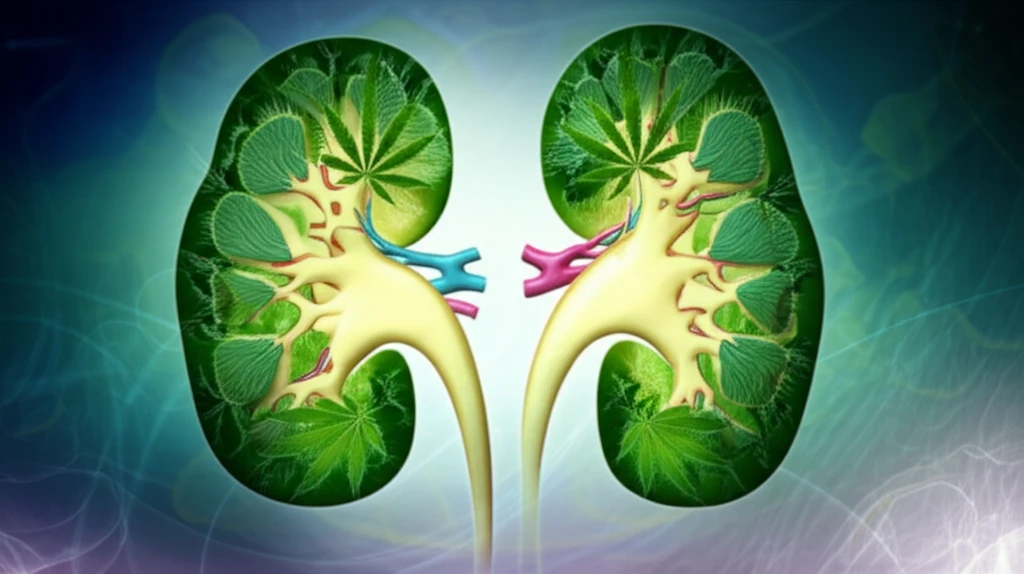
Can Cannabis Compounds Protect Your Kidneys? The Latest Research on 2-AG and Renal Health

"New studies suggest a link between a cannabis-derived compound and improved kidney function, opening doors to potential treatments for acute kidney injury."
Acute kidney injury (AKI) is a serious medical condition associated with a high risk of complications and death. One of the major causes of AKI is ischemia-reperfusion injury (IRI), which occurs when blood supply to the kidneys is interrupted and then restored. This process can damage kidney tissues and impair their function. Current treatments for AKI are limited, highlighting the urgent need for new and effective therapies.
Recent research has focused on the role of the endocannabinoid (EC) system in protecting against renal IRI. The EC system is a complex network of receptors and signaling molecules that help regulate various physiological processes, including inflammation, oxidative stress, and cell survival. Key components of this system include cannabinoid receptors (CB1 and CB2) and endocannabinoids like anandamide (AEA) and 2-arachidonoylglycerol (2-AG).
A groundbreaking study published in "Cannabis and Cannabinoid Research" investigated the effects of increasing renal 2-AG levels in a mouse model of acute kidney injury. The findings suggest that elevating 2-AG levels can improve kidney function and reduce damage associated with IRI. This article explores the implications of this research and the potential of cannabis compounds in treating kidney disease.
Unlocking the Potential of 2-AG: How Does It Impact Kidney Injury?
The study, led by Hamid Moradi and colleagues, sought to understand the role of the endocannabinoid system, particularly 2-AG, in renal IRI. Renal ischemia was induced in male mice by clamping the kidney pedicles for 30 minutes, followed by 24 hours of reperfusion. To increase 2-AG levels, some mice were pretreated with JZL184, a compound that inhibits the breakdown of 2-AG, 30 minutes before inducing IRI. The researchers then measured serum creatinine and blood urea nitrogen (BUN) levels, assessed renal tubular damage, and analyzed the renal content of endocannabinoids and markers of inflammation and oxidative stress.
- Significantly increased serum BUN and creatinine levels, indicating impaired kidney function.
- Increased tubular damage score, reflecting structural damage to kidney tubules.
- Elevated expression of renal markers of inflammation and oxidative stress.
- Increased renal 2-AG content, suggesting a natural response to injury.
Looking Ahead: The Future of Cannabis Compounds in Kidney Treatment
This research marks a significant step forward in understanding the role of the endocannabinoid system in kidney health. While the study focused on a mouse model, the findings suggest that 2-AG could be a potential therapeutic target for acute kidney injury. However, further research is needed to fully understand the mechanisms responsible for the observed effects and to determine the potential value of 2-AG in human treatment. As the scientific community continues to explore the therapeutic potential of cannabis compounds, this study offers new hope for improving renal function and treating kidney disease.