
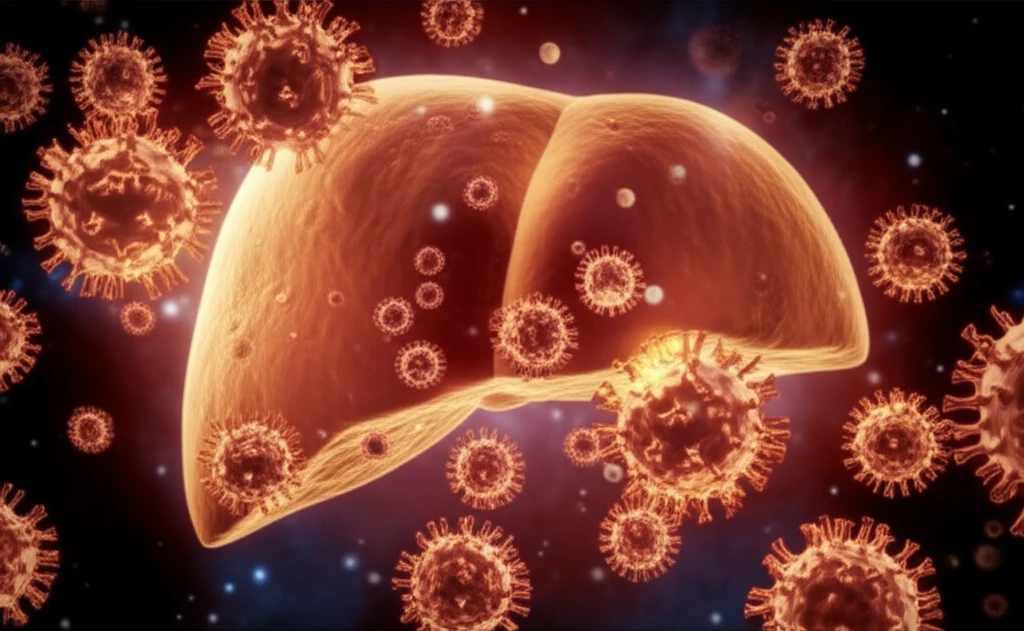
Illustration of liver cell protected by butyrate molecules

Can Butyrate Combat HBV? New Research Explores a Potential Antiviral Agent

"Scientists investigate how butyrate, a short-chain fatty acid, could offer a novel approach to treating Hepatitis B Virus (HBV) and related liver diseases."


Hepatitis B Virus (HBV) remains a significant global health challenge, affecting millions worldwide and leading to chronic liver inflammation, cirrhosis, and hepatocellular carcinoma (HCC). Current treatments aim to suppress viral replication, but often face issues with drug resistance and long-term side effects. This underscores the urgent need for new therapeutic strategies to combat HBV infection.

A promising area of research focuses on naturally occurring compounds with antiviral properties. Among these, butyrate, a short-chain fatty acid produced by gut bacteria, has garnered attention for its potential role in modulating cellular processes and inhibiting cancer. Scientists are now exploring whether butyrate can also be harnessed to fight HBV.

Recent studies have begun to unravel the mechanisms by which butyrate may interfere with HBV replication and HBV-induced liver damage. By modulating key regulatory pathways within cells, butyrate emerges as a potential candidate for novel HBV therapeutics.

How Butyrate Interferes with HBV Replication: The SIRT-1/Ac-p53 Connection

Illustration of liver cell protected by butyrate molecules

A groundbreaking study has shed light on how butyrate could inhibit HBV replication and the proliferation of liver cells affected by the virus. The research zeroes in on a specific regulatory axis involving SIRT-1 (a protein involved in cellular regulation) and Ac-p53 (acetylated p53, a tumor suppressor protein).

The study reveals that HBV infection increases the expression of SIRT-1 in liver cells. Elevated SIRT-1 levels are associated with lower levels of Ac-p53 in patients with high HBV viral loads. This imbalance appears to promote viral replication and cell proliferation. The key finding is that butyrate can disrupt this process.

  • Inhibiting SIRT-1: Butyrate has been shown to inhibit the expression of SIRT-1. By doing so, it allows Ac-p53 levels to rise.
  • Boosting Ac-p53: Increased Ac-p53 then triggers a cascade of beneficial effects, including reduced cell proliferation.
  • Suppressing HBV: Butyrate directly inhibits the expression of HBx protein, HBV-DNA, and hepatitis B surface antigen (HBsAg), all key indicators of viral activity.
These findings suggest that butyrate essentially works by re-establishing a more natural cellular environment that is less conducive to HBV replication. It shifts the balance away from viral promotion and toward cellular control.

The Future of Butyrate in HBV Treatment

While these findings are promising, it’s important to emphasize that this is preliminary research. Further studies are needed to fully understand the potential therapeutic applications of butyrate in treating HBV. However, the initial results suggest that butyrate, or compounds derived from it, could offer a new avenue for antiviral therapies.

About this Article -

This article was crafted using a human-AI hybrid and collaborative approach. AI assisted our team with initial drafting, research insights, identifying key questions, and image generation. Our human editors guided topic selection, defined the angle, structured the content, ensured factual accuracy and relevance, refined the tone, and conducted thorough editing to deliver helpful, high-quality information.See our About page for more information.

This article is based on research published under:

DOI-LINK: 10.1002/mc.22946, Alternate LINK

Title: Butyrate Inhibits Hbv Replication And Hbv-Induced Hepatoma Cell Proliferation Via Modulating Sirt-1/Ac-P53 Regulatory Axis

Subject: Cancer Research

Journal: Molecular Carcinogenesis

Publisher: Wiley

Authors: Kishor Pant, Amit K. Mishra, Saman Man Pradhan, Baibaswata Nayak, Prasenjit Das, Dr Shalimar, Anoop Saraya, Senthil K. Venugopal

Published: 2018-12-19

Everything You Need To Know

1

What is butyrate, and why is it being researched in relation to Hepatitis B Virus (HBV)?

Butyrate is a short-chain fatty acid produced by gut bacteria. In the context of Hepatitis B Virus (HBV) research, it's being investigated for its potential antiviral properties. It is significant because it may offer a new way to combat HBV by modulating cellular processes and inhibiting viral replication. If butyrate proves effective, it could lead to new treatments that address the limitations of current therapies, such as drug resistance and long-term side effects. The research focuses on how butyrate affects the SIRT-1/Ac-p53 connection. Other short-chain fatty acids could also be investigated.

2

What is the SIRT-1/Ac-p53 connection, and why is it important in the context of HBV?

The SIRT-1/Ac-p53 connection is a regulatory pathway within cells that is affected by HBV infection. HBV increases the expression of SIRT-1, which leads to lower levels of Ac-p53. This imbalance promotes viral replication and cell proliferation. This connection is significant because it provides a specific target for therapeutic intervention. By understanding how HBV manipulates this pathway, researchers can develop strategies to restore balance and inhibit viral activity. Compounds like butyrate disrupt this process by inhibiting SIRT-1, allowing Ac-p53 levels to rise, which in turn reduces cell proliferation and suppresses HBV. The research has not yet considered if there is cross-talk with other pathways.

3

How does butyrate interfere with the replication of Hepatitis B Virus (HBV)?

Butyrate interferes with HBV replication by inhibiting the expression of SIRT-1, which allows Ac-p53 levels to rise. Increased Ac-p53 then triggers beneficial effects, including reduced cell proliferation and direct inhibition of key indicators of viral activity like HBx protein, HBV-DNA, and hepatitis B surface antigen (HBsAg). This is important because it shifts the cellular environment away from viral promotion and toward cellular control, making it less conducive to HBV replication. By targeting specific viral and cellular components, butyrate can potentially disrupt the viral life cycle at multiple points. The mode of action of butyrate on other viruses has not been investigated.

4

What are HBx protein, HBV-DNA, and hepatitis B surface antigen (HBsAg), and why is it significant that butyrate can inhibit their expression?

HBx protein, HBV-DNA, and hepatitis B surface antigen (HBsAg) are all key indicators of Hepatitis B Virus (HBV) activity. HBx protein is a viral protein that plays a role in viral replication and liver cell growth. HBV-DNA is the viral genetic material. Hepatitis B surface antigen (HBsAg) is a protein found on the surface of the virus. Their presence indicates that the virus is actively replicating. Butyrate's ability to directly inhibit the expression of these indicators is significant because it suggests that butyrate can directly suppress viral activity. The presence of these indicators could be correlated to the stage or severity of the disease.

5

What are the limitations of current Hepatitis B Virus (HBV) treatments, and why is it important to explore new therapeutic strategies like butyrate?

Current treatments for Hepatitis B Virus (HBV) aim to suppress viral replication, but they often face issues with drug resistance and long-term side effects. New therapeutic strategies are needed to combat HBV infection. Exploring natural compounds like butyrate, which has antiviral properties, is one approach. This is important because it may offer a more sustainable and less toxic way to manage HBV infection. If successful, butyrate-based therapies could provide an alternative or complementary approach to current treatments, potentially improving patient outcomes and quality of life. The clinical trials that have been done so far do not consider the gut biome.

Newsletter Subscribe

Subscribe to get the latest articles and insights directly in your inbox.