
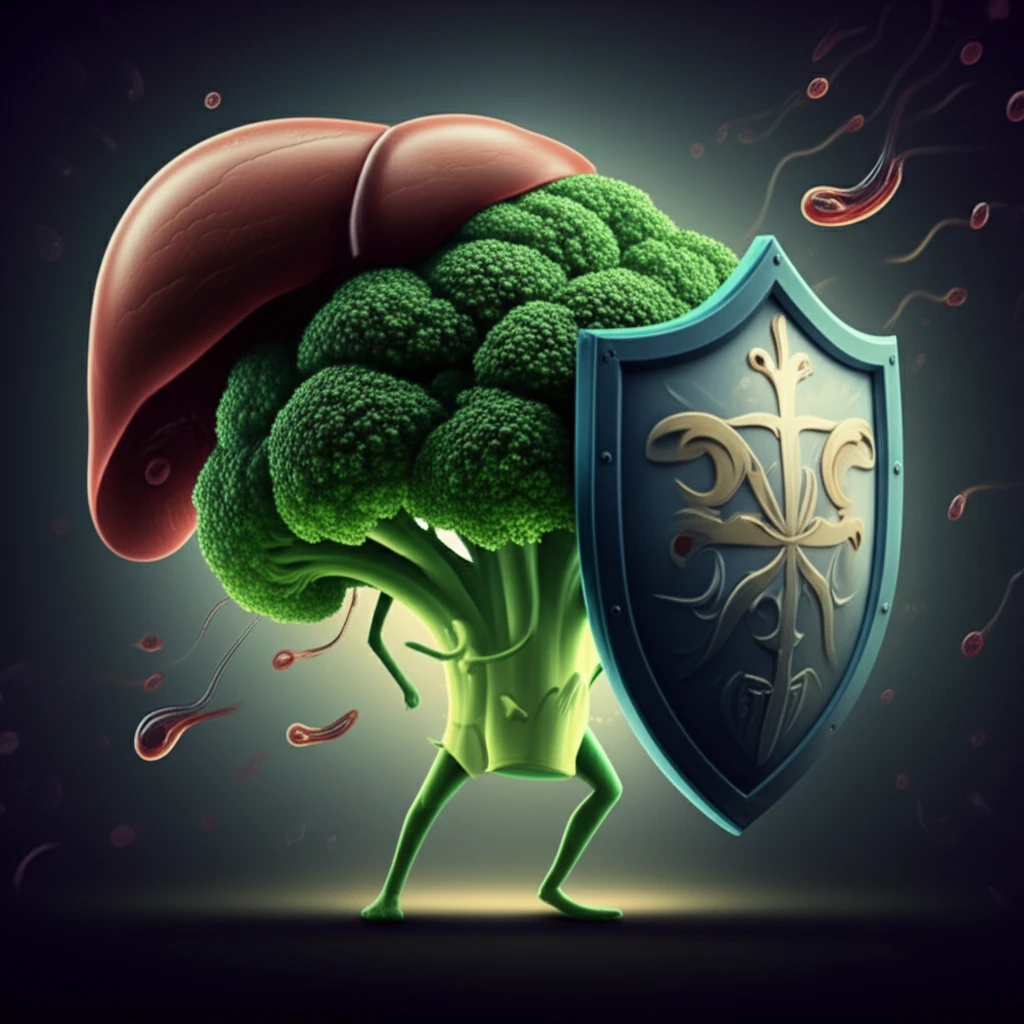
Can Broccoli Beat Liver Cancer? The Power of Benzyl Isothiocyanate

"New research explores how a compound found in cruciferous vegetables like broccoli could offer a natural defense against liver cancer."
Liver cancer, or hepatocellular carcinoma (HCC), remains a formidable global health challenge, known for its resistance to conventional treatments like chemotherapy and radiation. This creates an urgent need for both more effective therapies and proactive preventative strategies. Recent research is shining a light on the potential of natural compounds, particularly those found in everyday foods, to play a role in the fight against this disease.
Cruciferous vegetables, such as broccoli, cabbage, and cauliflower, have long been recognized for their health benefits. These vegetables contain a group of active compounds called isothiocyanates (ITCs), with benzyl isothiocyanate (BITC) being one of the most promising. BITC is created when glucotropaeolin, a natural compound in these vegetables, is broken down during digestion.
A new study has investigated the potential of BITC to prevent and fight liver cancer, exploring its effects on key molecular pathways involved in cancer growth. This research suggests that BITC may offer a natural way to slow or stop the progression of HCC.
Unlocking BITC's Potential: How Does Benzyl Isothiocyanate Fight Liver Cancer?
The study published in Biomedicine & Pharmacotherapy, delved into the mechanisms by which BITC might hinder the development of HCC. Researchers used both animal models and human liver cancer cell lines (HepG2 and Huh-7) to evaluate BITC's impact on cancer cell behavior and related molecular markers.
- Animal Model: Mice were induced with HCC using diethylnitrosamine (DEN), a known liver carcinogen. BITC was then administered orally at different dosages to assess its preventative and therapeutic effects.
- Cell Line Studies: Human liver cancer cell lines (HepG2 and Huh-7) were treated with BITC to observe its direct effects on cell growth, apoptosis (programmed cell death), and other cancer-related processes.
- Molecular Analysis: Researchers measured the expression levels of various proteins and enzymes involved in cancer progression, including HGF, pAkt, STAT3, VEGF, MMP-2, caspase-3, and TNF-α. Immunohistochemical staining was used to detect STAT3 expression in liver tissues.
The Future of BITC Research: A Natural Ally in Liver Cancer Prevention?
This research provides a compelling case for further exploration of BITC as a potential agent in liver cancer prevention and treatment. While more studies are needed to fully understand its effects in humans, the findings suggest that incorporating cruciferous vegetables into the diet may offer a valuable strategy for reducing the risk of HCC. BITC's ability to target key molecular pathways involved in cancer progression makes it a promising candidate for future research and potential therapeutic development.