
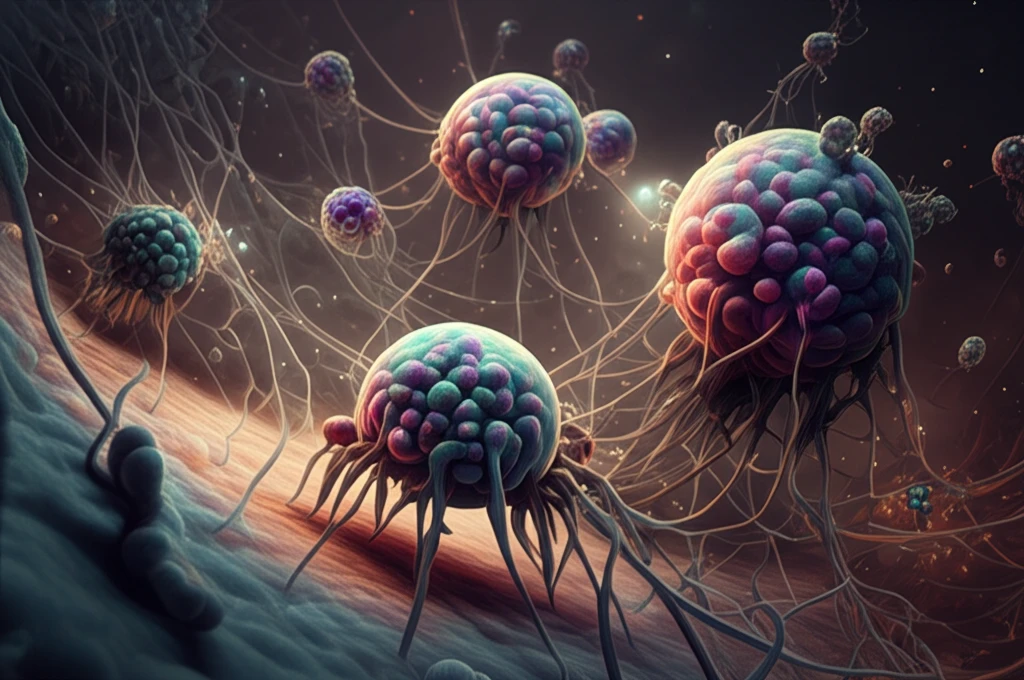
Can Bioengineered Organisms Help Us Conquer Future Diseases?

"Exploring the potential of synthetic biology and nanotechnology in combating global health threats like HIV, Ebola, and Tuberculosis."
In an era defined by rapid globalization and unprecedented scientific advancement, the specter of infectious diseases looms large. The recent outbreaks of Ebola in West Africa and the rise of Zika virus in Brazil serve as stark reminders of the ever-present threat posed by pathogens. As these diseases continue to evolve and adapt, finding new strategies to combat them becomes more urgent than ever.
Traditional approaches to disease control, such as vaccines and antiviral medications, have undoubtedly saved countless lives. However, many pathogens have developed sophisticated mechanisms to evade the human immune system, rendering existing treatments less effective. This has spurred researchers to explore new frontiers in bioengineering, seeking innovative solutions that can outsmart even the most resilient of foes.
This article delves into the exciting world of bioengineered antimicrobial organisms and explores their potential to revolutionize the way we fight infectious diseases. By harnessing the power of synthetic biology, nanotechnology, and other cutting-edge technologies, scientists are developing novel strategies to target pathogens, enhance immune responses, and ultimately conquer some of the most challenging health threats facing humanity.
Bioengineering in Food and Health
Bioengineering applies biology and engineering tools to create usable, tangible, and economically viable products that support health care. Bioengineered foods are already tracked through the U.S. Department of Agriculture's Agricultural Marketing Service, which maintains a list of crops and foods available in bioengineered forms worldwide. The list also identifies foods for which regulated entities must maintain records. Public discussion increasingly includes questions about digestion, gut health, safety, and the presence of bioengineered ingredients in familiar products.
Defining Bioengineered Food
The USDA definition described by the Non-GMO Project centers on food for human consumption that contains detectable genetic material. That genetic material must have been modified through certain biotechnology techniques. This definition provides a regulatory way to distinguish bioengineered food from the broader public use of the term GMO, but it does not by itself describe every biological engineering application or resolve all public concerns about food and health.
A Developing Field
Bioengineering has developed through the intersection of biological knowledge and engineering practice. Its history likely includes advances in understanding living systems, modifying biological material, and applying those changes to practical problems. Because no historical sources were provided for this subsection, specific milestones and dates cannot be established here.
Bioengineering Technologies: A New Arsenal Against Disease
Bioengineering technologies are rapidly transforming our approach to medicine and disease control. These technologies encompass a range of disciplines, including nanotechnology, synthetic biology, and genetic engineering. Each offers unique tools and techniques for manipulating biological systems and designing novel interventions.
- Nanotechnology: Manipulating matter at the atomic level for targeted drug delivery and diagnostics.
- Synthetic Biology: Designing new biological systems to combat pathogens.
- Genetic Engineering: Modifying organisms to enhance their disease-fighting capabilities.
- 'OMICs' Technologies: Analyzing genes, proteins, and metabolites to understand disease mechanisms.
Evidence Still Emerging
Current research on bioengineered organisms may examine how engineered biology could address disease and improve health-related technologies. The field is broad, so findings may differ substantially across organisms, applications, and stages of development. Without subsection-specific research sources, no particular study, review, treatment, or outcome can be identified reliably.
Risks and Uncertainty
Bioengineered organisms may raise questions about safety, unintended effects, oversight, and equitable access. Potential benefits should therefore be evaluated alongside evidence of limitations and failure modes rather than assumed in advance. No sources were supplied here to support a specific criticism, failed project, or quantified risk.
Comparing Approaches
A meaningful comparison could examine bioengineered organisms alongside conventional medicines, treatments, or disease-prevention strategies. Relevant criteria would include effectiveness, safety, scalability, cost, and the time required for validation. Because no comparative sources were provided, this subsection does not assign an advantage to any particular approach.
The Future of Disease Control: A Bioengineered World?
The development of bioengineered antimicrobial organisms represents a paradigm shift in the way we approach disease control. While challenges remain, including safety considerations and regulatory hurdles, the potential benefits are enormous. As technology continues to advance, we can expect to see even more sophisticated and effective bioengineered solutions emerge, paving the way for a future where infectious diseases are no longer a major threat to human health. Just as Edward Jenner's discovery of the smallpox vaccine revolutionized medicine in the 18th century, bioengineered antimicrobial organisms may well represent the next great leap forward in our ongoing battle against disease.
Promise Requires Evidence
Bioengineered organisms could become part of future efforts to address disease, but their value depends on demonstrated health benefits and responsible implementation. Scientific promise alone cannot establish clinical effectiveness or public acceptability. No expert commentary was supplied for this subsection, so broader conclusions should remain provisional.
Potential Directions
Future work may focus on designing organisms and biological systems that target difficult diseases more precisely. Progress will likely depend on research, testing, regulation, and the ability to translate laboratory findings into dependable real-world applications. Without future-focused sources, specific technologies, timelines, or forecasts cannot be stated.
Beyond the Laboratory
The impact of bioengineered organisms will depend not only on technical performance but also on regulation, manufacturing, access, and public trust. These factors can influence whether a promising intervention reaches the people who need it. No sources were provided to document a particular systemic challenge or policy response.
People and Outcomes
For patients and communities, the importance of bioengineering will ultimately be measured by whether it improves health and fits real-world needs. Clear communication about benefits, uncertainties, and oversight may shape acceptance and informed decision-making. Since no sources were supplied for this subsection, specific human outcomes or community experiences cannot be attributed.