
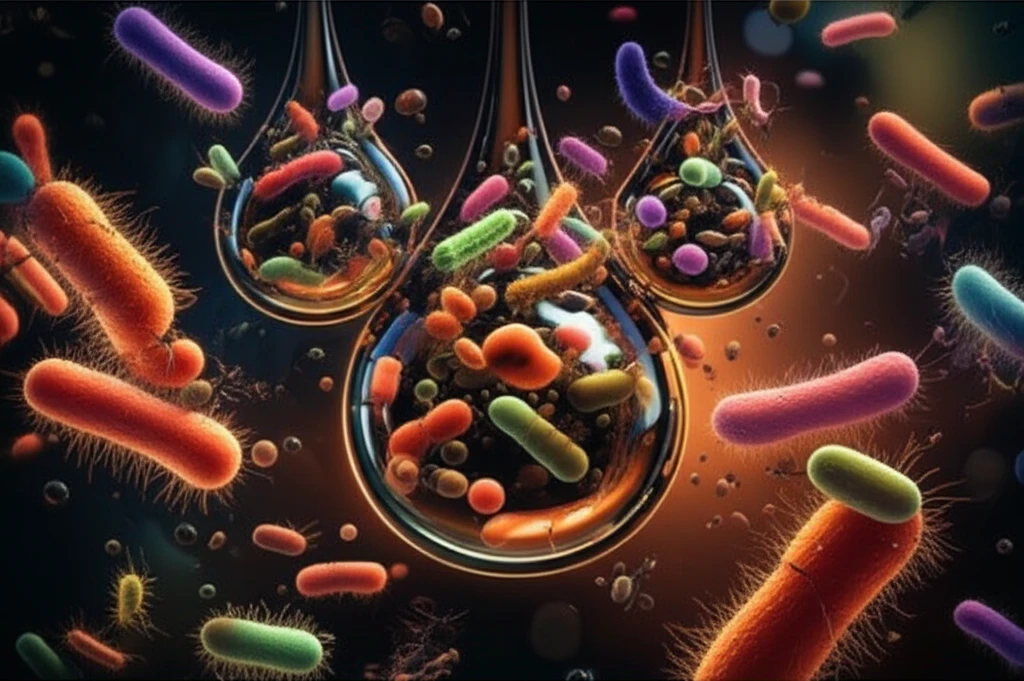
Bacterial cells degrading oil.

Can Bacteria Clean Up Oil Spills? The Promising Power of Bioremediation

"Harnessing nature's tiny cleanup crew: How microbial cultures can tackle petroleum pollution in our environment."


Petroleum hydrocarbons, the complex mixtures that make up gasoline, kerosene, and crude oil, are incredibly useful but pose a significant environmental threat when accidentally released. These substances, composed primarily of carbon and hydrogen, can contaminate soil and water, leading to long-term ecological damage. Finding effective and environmentally friendly ways to clean up these pollutants is a major challenge.

Traditional cleanup methods like incineration or physical removal can be expensive and sometimes ineffective, especially when dealing with large-scale contamination. This is where bioremediation comes in – the use of microorganisms to break down pollutants into less harmful substances. Bioremediation offers a promising, cost-effective approach to restoring contaminated sites.

Recent research has focused on identifying and utilizing specific types of bacteria that can degrade hydrocarbons. This article explores how single and mixed cultures of bacteria can be used to combat petroleum pollution, offering a sustainable solution for environmental cleanup.

The Bacteria All-Stars of Oil Degradation

Bacterial cells degrading oil.

A study published in the African Journal of Microbiology Research investigated the ability of four bacterial species – Pseudomonas sp., Bacillus sp., Klebsiella sp., and Proteus sp. – to utilize petroleum hydrocarbons. These bacteria were tested for their ability to break down kerosene, engine oil, and automotive oil in a laboratory setting. The researchers created both single-species cultures and a mixed culture (consortium) to see which approach was more effective.

The experiment involved growing these bacteria in a mineral salt medium (MSM) with the hydrocarbons as their only source of carbon and energy. Over five days, researchers monitored cell growth, changes in pH, and the production of carbon dioxide (CO2), which indicates the breakdown of the hydrocarbons.

The key findings of the study included:
  • All four bacterial species could utilize the hydrocarbons, demonstrating their potential for bioremediation.
  • Mixed bacterial cultures (the consortium) showed the most significant growth, indicating a synergistic effect where different species help each other break down the pollutants.
  • Pseudomonas sp. was particularly effective at degrading all three hydrocarbons.
These results highlight the potential of using mixed bacterial cultures to clean up sites contaminated with petroleum products. The consortium approach leverages the diverse enzymatic capabilities of different bacteria, leading to more efficient degradation.

The Future of Bioremediation: A Greener Cleanup Strategy

This research provides valuable insights into the potential of bioremediation as a sustainable solution for cleaning up petroleum contamination. By harnessing the power of naturally occurring bacteria, we can develop more effective and environmentally friendly cleanup strategies.

While the study focused on specific bacterial species and hydrocarbons, the principles can be applied to a wider range of pollutants and environments. Further research is needed to optimize bioremediation processes, including:

Exploring additional bacterial species and strains, evaluating environmental factors like nutrient availability and oxygen levels, and developing strategies to enhance gene transfer between bacteria to improve their degradation capabilities. Bioremediation offers a promising path towards a cleaner, healthier future, and continued research in this area is crucial.

About this Article -

This article was crafted using a human-AI hybrid and collaborative approach. AI assisted our team with initial drafting, research insights, identifying key questions, and image generation. Our human editors guided topic selection, defined the angle, structured the content, ensured factual accuracy and relevance, refined the tone, and conducted thorough editing to deliver helpful, high-quality information.See our About page for more information.

This article is based on research published under:

DOI-LINK: 10.5897/ajmr10.839, Alternate LINK

Title: Studies On The Bioutilization Of Some Petroleum Hydrocarbons By Single And Mixed Cultures Of Some Bacterial Species

Subject: Infectious Diseases

Journal: African Journal of Microbiology Research

Publisher: Academic Journals

Authors: Moneke Anene, Nwangwu Chika

Published: 2011-06-18

Everything You Need To Know

1

What is bioremediation and why is it important?

Bioremediation is a process that employs microorganisms, specifically bacteria, to break down pollutants, like petroleum hydrocarbons, into less harmful substances. This is a critical aspect of environmental cleanup because it offers a sustainable and often cost-effective alternative to traditional methods such as incineration or physical removal. The significance lies in its potential to restore contaminated sites and mitigate the long-term ecological damage caused by pollutants.

2

What are petroleum hydrocarbons, and why are they a concern?

Petroleum hydrocarbons are complex mixtures of compounds, primarily composed of carbon and hydrogen, that make up substances like gasoline, kerosene, and crude oil. They are incredibly useful in various applications but pose a significant environmental threat when released, contaminating soil and water. Their importance in this context is due to their potential for environmental damage and the need for effective cleanup methods. The implications are severe, potentially leading to ecological damage, impacting human health, and requiring costly remediation efforts.

3

Which specific bacteria were studied and what role did they play?

The study examined the ability of four bacterial species: *Pseudomonas* sp., *Bacillus* sp., *Klebsiella* sp., and *Proteus* sp. to break down petroleum hydrocarbons. These bacteria were tested for their ability to degrade kerosene, engine oil, and automotive oil. The goal was to determine their effectiveness in bioremediation efforts. The importance of these bacteria lies in their potential to be used in the cleanup of contaminated sites. The implications of using these specific bacteria include the possibility of more efficient and environmentally friendly cleanup strategies.

4

What is a mixed bacterial culture, and why is it significant?

A mixed bacterial culture, or consortium, is a group of different bacterial species working together to break down pollutants. In this context, the consortium was created using *Pseudomonas* sp., *Bacillus* sp., *Klebsiella* sp., and *Proteus* sp. The consortium approach leverages the diverse enzymatic capabilities of different bacteria, leading to more efficient degradation of hydrocarbons. This is significant because it often leads to more effective cleanup than using a single species. The implications of using a mixed culture include the potential for faster and more complete pollutant degradation, leading to quicker restoration of contaminated sites.

5

Which bacterium showed the most promise, and what does this mean?

*Pseudomonas* sp. was particularly effective in degrading all three types of petroleum hydrocarbons tested: kerosene, engine oil, and automotive oil. This means that *Pseudomonas* sp. demonstrated a strong ability to break down these pollutants in a laboratory setting. This is important because it indicates that this specific bacterium could be a key player in bioremediation efforts. The implications of *Pseudomonas* sp.'s effectiveness include the potential for its use in cleanup strategies, offering a targeted approach to tackle hydrocarbon contamination.

Newsletter Subscribe

Subscribe to get the latest articles and insights directly in your inbox.