
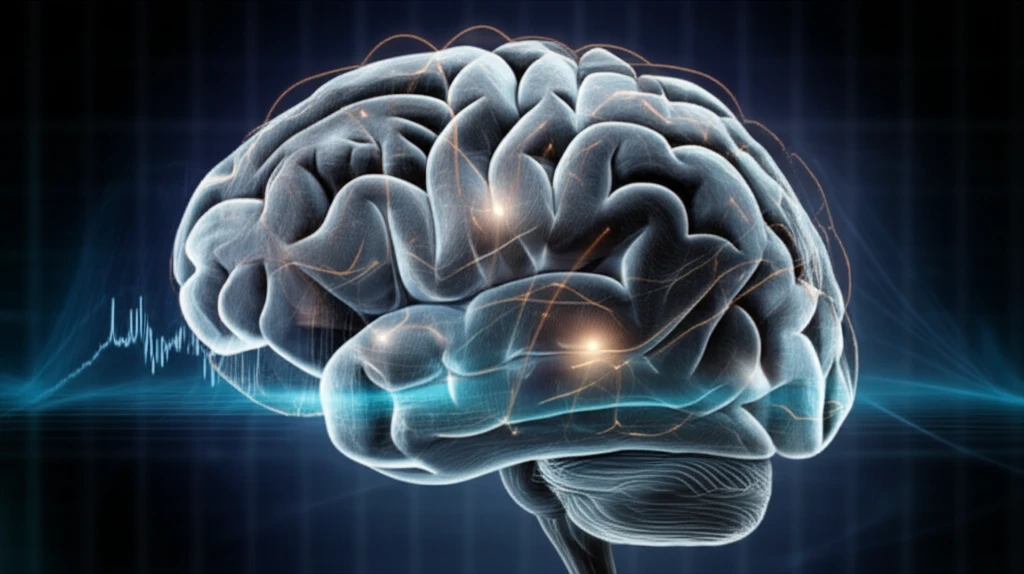
A surreal brain illustration overlaid with EEG data, symbolizing seizure prediction.

Can AI Predict Seizures Before They Happen? A Breakthrough in Epilepsy Forecasting

"New research explores the potential of neural networks and EEG data to predict seizures, offering hope for improved management and portable warning systems for those living with epilepsy."


Epilepsy, a neurological disorder affecting over 50 million people worldwide, is characterized by unpredictable seizures that can significantly impact quality of life. While anti-epileptic drugs and surgical interventions offer some relief, a substantial portion of patients remain drug-resistant, highlighting the urgent need for innovative solutions.

A promising avenue of research lies in the realm of seizure forecasting – predicting when a seizure might occur. This would allow individuals to take proactive measures, minimizing potential harm and anxiety. Electroencephalography (EEG), a non-invasive technique for measuring brain activity, has become a cornerstone in this endeavor.

Recent studies have explored the use of machine learning and artificial intelligence techniques to analyze EEG data and identify patterns indicative of an impending seizure. This article delves into a novel approach utilizing neural networks and sub-frequency band analysis of EEG signals to achieve automated seizure forecasting, offering a glimpse into a future where epilepsy can be managed with greater precision and confidence.

Harnessing Neural Networks and EEG Sub-Bands for Seizure Prediction

A surreal brain illustration overlaid with EEG data, symbolizing seizure prediction.

The study explores a method where raw EEG data is broken down into ten sub-frequency bands. This approach allows researchers to focus on specific aspects of brain activity, potentially revealing subtle changes that might be missed when analyzing the entire EEG spectrum. By examining these sub-bands, researchers aim to identify unique 'fingerprints' associated with the preseizure state.

Key features, including statistical measures like skewness, variance, kurtosis, mean, signal energy and forward prediction error (FPE) are extracted from each sub-frequency band. These features, chosen for their computational efficiency, are then fed into a Generalized Regression Neural Network (GRNN). The GRNN is trained to distinguish between normal (interictal) and preseizure (preictal) EEG segments.

  • Sub-frequency Band Analysis: Divides EEG signals into specific frequency ranges for targeted analysis.
  • Feature Extraction: Extracts key statistical characteristics from each sub-band.
  • GRNN Training: Uses neural networks to learn patterns associated with preseizure states.
To refine the forecasting accuracy, a post-processing technique involving thresholding mechanisms is applied to the GRNN output. By testing various thresholds, the researchers aim to optimize the system's sensitivity (correctly identifying preseizure states) and specificity (avoiding false alarms). The ultimate goal is to develop a system that provides reliable and timely warnings without causing unnecessary anxiety.

The Future of Epilepsy Management: Personalized and Proactive

The study's findings suggest that seizure forecasting may be more effective when tailored to individual patients, with different sub-frequency bands proving more informative for different individuals. Interestingly, the '63 Hz high pass filtered' sub-frequency band consistently yielded superior results across all subjects, indicating its potential as a generalized marker for seizure prediction.

While promising, the research also acknowledges limitations, including the need to reduce false positive rates. Future work will focus on refining the algorithm, incorporating noise reduction techniques, and exploring other machine learning approaches. Furthermore, the researchers aim to validate the system's performance using larger and more diverse datasets, paving the way for clinical translation.

Ultimately, the goal is to develop a portable, user-friendly seizure forecasting device that can empower individuals with epilepsy to live more independent and fulfilling lives. By providing timely warnings, such a device could enable proactive measures, reduce the risk of injury, and alleviate the constant anxiety associated with the unpredictable nature of seizures. This research represents a significant step towards a future where epilepsy is managed proactively and with greater precision.

About this Article -

This article was crafted using a human-AI hybrid and collaborative approach. AI assisted our team with initial drafting, research insights, identifying key questions, and image generation. Our human editors guided topic selection, defined the angle, structured the content, ensured factual accuracy and relevance, refined the tone, and conducted thorough editing to deliver helpful, high-quality information.See our About page for more information.

This article is based on research published under:

DOI-LINK: 10.1016/j.bbe.2018.11.007, Alternate LINK

Title: Automated Detection Of The Preseizure State In Eeg Signal Using Neural Networks

Subject: Biomedical Engineering

Journal: Biocybernetics and Biomedical Engineering

Publisher: Elsevier BV

Authors: C. Sudalaimani, N. Sivakumaran, Thomas T. Elizabeth, Valsalam S. Rominus

Published: 2019-01-01

Everything You Need To Know

1

What is epilepsy, and why is it a significant health concern?

Epilepsy is a neurological disorder affecting millions worldwide, characterized by unpredictable seizures that can significantly impact the quality of life. While existing treatments like anti-epileptic drugs and surgical interventions provide relief for some, a significant portion of patients remain drug-resistant, emphasizing the need for innovative solutions such as seizure forecasting. This is a critical aspect of the discussed research, which aims to improve patient management.

2

What role does Electroencephalography (EEG) play in seizure forecasting?

Electroencephalography (EEG) is a non-invasive technique that measures brain activity. It is a cornerstone in seizure forecasting because it provides the data needed for analysis. This data is then used with machine learning and artificial intelligence techniques to analyze EEG data and identify patterns indicative of an impending seizure. The research utilizes the EEG data to identify the specific brain activity leading up to a seizure.

3

How does sub-frequency band analysis contribute to seizure prediction?

The study uses sub-frequency band analysis to break down raw EEG data into ten specific frequency ranges. This method allows researchers to concentrate on specific aspects of brain activity, which can reveal subtle changes that are often missed when analyzing the entire EEG spectrum. It extracts statistical measures, such as skewness, variance, kurtosis, and mean, from each sub-frequency band to identify unique patterns.

4

What is a Generalized Regression Neural Network (GRNN) and how is it used in this research?

A Generalized Regression Neural Network (GRNN) is employed to distinguish between normal (interictal) and preseizure (preictal) EEG segments. The GRNN is trained using key features extracted from each sub-frequency band. Post-processing techniques, involving thresholding mechanisms, refine the forecasting accuracy of the GRNN output. This helps the system identify patterns and provide reliable, timely warnings without causing unnecessary anxiety.

5

What are the implications of personalized seizure forecasting?

The research suggests that seizure forecasting may be more effective when tailored to individual patients, as different sub-frequency bands proved more informative for different individuals. The '63 Hz high pass filtered' sub-frequency band showed superior results across all subjects, indicating its potential as a general marker for seizure prediction. This move towards personalized and proactive management could significantly improve the lives of those living with epilepsy.

Newsletter Subscribe

Subscribe to get the latest articles and insights directly in your inbox.