
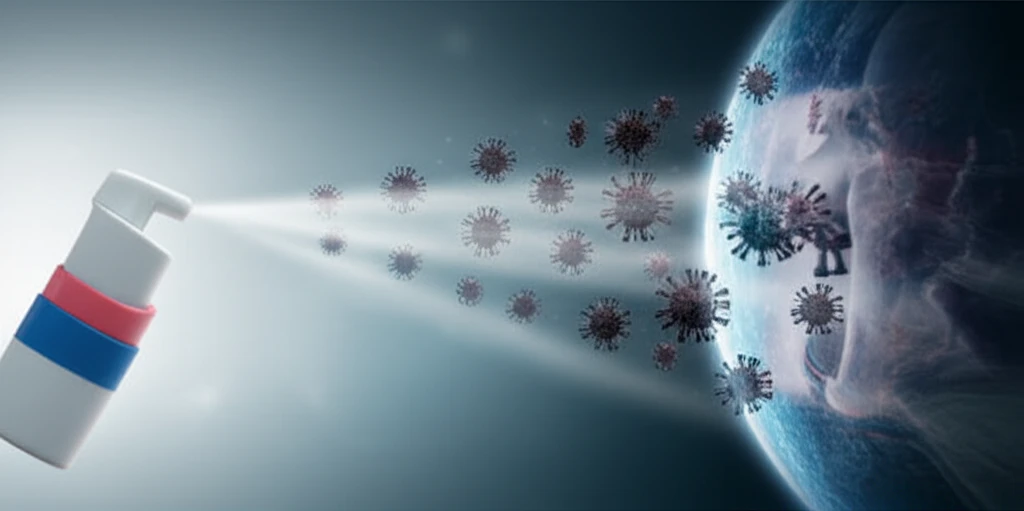
Nasal spray emitting a shield of light, symbolizing cervical cancer prevention.

Can a Nasal Vaccine Prevent Cervical Cancer? The Surprising Role of Flagellin

"New research explores how a flagellin-adjuvanted peptide vaccine, delivered through the nose, could enhance the body's immune response and prevent tumor development in HPV-related cancers."


Cervical cancer remains a significant threat to women's health worldwide, with human papillomavirus (HPV) identified as a primary cause. Current strategies focus on preventative vaccines that stimulate the production of neutralizing antibodies. However, mucosal vaccines, which target the immune system at the point of entry for many pathogens, often struggle to elicit a strong enough response.

Researchers are exploring new approaches to enhance the effectiveness of mucosal vaccines. One promising avenue involves the use of adjuvants—substances that boost the immune response. Flagellin, a protein derived from bacteria, has shown potential as a powerful adjuvant due to its ability to activate Toll-like receptor 5 (TLR5), a key component of the immune system.

A recent study investigated whether flagellin could enhance the efficacy of a peptide-based HPV vaccine delivered through the nose. The results offer exciting insights into the potential of this approach for preventing cervical cancer. This article breaks down the study's findings, explaining how a flagellin-adjuvanted vaccine can stimulate a robust immune response and protect against tumor development in a mouse model.

How Does a Flagellin-Adjuvanted Nasal Vaccine Work?

Nasal spray emitting a shield of light, symbolizing cervical cancer prevention.

The study, published in Clinical and Experimental Vaccine Research, details how researchers administered a vaccine containing HPV-16 E6 and E7 peptides (short protein fragments associated with cervical cancer) along with flagellin to mice through the nose. The mice received two doses of the vaccine, with researchers then analyzing their immune responses and monitoring tumor growth after implantation of TC-1 cells (cells bearing E6/E7 antigens).

The researchers observed a significant enhancement of the immune response in mice that received the flagellin-adjuvanted vaccine. Specifically, the vaccine:

  • Significantly increased cytotoxic T lymphocyte (CTL) activity, meaning the immune system was better equipped to kill cancer cells.
  • Enhanced the production of interferon-γ (IFN-γ), a signaling molecule that plays a crucial role in activating the immune system and fighting off infections.
  • Provided excellent protection against TC-1 tumor challenge, resulting in high survival rates in the vaccinated animals.
These findings suggest that flagellin acts as a potent mucosal adjuvant, boosting the immune response to the E6/E7 peptides and leading to effective tumor control. The nasal route of administration is particularly appealing because it targets the mucosal immune system, which is the first line of defense against many pathogens, including HPV.

The Future of HPV Vaccines: A Nasal Spray?

The results of this study offer a promising glimpse into the future of HPV vaccines. The use of flagellin as a mucosal adjuvant, combined with nasal administration, could lead to more effective and accessible vaccines for preventing cervical cancer. This is particularly important in developing countries, where cervical cancer rates are high and access to healthcare is limited.

While these findings are encouraging, it's important to note that this study was conducted in mice. Further research is needed to confirm these results in humans and to evaluate the safety and efficacy of flagellin-adjuvanted nasal HPV vaccines in clinical trials.

If successful, this innovative approach could revolutionize cervical cancer prevention, offering a needle-free, easily administered vaccine that harnesses the power of the mucosal immune system. The potential impact on women's health worldwide is significant, paving the way for a future where cervical cancer is a preventable disease.

About this Article -

This article was crafted using a human-AI hybrid and collaborative approach. AI assisted our team with initial drafting, research insights, identifying key questions, and image generation. Our human editors guided topic selection, defined the angle, structured the content, ensured factual accuracy and relevance, refined the tone, and conducted thorough editing to deliver helpful, high-quality information.See our About page for more information.

This article is based on research published under:

DOI-LINK: 10.7774/cevr.2013.2.2.128, Alternate LINK

Title: Intranasal Immunization With A Flagellin-Adjuvanted Peptide Anticancer Vaccine Prevents Tumor Development By Enhancing Specific Cytotoxic T Lymphocyte Response In A Mouse Model

Subject: Infectious Diseases

Journal: Clinical and Experimental Vaccine Research

Publisher: Korean Vaccine Society

Authors: Chung Truong Nguyen, Seol Hee Hong, Thuan Trong Ung, Vivek Verma, Soo Young Kim, Joon Haeng Rhee, Shee Eun Lee

Published: 2013-01-01

Everything You Need To Know

1

How does a flagellin-adjuvanted nasal vaccine work?

The HPV vaccine uses a flagellin-adjuvanted peptide, given through the nose. This approach targets the mucosal immune system, which is the body's first line of defense. The vaccine contains HPV-16 E6 and E7 peptides and flagellin. This combination significantly boosts the immune response, particularly the cytotoxic T lymphocyte (CTL) activity, enhancing the body's ability to kill cancer cells.

2

What is flagellin and why is it used in this vaccine?

Flagellin is a protein derived from bacteria. It is used as an adjuvant in the vaccine because it activates Toll-like receptor 5 (TLR5), a crucial part of the immune system. By activating TLR5, flagellin boosts the immune response to the HPV peptides, resulting in enhanced protection against tumor development. Without the flagellin, the immune response to the vaccine would not be as strong, and its effectiveness would be diminished.

3

What are cytotoxic T lymphocytes (CTLs) and what is their role in this vaccine's effectiveness?

Cytotoxic T lymphocytes (CTLs), also known as killer T cells, are a type of immune cell that can recognize and destroy cells infected with viruses or cancer cells. The flagellin-adjuvanted vaccine significantly increases CTL activity. The CTLs become more effective at identifying and eliminating cells infected with HPV or that have become cancerous. This is vital because it directly addresses the cancerous cells, preventing tumor growth and increasing survival rates.

4

Why is the nasal route of administration important for this HPV vaccine?

The nasal route is particularly appealing because it targets the mucosal immune system. This is the body's initial defense against pathogens like HPV. Mucosal vaccines aim to stimulate an immune response at the point of entry for pathogens. By administering the vaccine nasally, the immune system in the nasal passages is directly activated, leading to a more effective and targeted immune response against HPV. This approach could potentially lead to more accessible and effective vaccines.

5

What is the significance of interferon-γ (IFN-γ) in the context of this vaccine?

Interferon-γ (IFN-γ) is a signaling molecule that plays a vital role in activating the immune system and fighting infections. The flagellin-adjuvanted vaccine enhances IFN-γ production. High levels of IFN-γ signal that the immune system is effectively fighting the HPV infection or cancer. This heightened IFN-γ production is critical for controlling tumor growth and improving survival rates in vaccinated animals. It is an indicator of the immune system's robust response to the vaccine.

Newsletter Subscribe

Subscribe to get the latest articles and insights directly in your inbox.