
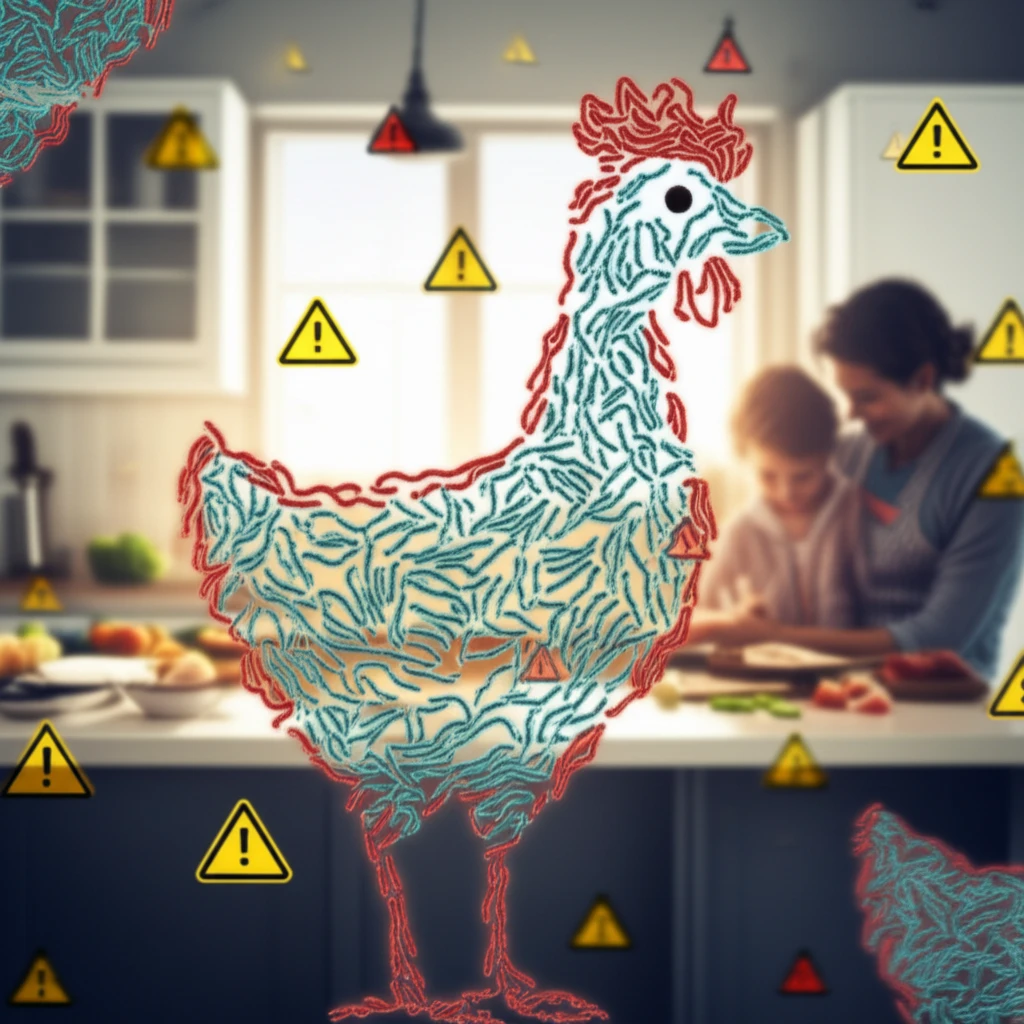
Surreal illustration of Campylobacter bacteria in a kitchen setting.

Campylobacteriosis: What You Need to Know About This Common Infection

"A deep dive into the causes, symptoms, prevention, and treatment of Campylobacter, a widespread foodborne illness affecting millions worldwide."


Campylobacteriosis is one of the most prevalent infectious diseases globally, impacting both developed and developing nations. Unlike some illnesses, it doesn't discriminate based on location or level of medical advancement. Regions in Africa, Asia, and the Middle East report endemic levels, especially among young children.

In Europe, Campylobacter infections have surpassed Salmonella as the most frequently reported cause of bacterial gastroenteritis since 2005. This highlights the increasing significance of Campylobacter as a public health concern.

This article explores the multifaceted nature of Campylobacteriosis, focusing on its causes, symptoms, and preventative measures. Learn practical strategies to minimize the risk of infection and contribute to better health outcomes for yourself and your community.

Understanding Campylobacteriosis: How It Spreads and Who Is at Risk?

Surreal illustration of Campylobacter bacteria in a kitchen setting.

Campylobacteriosis is a zoonotic disease, meaning it spreads from animals to humans. Many domestic and wild animal species carry the bacteria, acting as natural reservoirs. Poultry is a primary source of infection for humans. The bacteria are often found in poultry meat.

Infection typically occurs through:

  • Consuming undercooked poultry: This is the most common route. Make sure poultry reaches a safe internal temperature during cooking.
  • Cross-contamination: Campylobacter can spread from raw poultry to other foods or surfaces in the kitchen. Proper hygiene is crucial.
  • Contact with animals: Direct contact with infected animals or their environment can also lead to infection.
While anyone can get Campylobacteriosis, young children are particularly vulnerable. The infection is also associated with malnutrition and growth impairment, especially in communities with limited resources. It's important to note that many cases go undiagnosed or unreported, meaning the true impact is likely far greater than official statistics suggest.

Protecting Yourself and Your Community

Combating Campylobacteriosis requires a multi-pronged approach, focusing on improved hygiene, food safety practices, and responsible antibiotic use. Effective measures include:

<ul><li>Thoroughly cooking poultry: Ensure poultry reaches a safe internal temperature to kill Campylobacter bacteria.</li><li>Preventing cross-contamination: Use separate cutting boards and utensils for raw poultry and other foods. Wash hands thoroughly after handling raw poultry.</li><li>Practicing good hygiene: Regularly wash hands with soap and water, especially after contact with animals or raw food.</li></ul>

By taking these precautions, you can significantly reduce your risk of contracting Campylobacteriosis and contribute to a healthier community. Further research and collaboration between health services, veterinarians, farmers, and consumers are essential to effectively manage this global health challenge.

About this Article -

This article was crafted using a human-AI hybrid and collaborative approach. AI assisted our team with initial drafting, research insights, identifying key questions, and image generation. Our human editors guided topic selection, defined the angle, structured the content, ensured factual accuracy and relevance, refined the tone, and conducted thorough editing to deliver helpful, high-quality information.See our About page for more information.

This article is based on research published under:

DOI-LINK: 10.4172/2327-5073.1000308, Alternate LINK

Title: A Cosmopolitan One Health Issue: Campylobacteriosis

Subject: General Medicine

Journal: Clinical Microbiology: Open Access

Publisher: OMICS Publishing Group

Authors: Massimo Giangaspero

Published: 2018-01-01

Everything You Need To Know

1

What are the main ways someone can get infected with Campylobacteriosis, and who is most at risk?

Campylobacteriosis is primarily contracted by consuming undercooked poultry. Cross-contamination from raw poultry to other foods or surfaces in the kitchen and direct contact with infected animals or their environment can also lead to infection. Young children are particularly vulnerable to Campylobacteriosis, and the infection is associated with malnutrition and growth impairment, especially in communities with limited resources.

2

Why is Campylobacteriosis considered a zoonotic disease, and what animal is most commonly linked to spreading it?

Campylobacteriosis is considered a zoonotic disease because it spreads from animals to humans. Many domestic and wild animal species carry the bacteria, acting as natural reservoirs. Poultry is identified as a primary source of infection for humans, as the bacteria are commonly found in poultry meat.

3

How has Campylobacter infection changed compared to other infections, like Salmonella, in recent years, and why is this significant?

In Europe, Campylobacter infections have surpassed Salmonella as the most frequently reported cause of bacterial gastroenteritis since 2005. The increasing significance of Campylobacter as a public health concern requires a multifaceted approach, focusing on improved hygiene and food safety practices.

4

What steps can be taken to protect yourself and the community from Campylobacteriosis?

Combating Campylobacteriosis requires a multi-pronged approach, focusing on improved hygiene, food safety practices, and responsible antibiotic use. By adhering to food safety guidelines, maintaining strict hygiene practices, and using antibiotics responsibly can minimize the risk of infection and contribute to better health outcomes.

5

Where is Campylobacteriosis most common globally, and how does its impact vary across different regions?

Campylobacteriosis is a prevalent infectious disease globally, impacting both developed and developing nations. Regions in Africa, Asia, and the Middle East report endemic levels, especially among young children. In Europe, Campylobacter infections have surpassed Salmonella as the most frequently reported cause of bacterial gastroenteritis since 2005. This illustrates that Campylobacteriosis does not discriminate based on location or level of medical advancement.

Newsletter Subscribe

Subscribe to get the latest articles and insights directly in your inbox.