
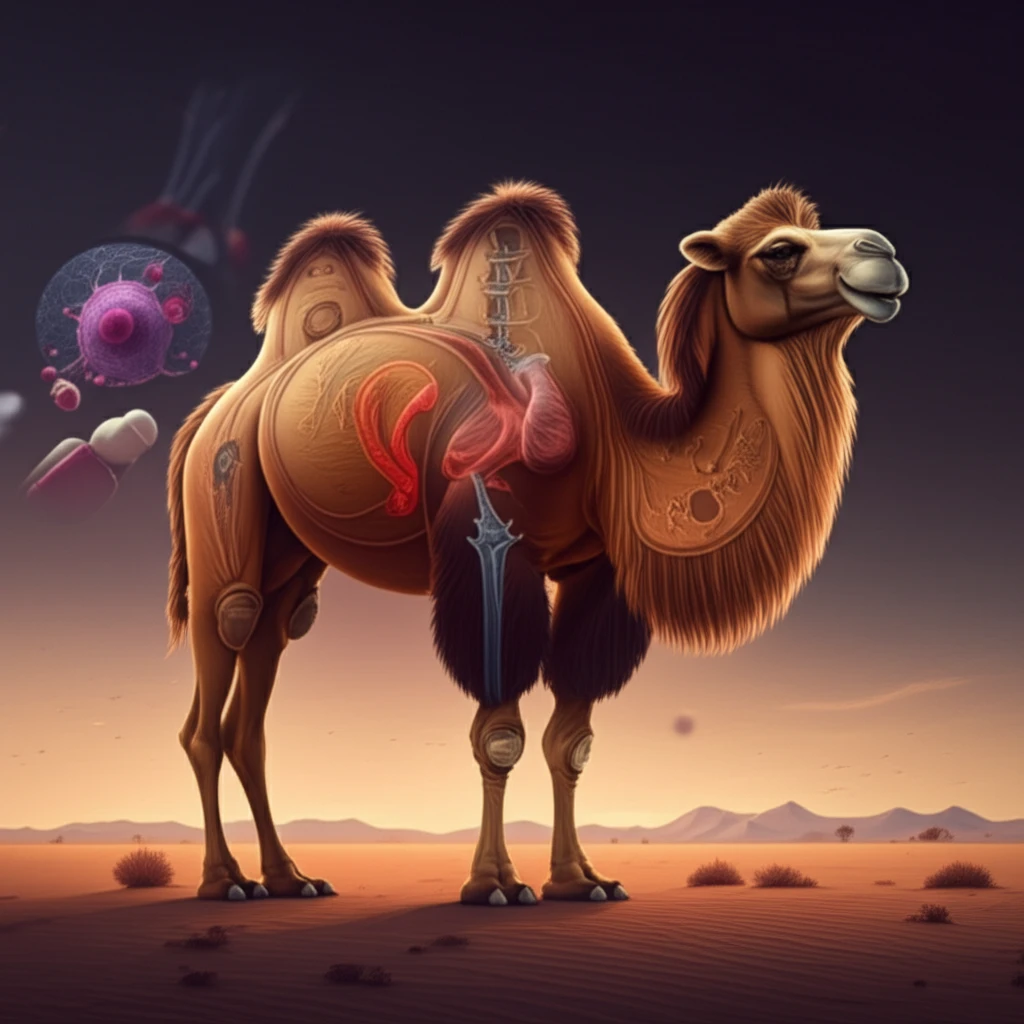
Camel Milk's Cancer-Fighting Secrets: New Research Reveals Promising Anti-Cancer Properties

"Could a traditional remedy hold the key to fighting esophageal cancer? New research reveals the potential of camel milk in combating this aggressive disease."
Esophageal cancer, a disease marked by its aggressive nature and often late diagnosis, presents a formidable challenge to global health. With survival rates remaining stubbornly low, the need for innovative treatments is critical. Recent research has shed light on a potential ally in this fight: camel milk. Historically recognized for its medicinal properties, camel milk is now under scientific scrutiny for its potential to combat cancer.
This study delves into the anti-cancer mechanisms of TR35, an active fraction extracted from Xinjiang Bactrian camel milk. The findings reveal that TR35 can significantly inhibit the growth of esophageal carcinoma cells and induce apoptosis—a form of programmed cell death—offering hope for new therapeutic strategies. The research explored the underlying molecular mechanisms, suggesting the role of specific proteins in tumor growth inhibition.
This exploration not only highlights the potential of camel milk as a cancer treatment but also paves the way for a deeper understanding of how dietary components can influence cancer. This article unpacks the complexities of the research, explores the science behind the findings, and discusses what these discoveries mean for the future of cancer treatment and patient care.
The Science Behind TR35: How Camel Milk Fights Cancer
The study's core revolves around TR35, a specific fraction isolated from Bactrian camel milk. Researchers investigated its impact on Eca109 cells, a line of human esophageal cancer cells. The results were striking: TR35 effectively curbed the proliferation of these cancer cells, demonstrating a dose-dependent effect. This means that as the concentration of TR35 increased, the inhibition of cancer cell growth became more pronounced. The study went further, examining the effect of TR35 in vivo, by testing on mice, where it was found to reduce tumor growth.
- Cell Growth Inhibition: TR35 effectively inhibits the growth and proliferation of Eca109 cells, showcasing a dose-dependent response.
- Apoptosis Induction: Treatment with TR35 triggers apoptosis, a programmed cell death, in cancer cells.
- Molecular Mechanism: RNA and protein analysis reveal the downregulation of specific proteins as a factor in tumor growth inhibition.
- In Vivo Success: The research shows that TR35 can also inhibit the growth of xenografted tumors in mice, without causing any loss of body weight.
Implications and Future Directions for Cancer Treatment
This groundbreaking research on TR35 highlights the potential of camel milk in the fight against esophageal cancer. The findings suggest that certain dietary constituents may have a role in cancer prevention. Future studies might examine the identified proteins to pinpoint their functions and how to target them with drugs. The research provides a strong foundation for more exploration of this traditional remedy. The team’s discoveries opens doors to additional studies on camel milk and esophageal cancer. Further research on TR35 could lead to new treatments and strategies for cancer prevention and care. The goal is to improve outcomes for those affected by this difficult disease. The study offers a hopeful glimpse into a future where natural remedies and modern science work together to combat cancer.