
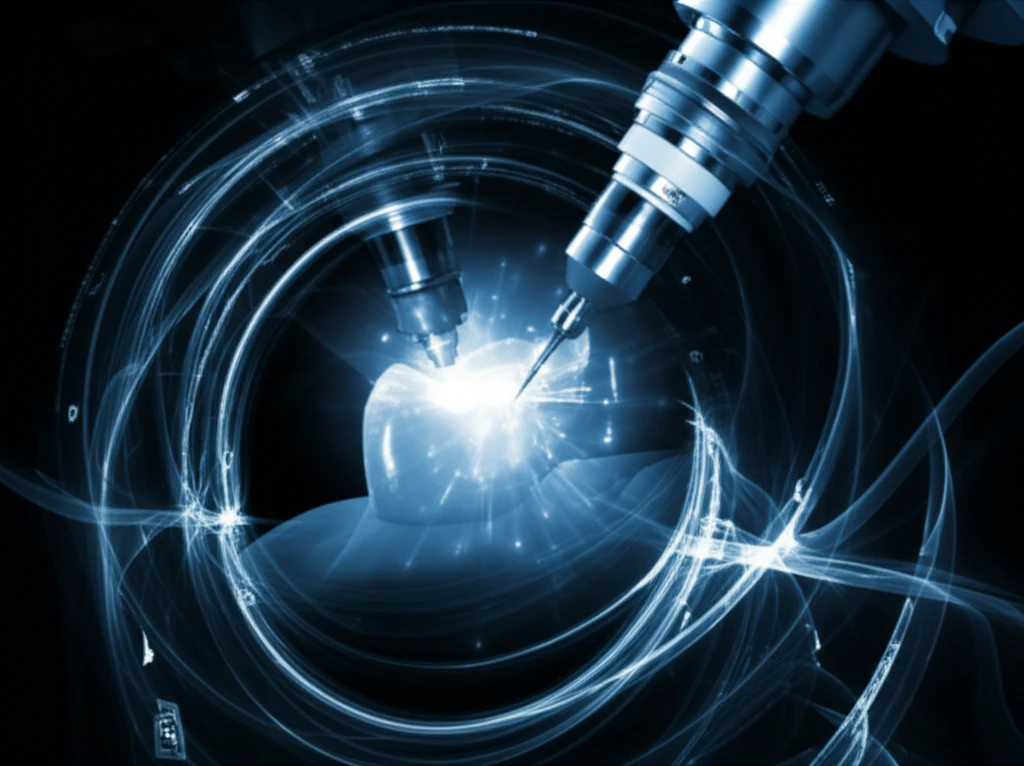
CAD/CAM machine milling dental crown

CAD/CAM Crowns: Are They the Future of Dental Restorations?

"Explore how CAD/CAM technology is revolutionizing implant-supported crowns, offering improved accuracy and fit compared to traditional methods."


For those dealing with missing teeth, dental implants provide a strong and lasting solution that closely mimics the feel and function of natural teeth. The success of dental implants relies heavily on how well the replacement crown fits, impacting both the health of the surrounding tissues and the longevity of the implant itself.

Traditionally, creating these implant-supported crowns involves meticulous manual processes, which can sometimes lead to imperfections in fit. A poorly fitted crown can cause a host of problems, including inflammation, bone loss, and even implant failure. As such, dentists and researchers are constantly seeking ways to enhance the precision of dental restorations.

Enter CAD/CAM technology, a game-changing innovation that leverages computer-aided design and manufacturing to fabricate dental crowns. This technology promises to deliver restorations with unparalleled accuracy, potentially minimizing the risks associated with ill-fitting crowns. This article delves into the world of CAD/CAM crowns, comparing their adaptation and fit with traditional methods, and exploring their clinical implications for implant dentistry.

What Are CAD/CAM Crowns and How Do They Work?

CAD/CAM machine milling dental crown

CAD/CAM, which stands for Computer-Aided Design and Computer-Aided Manufacturing, integrates digital technology into the creation of dental restorations. Instead of relying on manual techniques, CAD/CAM systems use sophisticated software to design and mill crowns with incredible precision.

Here’s a breakdown of the CAD/CAM process:

  • Digital Impression: The process begins with capturing a digital impression of the prepared tooth or implant site, often using an intraoral scanner. This eliminates the need for traditional impression materials, making the experience more comfortable for the patient.
  • Crown Design: The digital impression is then uploaded to CAD software, where a dentist or technician designs the crown. The software allows for precise control over the crown’s shape, size, and contours, ensuring an optimal fit and aesthetic appearance.
  • Manufacturing: Once the design is finalized, it’s sent to a CAM (Computer-Aided Manufacturing) machine, which uses the digital blueprint to mill the crown from a solid block of restorative material, such as ceramic or composite resin.
  • Finishing Touches: The milled crown is then refined, polished, and customized to match the patient’s natural tooth color.
The result is a highly accurate and customized dental crown, created with efficiency and precision.

The Future of Dental Restorations?

CAD/CAM technology is revolutionizing implant dentistry, offering a pathway to more accurate, efficient, and predictable crown restorations. As the technology continues to advance, it promises to enhance the quality of care and improve the long-term success of dental implants, ensuring a future where everyone can enjoy a confident and healthy smile.

About this Article -

This article was crafted using a human-AI hybrid and collaborative approach. AI assisted our team with initial drafting, research insights, identifying key questions, and image generation. Our human editors guided topic selection, defined the angle, structured the content, ensured factual accuracy and relevance, refined the tone, and conducted thorough editing to deliver helpful, high-quality information.See our About page for more information.

Everything You Need To Know

1

What are CAD/CAM crowns, and how do they differ from traditional dental crowns in terms of creation?

CAD/CAM crowns (Computer-Aided Design and Computer-Aided Manufacturing) are dental restorations created using digital technology. Unlike traditional methods that rely on manual processes, CAD/CAM technology uses software to design and milling machines to fabricate crowns with high precision. This involves a digital impression, crown design using CAD software, manufacturing via CAM machine, and finishing touches, resulting in a highly accurate and customized dental crown. Traditional crowns often involve manual impressions and fabrication, which may lead to less precise fits compared to CAD/CAM crowns.

2

How does the use of CAD/CAM technology improve the accuracy of implant-supported crowns, and what are the potential benefits of this enhanced precision?

CAD/CAM technology enhances the accuracy of implant-supported crowns by using digital impressions and computer-aided design to create crowns with precise shape, size, and contours. This precision minimizes the risk of ill-fitting crowns, which can cause inflammation, bone loss, and implant failure. The benefits of enhanced precision include improved health of surrounding tissues, increased longevity of the dental implant, and a more comfortable fit for the patient.

3

Can you walk me through the step-by-step process of creating a CAD/CAM crown, highlighting the technology used at each stage?

The CAD/CAM process involves several key steps. First, a digital impression of the prepared tooth or implant site is captured using an intraoral scanner, replacing traditional impression materials. Next, the digital impression is uploaded to CAD software, where a dentist or technician designs the crown with precise control over its shape and size. Once the design is finalized, it's sent to a CAM machine, which mills the crown from a solid block of restorative material, such as ceramic or composite resin. Finally, the milled crown is refined, polished, and customized to match the patient’s natural tooth color. This entire process integrates digital technology to ensure high accuracy and customization.

4

What are the clinical implications of using CAD/CAM crowns in implant dentistry, and how might this technology impact the long-term success of dental implants?

The clinical implications of using CAD/CAM crowns in implant dentistry are significant. The enhanced accuracy and fit of CAD/CAM crowns can reduce the risk of complications such as inflammation, bone loss, and implant failure. This technology promises to improve the long-term success of dental implants by ensuring better integration with surrounding tissues and a more stable restoration. As CAD/CAM technology advances, it is expected to enhance the quality of care and predictability of outcomes in implant dentistry.

5

Beyond accuracy, what other advantages do CAD/CAM crowns offer compared to traditional methods, particularly in terms of patient comfort and the materials used?

Besides accuracy, CAD/CAM crowns offer several other advantages. The digital impression process eliminates the need for traditional impression materials, enhancing patient comfort. CAD/CAM technology also allows for the use of various restorative materials, such as ceramic or composite resin, which can be selected based on the patient's specific needs and aesthetic preferences. The efficiency and precision of CAD/CAM systems can also reduce chair time and the number of appointments required, further improving the patient experience. However, the use of specific materials like zirconia or lithium disilicate and their unique properties in CAD/CAM restorations are not detailed.

Newsletter Subscribe

Subscribe to get the latest articles and insights directly in your inbox.