
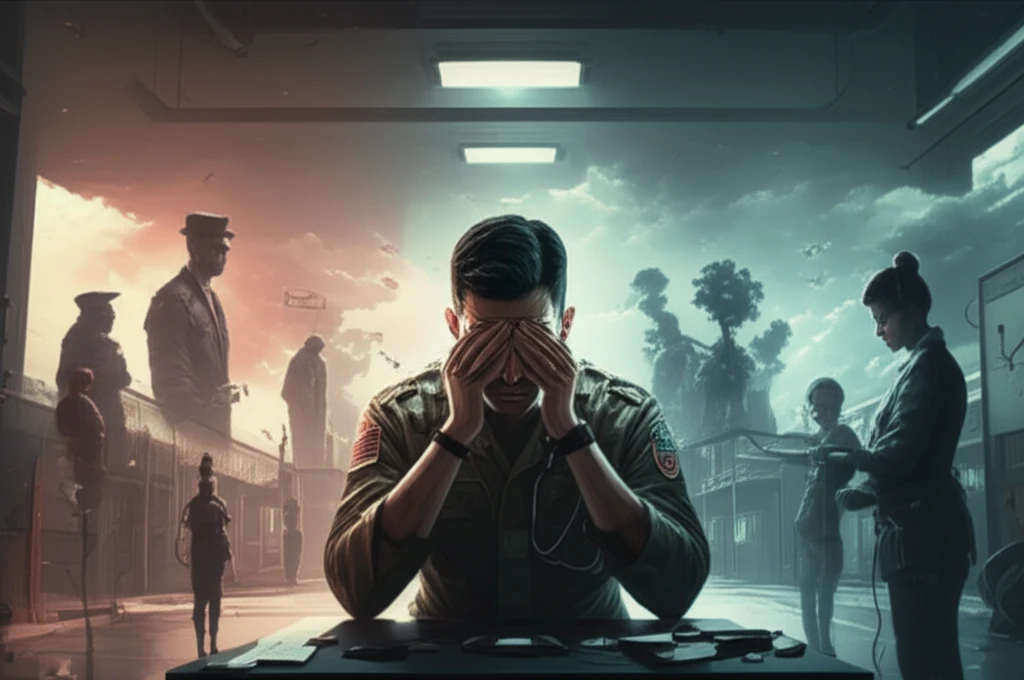
Burnout in Military Healthcare: Are Our Caregivers at Risk?

"Explore the hidden challenges faced by military mental health providers and discover practical strategies to combat burnout."
The demands on military mental health providers have surged due to ongoing operations like Operation Enduring Freedom and Operation Iraqi Freedom, leading to increased mental health disorders among service members. This surge has drawn attention to the conditions affecting those providing care, particularly burnout and compassion fatigue, which are common outcomes of occupational stress.
Burnout, characterized by physical and mental exhaustion, negative self-perception, and cynicism toward clients, is a significant concern in high-stress professions. While burnout has been extensively studied across various health settings, its specific impact on military mental health providers remains less understood. It is hypothesized that military providers face a higher burnout risk due to the prevalence of traumatic stress disorders among their patients.
This article dives into a study aimed at exploring burnout among mental health providers at U.S. military treatment facilities. It seeks to identify personal and occupational factors influencing burnout levels. The goal is to inform the development of programs that effectively prevent burnout in both military and civilian settings, ultimately enhancing the well-being of those who dedicate their careers to supporting our service members.
What Factors Contribute to Burnout Among Military Mental Health Providers?
A study published in Military Medicine examined the factors contributing to burnout among mental health providers in military settings. The research involved 97 participants from Naval Medical Center San Diego (NMCSD) and Marine Corps Base Camp Pendleton (CP). These individuals completed surveys assessing demographics, work-related measures, and burnout levels using the Maslach Burnout Inventory (MBI).
- Workload: Working more hours and managing larger patient caseloads significantly increased burnout scores.
- Patient Demographics: A higher percentage of patients with personality disorders correlated with increased burnout.
- Gender: Female providers reported higher burnout levels than their male counterparts.
- Occupation: Psychiatrists were more prone to burnout compared to other mental health professionals.
- Lack of Support: Fewer confidants at work contributed to higher burnout scores.
- Experience: More years of clinical experience were associated with lower burnout.
- Patient Type: A greater percentage of patients with traumatic brain injuries (TBI) was linked to lower burnout scores.
- Occupation: Psychologists reported lower burnout levels.
What Can Be Done to Support Our Military Mental Health Providers?
The findings of this study suggest that burnout levels among military mental health providers are comparable to those in civilian settings but can be influenced by specific institutional risk factors. Interventions targeting these factors may alleviate burnout and improve the well-being of providers. Some potential strategies include: