
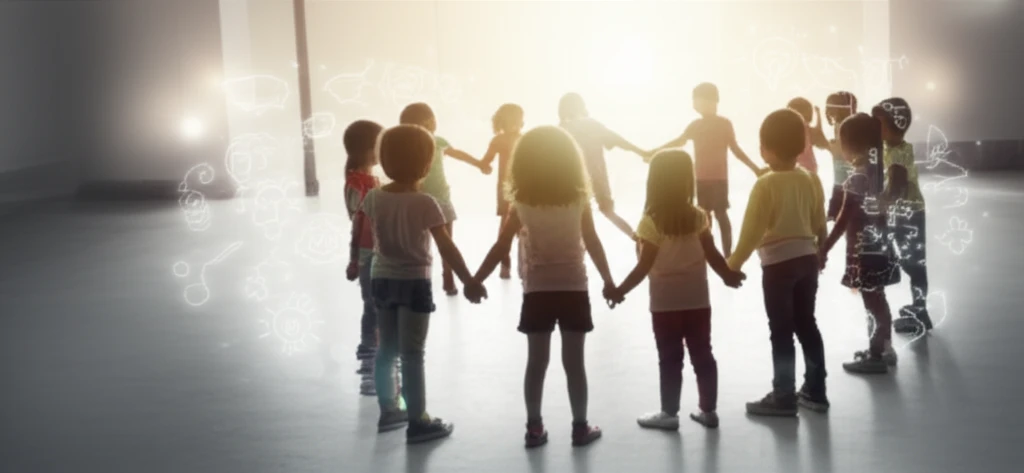
Diverse children holding hands, symbolizing community and support.

Building Stronger Communities: How Cultural Partnerships Can Protect Children's Well-Being

"Discover how integrating social and cultural strategies can create a supportive environment, safeguarding children from adversity and promoting their healthy development."


In today's rapidly changing world, ensuring the well-being of children is more critical than ever. While individual efforts are valuable, a community-centered approach that leverages the strengths of social and cultural partnerships offers a more sustainable and impactful solution. These partnerships weave a safety net of support, helping to protect children from various challenges and promoting their healthy development.

Social and cultural partnerships bring together diverse organizations and individuals, including schools, community centers, arts organizations, healthcare providers, and families. By combining their resources, expertise, and perspectives, these partnerships can create comprehensive programs that address the multifaceted needs of children. They foster environments where children feel safe, supported, and empowered to thrive.

This article delves into the importance of social and cultural partnerships in preventing children's ill-being. It highlights practical strategies, addresses common challenges, and provides actionable steps for building stronger, more supportive communities. Discover how you can contribute to creating a brighter future for our children through collaborative community efforts.

Why Social and Cultural Partnerships Matter for Children's Well-Being

Diverse children holding hands, symbolizing community and support.

Children's well-being is a complex issue influenced by a variety of factors, including their family environment, access to education and healthcare, and exposure to positive social and cultural experiences. When these factors are compromised, children can experience a range of negative outcomes, such as academic difficulties, behavioral problems, and mental health issues. Social and cultural partnerships play a crucial role in addressing these challenges by creating a supportive and enriching environment for children.

These partnerships recognize that preventing children's ill-being requires a holistic approach that goes beyond addressing immediate needs. They focus on building long-term resilience by promoting positive social connections, fostering cultural understanding, and providing opportunities for personal growth. By working together, partners can create a network of support that empowers children to overcome adversity and reach their full potential.

  • Comprehensive Support: Partnerships offer a wide range of services, from academic support and mentoring to arts programs and recreational activities.
  • Early Intervention: By identifying and addressing potential problems early on, partnerships can prevent issues from escalating.
  • Community Ownership: Partnerships engage community members in the process, fostering a sense of ownership and responsibility for children's well-being.
  • Cultural Enrichment: Partnerships celebrate diversity and promote cultural understanding, helping children develop a strong sense of identity and belonging.
The benefits of social and cultural partnerships extend beyond individual children. They also strengthen families, build community capacity, and create a more vibrant and equitable society. By investing in these partnerships, we invest in the future of our communities.

Taking Action: Building Stronger Partnerships for Children

Creating effective social and cultural partnerships requires a collaborative effort from all stakeholders. By working together, we can build stronger communities that support the well-being of all children. The journey towards a brighter future for our children begins with a single step – let's take that step together.

About this Article -

This article was crafted using a human-AI hybrid and collaborative approach. AI assisted our team with initial drafting, research insights, identifying key questions, and image generation. Our human editors guided topic selection, defined the angle, structured the content, ensured factual accuracy and relevance, refined the tone, and conducted thorough editing to deliver helpful, high-quality information.See our About page for more information.

This article is based on research published under:

DOI-LINK: 10.17485/ijst/2016/v9i44/105470, Alternate LINK

Title: Problem Analysis Of Social And Cultural Partnership Implementation In Preventing Children’S Ill-Being

Subject: Multidisciplinary

Journal: Indian Journal of Science and Technology

Publisher: Indian Society for Education and Environment

Authors: Vladimir Vasilievich Afanasiev, Anatolievna Milkevich Oksana, Valentina Pavlovna Sergeeva, Lyubov Ivanovna Ukolova

Published: 2016-11-25

Everything You Need To Know

1

Why are social and cultural partnerships important for children's well-being?

Social and cultural partnerships are crucial because they address the multifaceted factors influencing a child's well-being, such as their family environment, access to education and healthcare, and exposure to positive social and cultural experiences. When these factors are compromised, children may face academic difficulties, behavioral problems, and mental health issues. These partnerships create a supportive and enriching environment, focusing on building long-term resilience by promoting positive social connections, cultural understanding, and opportunities for personal growth, empowering children to overcome adversity.

2

What specific benefits do social and cultural partnerships offer to children and the wider community?

Social and cultural partnerships offer several key benefits: they provide comprehensive support ranging from academic assistance and mentoring to arts programs and recreational activities. They allow for early intervention to prevent issues from escalating. They encourage community ownership by engaging members in the process, fostering responsibility for children's well-being. Also, they promote cultural enrichment by celebrating diversity and helping children develop a strong sense of identity and belonging. These partnerships also strengthen families, build community capacity, and contribute to a more vibrant and equitable society.

3

What are some practical steps for building effective social and cultural partnerships to support children?

Creating effective social and cultural partnerships requires a collaborative effort from all stakeholders, including schools, community centers, arts organizations, healthcare providers, and families. Combining resources, expertise, and perspectives is essential to create comprehensive programs addressing the multifaceted needs of children. It involves engaging community members, fostering a sense of ownership, and ensuring that initiatives promote cultural understanding and celebrate diversity.

4

How do social and cultural partnerships address the long-term well-being of children beyond immediate needs?

Social and cultural partnerships prioritize the long-term well-being of children by adopting a holistic approach that extends beyond addressing immediate needs. They focus on building resilience through positive social connections, cultural understanding, and providing opportunities for personal growth. By creating a supportive network, children are empowered to overcome adversity and reach their full potential. This contrasts with approaches that only address immediate problems without fostering the underlying skills and connections necessary for sustained well-being.

5

What role does cultural enrichment play in social and cultural partnerships, and why is it important for children's development?

Cultural enrichment plays a vital role by celebrating diversity and promoting cultural understanding. This helps children develop a strong sense of identity and belonging, which is crucial for their emotional and social development. By fostering an appreciation for different cultures, social and cultural partnerships equip children with the skills to navigate an increasingly diverse world, promoting inclusivity and understanding.

Newsletter Subscribe

Subscribe to get the latest articles and insights directly in your inbox.