
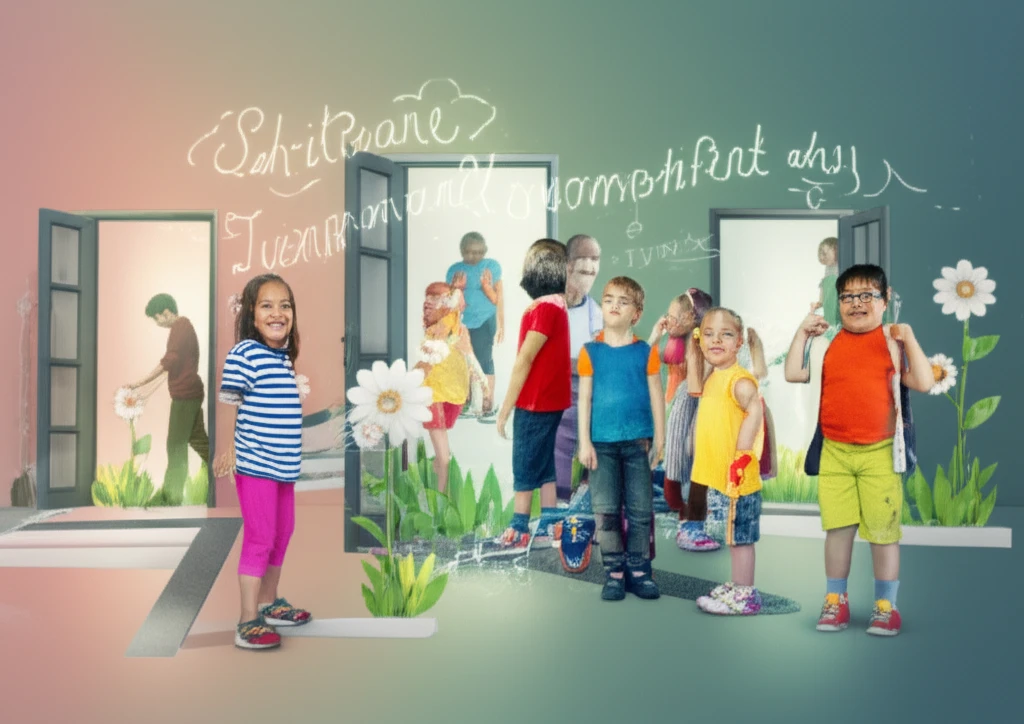
Illustration of resilient children with disabilities overcoming challenges with optimism and strength.

Building Resilience: How to Help Kids Bounce Back from Anything

"Understanding the Building Blocks of Resilience to Empower Children with Disabilities to Thrive"


Life throws curveballs at everyone, but for children, especially those with disabilities, these challenges can sometimes feel insurmountable. But what if we could equip them with a secret weapon? That weapon is resilience – the ability to bounce back from adversity and thrive. This article delves into the core components of resilience and provides a framework for fostering it in children, empowering them to face life's hurdles with confidence and strength.

Resilience isn't about being invincible; it's about developing the internal resources and coping mechanisms needed to adapt and grow in the face of difficulties. For children, this means learning to navigate the challenges of daily life, build strong relationships, and maintain a sense of hope and optimism, regardless of the obstacles they encounter. It's about understanding that setbacks are a part of life, and it's how we respond to them that truly matters.

This is particularly crucial for children with disabilities, who may face a unique set of adversities. From limitations in activities and participation to navigating transitions and dealing with future uncertainties, they need tools to cope. This article provides a guide for building resilience in children, ensuring they not only survive challenges but also discover their inner strength and potential.

The Building Blocks of Resilience: A Framework for Empowering Children

Illustration of resilient children with disabilities overcoming challenges with optimism and strength.

The foundation of resilience is built upon several key components: health-related adversities, self-capacities, self-regulatory processes, and adaptive benefits. This framework helps us understand how children navigate adversity, build inner strength, and develop a positive outlook on the future. The core of this system is the interplay between the adversities they face and their own internal resources, leading to positive growth.

This framework highlights four key self-capacities that are crucial for resilience: activity self-efficacy, the capacity to marshal resources, life situation adaptability, and the ability to envision a positive future. These self-capacities are not isolated traits but are interconnected, triggered by adversity, and influence each other. When children develop these capacities, they are better equipped to navigate challenges and thrive. These capacities are not just about coping; they are about growth and empowerment.

  • Activity Self-Efficacy: This refers to a child's belief in their ability to perform activities and achieve goals. Building self-efficacy involves providing opportunities for success and celebrating achievements, no matter how small.
  • Capacity to Marshal Resources: This involves knowing how to seek and utilize support, both formal (therapists, teachers) and informal (friends, family). It's about teaching children how to advocate for their needs and build a strong support system.
  • Life Situation Adaptability: This is the ability to adapt to changing circumstances. It includes problem-solving skills, flexibility, and the willingness to try new approaches when faced with challenges.
  • Envisioning a Positive Future: This means cultivating hope and optimism. It involves helping children set goals, dream big, and believe in their potential to achieve a fulfilling life, despite their challenges.
By focusing on these self-capacities, we equip children with the tools they need not just to survive but to flourish. The framework helps in understanding that adversity is not the end, but the beginning of a journey of self-discovery and growth. By strengthening these core capacities, we're not just helping children cope; we're empowering them to live full, meaningful lives.

Empowering the Next Generation: Building Resilience, One Step at a Time

Building resilience in children is a journey, not a destination. By understanding the core components of resilience and implementing strategies to foster self-capacities, we can empower children to face challenges with courage, adaptability, and hope. This framework offers a powerful roadmap for parents, educators, therapists, and anyone committed to helping children with disabilities not just survive, but thrive, and build a brighter future for themselves.

About this Article -

This article was crafted using a human-AI hybrid and collaborative approach. AI assisted our team with initial drafting, research insights, identifying key questions, and image generation. Our human editors guided topic selection, defined the angle, structured the content, ensured factual accuracy and relevance, refined the tone, and conducted thorough editing to deliver helpful, high-quality information.See our About page for more information.

Everything You Need To Know

1

What are the fundamental components that build resilience in children, particularly those with disabilities?

The building blocks of resilience are comprised of health-related adversities, self-capacities, self-regulatory processes, and adaptive benefits. This framework is essential for understanding how children navigate challenges and develop inner strength. It highlights the interplay between adversities they face and their internal resources. This interplay is what leads to positive growth and a brighter outlook on the future for children.

2

How does 'Activity Self-Efficacy' contribute to a child's resilience, and how can it be nurtured?

Activity Self-Efficacy refers to a child's belief in their ability to perform activities and achieve goals. It's a crucial self-capacity for building resilience because it provides children with the confidence to approach new challenges. To nurture this, it's important to provide opportunities for success and celebrate achievements, no matter how small. By experiencing success and receiving positive reinforcement, children develop a stronger belief in their abilities, making them more resilient.

3

Why is the 'Capacity to Marshal Resources' an important aspect of resilience, and how can it be developed?

The Capacity to Marshal Resources is vital for resilience because it involves knowing how to seek and utilize support, both formal (therapists, teachers) and informal (friends, family). It's about teaching children how to advocate for their needs and build a strong support system. This can be developed by teaching children to identify their needs, communicate them effectively, and seek help when needed. This self-capacity ensures children are not isolated and have a network to lean on during difficult times.

4

What role does 'Life Situation Adaptability' play in a child's ability to overcome challenges, and how can it be improved?

Life Situation Adaptability, which includes problem-solving skills, flexibility, and the willingness to try new approaches, is crucial for navigating the unexpected hurdles life throws at children. To improve this, children should be encouraged to embrace challenges as opportunities for growth and learn from their mistakes. Practicing problem-solving scenarios and encouraging flexibility in their thinking can significantly enhance this self-capacity, making them more resilient.

5

How does 'Envisioning a Positive Future' impact a child's resilience, and what are the strategies to cultivate it?

Envisioning a Positive Future, which means cultivating hope and optimism, is critical because it allows children to set goals, dream big, and believe in their potential to achieve a fulfilling life. To cultivate this, help children set realistic goals and celebrate their achievements. Discussing their aspirations, encouraging them to visualize their success, and helping them understand that their challenges do not define their future are all effective strategies. By focusing on a positive future, children are more motivated and able to overcome obstacles.

Newsletter Subscribe

Subscribe to get the latest articles and insights directly in your inbox.