
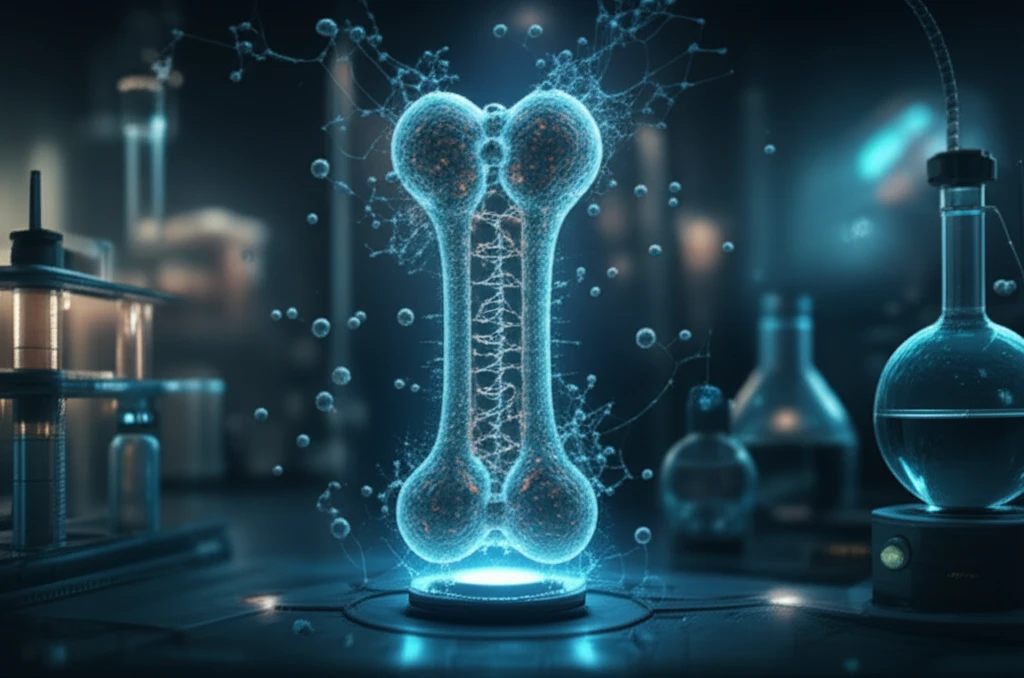
Futuristic illustration of osteoblasts building a bone structure.

Building Blocks of Bone: How Osteoblasts Can Revolutionize Tissue Engineering

"Unlock the potential of osteoblasts in bone tissue engineering for advanced regenerative therapies."


Bone loss affects millions worldwide, often resulting from trauma, disease, or age-related degeneration. While the body has a remarkable capacity for self-repair, significant bone deficits frequently demand medical intervention. Tissue engineering offers a promising solution, utilizing the body's own cells to regenerate damaged tissues.

At the heart of this innovative field are osteoblasts, specialized cells responsible for bone formation. These cells, derived from sources like bone marrow, are cultivated in the lab and then seeded onto biocompatible scaffolds. This cell-scaffold construct is designed to mimic the natural bone environment, encouraging the osteoblasts to multiply, differentiate, and ultimately rebuild lost bone.

This article explores the multifaceted role of osteoblasts in bone tissue engineering, shedding light on their characteristics, functions, and the potential they hold for revolutionizing orthopedic treatments and regenerative medicine.

What are Osteoblasts and How Do They Work?

Futuristic illustration of osteoblasts building a bone structure.

The musculoskeletal system provides the framework for our bodies, protecting vital organs and enabling movement. Bone is a dynamic tissue, constantly undergoing remodeling through the coordinated action of three key cell types: osteocytes, osteoclasts, and osteoblasts.

Osteoblasts are the architects of bone. These specialized cells synthesize and secrete the organic components of bone matrix, primarily collagen. This unmineralized matrix, called osteoid, provides the structural foundation for new bone. Osteoblasts also regulate the mineralization process, depositing calcium and phosphate crystals within the osteoid to harden the bone.

  • Osteocytes: Mature bone cells embedded within the mineralized matrix. They act as mechanosensors, detecting and responding to mechanical stimuli.
  • Osteoclasts: Large, multinucleated cells responsible for bone resorption, breaking down old or damaged bone tissue.
  • Osteoprogenitors: These are the stem cells that differentiate into osteoblasts.
Osteoblasts don't work alone. They communicate with each other and with other bone cells through a complex signaling network, ensuring balanced bone remodeling. This communication is essential for maintaining bone health and responding to changes in mechanical load or hormonal signals.

The Future of Bone Regeneration is Here

Osteoblasts stand at the forefront of bone tissue engineering, offering hope for advanced therapies to treat bone loss and accelerate healing. By harnessing the power of these remarkable cells, researchers are paving the way for innovative solutions that will transform orthopedic treatments and improve the lives of millions affected by bone-related conditions.

About this Article -

This article was crafted using a human-AI hybrid and collaborative approach. AI assisted our team with initial drafting, research insights, identifying key questions, and image generation. Our human editors guided topic selection, defined the angle, structured the content, ensured factual accuracy and relevance, refined the tone, and conducted thorough editing to deliver helpful, high-quality information.See our About page for more information.

Everything You Need To Know

1

What are osteoblasts, and how do they contribute to bone formation?

Osteoblasts are specialized cells that act as the architects of bone. They are responsible for synthesizing and secreting the organic components of the bone matrix, predominantly collagen, which forms the structural foundation. Additionally, osteoblasts regulate the mineralization process by depositing calcium and phosphate crystals within the osteoid, the unmineralized matrix, to harden the bone. These processes are crucial for bone formation and maintaining the integrity of the skeletal system.

2

How does bone tissue engineering utilize osteoblasts to address bone loss?

Bone tissue engineering utilizes osteoblasts to regenerate damaged bone by leveraging their bone-forming capabilities. Osteoblasts, often derived from sources like bone marrow, are cultivated in a laboratory setting and then seeded onto biocompatible scaffolds. These scaffolds are designed to mimic the natural bone environment, providing a structure where the osteoblasts can multiply, differentiate, and rebuild lost bone. This cell-scaffold construct is then implanted to encourage new bone formation, offering a promising solution for treating bone deficits caused by trauma, disease, or age-related degeneration.

3

Besides osteoblasts, what other cell types are involved in bone remodeling, and what are their specific functions?

Besides osteoblasts, bone remodeling involves osteocytes and osteoclasts, each playing a distinct role. Osteocytes, mature bone cells embedded within the mineralized matrix, act as mechanosensors, detecting and responding to mechanical stimuli. Osteoclasts are large, multinucleated cells responsible for bone resorption, breaking down old or damaged bone tissue. The coordinated activity of these three cell types ensures that bone is constantly remodeled, adapting to changing demands and maintaining overall bone health.

4

Can you describe the role of osteoprogenitors in the context of bone formation and how they relate to osteoblasts?

Osteoprogenitors serve as the stem cells that differentiate into osteoblasts. These cells have the potential to become osteoblasts, which are the primary cells responsible for bone formation. The differentiation process is essential because it allows for the generation of new osteoblasts from a pool of precursor cells. When there is a need to repair or rebuild bone tissue, osteoprogenitors are signaled to differentiate into osteoblasts, which then carry out the tasks of synthesizing bone matrix and regulating mineralization.

5

How does communication between osteoblasts and other bone cells contribute to maintaining bone health?

Osteoblasts don't work in isolation; they communicate extensively with other bone cells, including osteocytes and osteoclasts, through a complex signaling network. This communication is crucial for ensuring balanced bone remodeling, a dynamic process that maintains bone health. It allows the cells to coordinate their activities in response to changes in mechanical load or hormonal signals. These signaling pathways regulate processes such as bone formation and resorption, ensuring that bone is rebuilt as efficiently as it is broken down and adapts to external demands.

Newsletter Subscribe

Subscribe to get the latest articles and insights directly in your inbox.