
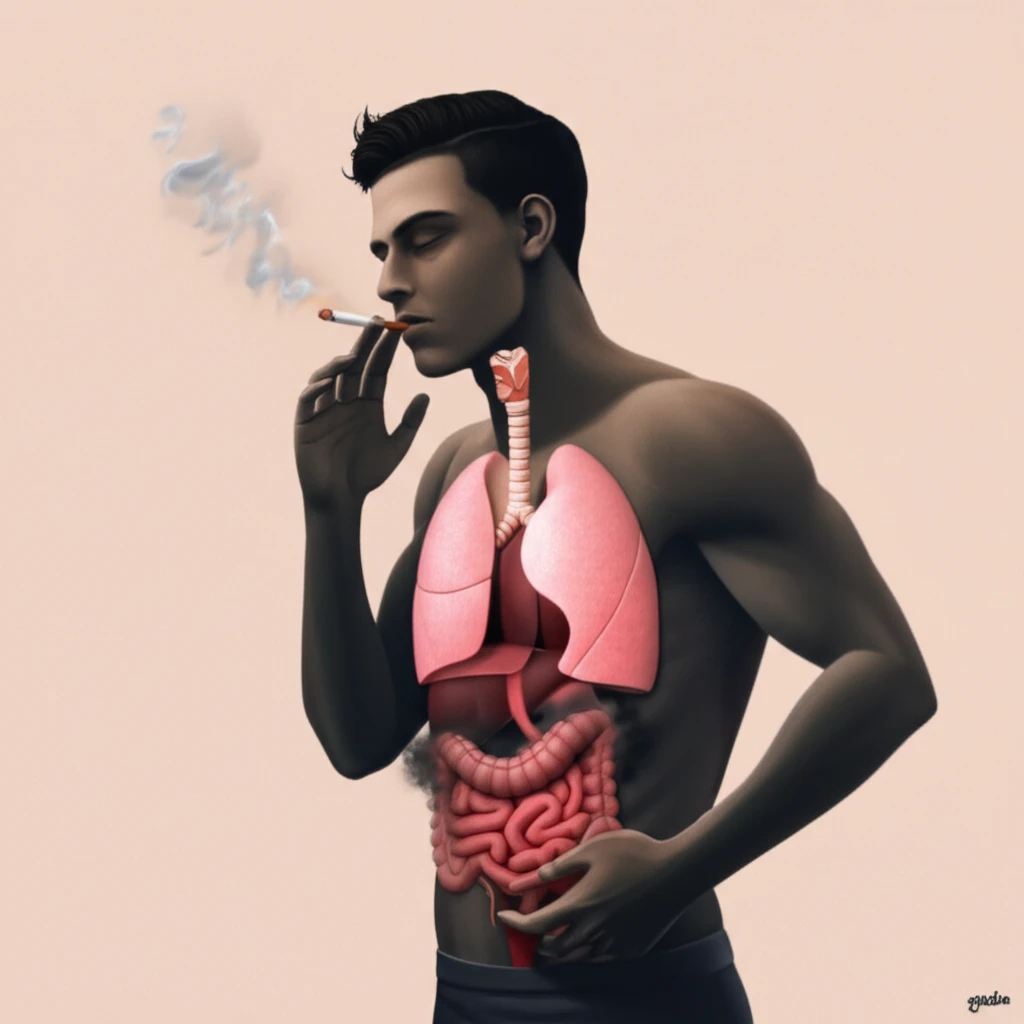
Surreal image symbolizing the link between smoking, Buerger's disease, and intestinal complications.

Buerger's Disease: When Smoking Leads to More Than Just Lung Problems

"A rare case highlights the critical link between smoking, Buerger's disease, and life-threatening intestinal complications."


Buerger's disease, also known as thromboangiitis obliterans, is a rare inflammatory condition that primarily affects the small and medium-sized arteries and veins in the arms and legs. What sets it apart from other vascular diseases is its strong association with tobacco use; it predominantly strikes young men with a history of heavy smoking.

While Buerger's disease is commonly associated with limb ischemia, leading to pain, ulcers, and even amputation, its impact can extend to other parts of the body. In extremely rare cases, it can affect the arteries supplying the digestive system, leading to severe and potentially fatal complications.

This article delves into a case report highlighting the dangers of Buerger's disease when it manifests in the mesenteric arteries, which supply blood to the intestines. This unusual presentation underscores the critical need for awareness among both smokers and healthcare professionals.

A Smoker's Gut-Wrenching Ordeal: When Buerger's Disease Attacks the Intestines

Surreal image symbolizing the link between smoking, Buerger's disease, and intestinal complications.

A 37-year-old man, a long-time smoker, was admitted to the emergency room with severe abdominal pain and vomiting. His medical history revealed that he had been diagnosed with Buerger's disease a year prior, following complaints of leg pain and gangrene in one of his toes. Despite undergoing toe amputation and receiving treatment, he had been lost to follow-up.

Upon examination, he presented with a high fever, rapid heart rate, and signs of peritonitis, an inflammation of the abdominal lining. Tests revealed a severely compromised blood supply to his intestines. A CT scan confirmed a blockage in the superior mesenteric artery, the main vessel supplying blood to the intestines. This blockage was attributed to a thrombus, or blood clot, stemming from his Buerger's disease.

To better understand Buerger's Disease and its diagnostic parameters, here are the Shionoya's criteria:
  • History of tobacco use
  • Onset of symptoms before age 50
  • Infrapopliteal arterial occlusions
  • Upper limb involvement or migratory phlebitis
  • Exclusion of atherosclerotic risk factors other than smoking.
Faced with a life-threatening situation, surgeons performed an emergency laparotomy, an operation to explore the abdomen. They discovered widespread peritonitis and extensive damage to the small intestine, with multiple perforations. A significant portion of the small intestine was surgically removed, and the patient was placed in intensive care. Unfortunately, due to the severity of the damage and the delay in treatment, he passed away two days later.

A Wake-Up Call for Smokers: Buerger's Disease Can Affect More Than Just Your Limbs

This case serves as a stark reminder of the devastating consequences of smoking and the importance of early diagnosis and management of Buerger's disease. While the disease primarily affects the limbs, this rare instance highlights its potential to impact the digestive system, leading to life-threatening complications. For smokers experiencing symptoms of Buerger's disease, such as pain or numbness in the extremities, seeking immediate medical attention is crucial. Quitting smoking remains the cornerstone of treatment, and early intervention can significantly improve outcomes and prevent irreversible damage.

About this Article -

This article was crafted using a human-AI hybrid and collaborative approach. AI assisted our team with initial drafting, research insights, identifying key questions, and image generation. Our human editors guided topic selection, defined the angle, structured the content, ensured factual accuracy and relevance, refined the tone, and conducted thorough editing to deliver helpful, high-quality information.See our About page for more information.

This article is based on research published under:

DOI-LINK: 10.11604/pamj.2014.19.322.5718, Alternate LINK

Title: Grave Infarctus Mésentérique Par Occlusion Artérielle Mésentérique Supérieure Chez Un Patient Atteint De La Maladie De Buerger

Subject: General Medicine

Journal: Pan African Medical Journal

Publisher: Pan African Medical Journal

Authors: Moulay Ibrahim Ratbi, Ghislain Yves Abissegue, Mohamed Tarchouli, Mohammed Tariq Tajedine

Published: 2014-01-01

Everything You Need To Know

1

What is Buerger's disease, and what parts of the body does it affect?

Buerger's disease, also known as thromboangiitis obliterans, is a rare inflammatory condition affecting the small and medium-sized arteries and veins, particularly in the arms and legs. It is strongly associated with tobacco use, predominantly affecting young men with a history of heavy smoking. It's important to note that this disease can lead to limb ischemia, which may cause pain, ulcers, and even require amputation. In rare cases, it can affect arteries supplying the digestive system, leading to severe complications, as demonstrated by the described case.

2

Why is Buerger's disease important to understand from the provided information?

The significance of Buerger's disease in the context of this information lies in its severe health risks. The disease's primary link to smoking makes it particularly dangerous, especially among smokers. Its ability to cause limb ischemia can severely impact quality of life. More importantly, its potential to impact the digestive system, as highlighted, demonstrates the need for awareness. This case shows the need for early diagnosis and management is critical to prevent life-threatening outcomes.

3

What are the potential implications of having Buerger's disease?

The implications of Buerger's disease are quite serious, mainly because of the impact it has on the patient. The disease often causes limb ischemia, potentially leading to pain, ulcers, and the need for amputation. This can profoundly affect a person's mobility and overall well-being. Moreover, in rare instances, the disease can affect the arteries that supply the digestive system, potentially leading to critical conditions like peritonitis, intestinal damage, and even death. This underlines the importance of early intervention, including quitting smoking and seeking prompt medical attention.

4

What are the Shionoya's criteria, and why are they important?

The Shionoya's criteria are a set of diagnostic parameters used to identify Buerger's disease. They include a history of tobacco use, the onset of symptoms before age 50, the presence of infrapopliteal arterial occlusions, upper limb involvement or migratory phlebitis, and the exclusion of atherosclerotic risk factors other than smoking. These criteria help healthcare professionals confirm the diagnosis and distinguish Buerger's disease from other vascular conditions, guiding appropriate treatment strategies and management of the disease.

5

What should smokers do if they suspect they might have Buerger's disease?

If you're a smoker and experience symptoms of Buerger's disease, such as pain or numbness in your extremities, seeking immediate medical attention is crucial. This is because Buerger's disease can lead to severe health issues, including limb ischemia and, in rare cases, life-threatening complications affecting the digestive system. Early diagnosis allows for timely intervention, which may include quitting smoking and other treatments that can significantly improve outcomes and prevent further damage.

Newsletter Subscribe

Subscribe to get the latest articles and insights directly in your inbox.