
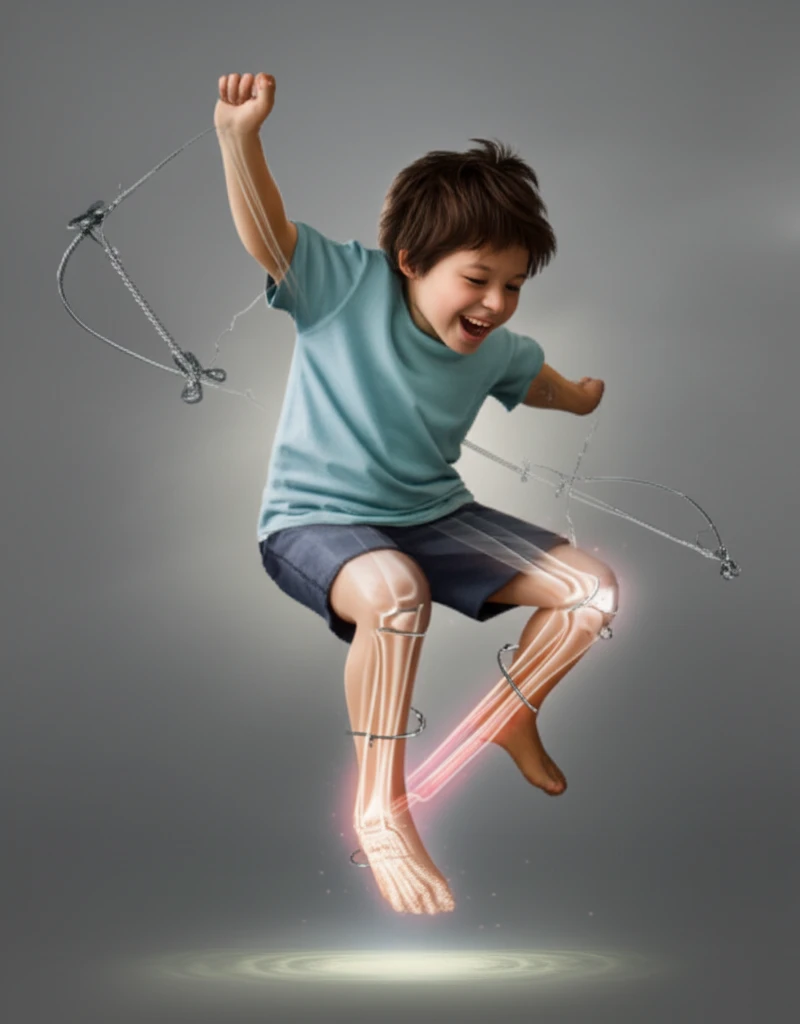
Child playing with healed wrist fracture, palmar approach recovery

Broken Bones to Back on the Playground: The Ultimate Guide to Children's Radius Fracture Recovery

"Discover the innovative palmar approach for treating distal radius fractures in children, ensuring quicker recovery and minimal complications."


Kids will be kids, and sometimes that means tumbles and falls. A common result of these childhood adventures is a distal radius fracture, a break in the wrist area. While most of these fractures heal without complications, some require more than just a simple cast. Traditional treatments often involve manual repositioning and casting, but what happens when that's not enough?

Enter the palmar approach with Kirschner-wire (K-wire) fixation—a surgical technique revolutionizing the treatment of complex distal radius fractures in children. This method offers a more direct and effective way to stabilize the fracture, especially when soft tissue is trapped or manual repositioning has failed. Unlike traditional methods, the palmar approach focuses on the front side of the wrist, minimizing damage to the dorsal periosteum (a sensitive membrane crucial for bone healing).

This guide will walk you through everything you need to know about the palmar approach, its benefits, and what to expect during the recovery process. We'll explore how this technique ensures quicker healing, reduces the risk of complications, and gets your child back to playing and exploring with confidence.

Why Palmar Approach? The Science Behind Faster Healing

Child playing with healed wrist fracture, palmar approach recovery

The traditional method of treating distal radius fractures often involves manual repositioning followed by casting. While effective for simple fractures, this approach can fall short when dealing with more complex cases. When soft tissues get trapped within the fracture or the break is significantly displaced, manual repositioning can be difficult and potentially cause more harm.

The palmar approach offers several key advantages:

  • Precision Repositioning: The palmar approach allows surgeons to directly visualize the fracture site, ensuring accurate repositioning, especially in cases where soft tissue is trapped.
  • Minimized Tissue Damage: By accessing the fracture from the palmar side (the palm side of the wrist), surgeons can avoid disrupting the dorsal periosteum. This membrane is vital for bone healing, and preserving it leads to faster recovery.
  • Reduced Risk of Complications: The direct approach reduces the need for repeated manipulations, lowering the risk of epiphyseal injury (damage to the growth plate) and other complications.
A study published in the Chinese Journal of Traumatology highlights the effectiveness of the palmar approach. Researchers followed 30 children with distal radius extension-type fractures who underwent palmar approach surgery with K-wire fixation. The results showed that all patients experienced primary incision healing with an average recovery time of just 6 weeks. Additionally, there were no cases of nonunion, delayed union, or wrist deformity.

Empowering Your Child's Recovery

The palmar approach with K-wire fixation represents a significant advancement in treating distal radius fractures in children. By providing precise repositioning, minimizing tissue damage, and promoting faster healing, this technique ensures a smoother recovery process and a quicker return to the activities your child loves. If your child has a distal radius fracture, discuss the palmar approach with your orthopedic surgeon to determine if it's the right option for their specific needs. With the right treatment and care, your child can get back on the playground with confidence!

About this Article -

This article was crafted using a human-AI hybrid and collaborative approach. AI assisted our team with initial drafting, research insights, identifying key questions, and image generation. Our human editors guided topic selection, defined the angle, structured the content, ensured factual accuracy and relevance, refined the tone, and conducted thorough editing to deliver helpful, high-quality information.See our About page for more information.

This article is based on research published under:

DOI-LINK: 10.1016/j.cjtee.2018.08.003, Alternate LINK

Title: Palmar Approach With Kirschner-Wire Fixation In The Treatment Of Children'S Distal Radius Extension Type Fracture

Subject: Orthopedics and Sports Medicine

Journal: Chinese Journal of Traumatology

Publisher: Elsevier BV

Authors: Zu-Jie Hu, Ming Li, Xing Liu, Chuan-Kang Liu

Published: 2018-10-01

Everything You Need To Know

1

What is the palmar approach, and how does it differ from traditional methods for treating wrist fractures?

The palmar approach is a surgical technique used to treat complex distal radius fractures in children. This method involves accessing the fracture site from the palmar side of the wrist, allowing for precise repositioning of the broken bones. It's often employed when traditional methods like manual repositioning and casting are insufficient, especially when soft tissue gets trapped or the fracture is significantly displaced. This approach utilizes Kirschner-wire (K-wire) fixation to stabilize the fracture.

2

Why is the palmar approach considered important for treating distal radius fractures in children?

The palmar approach is significant because it offers several advantages over traditional methods. It allows for precision repositioning of the distal radius fracture, crucial when dealing with complex breaks or soft tissue involvement. By accessing the fracture from the palmar side, the palmar approach minimizes damage to the dorsal periosteum, which is critical for bone healing. This approach reduces the risk of complications like epiphyseal injury and promotes faster recovery compared to conventional treatments.

3

How does the palmar approach work to fix a broken wrist?

The palmar approach works by providing surgeons with direct visualization of the fracture site, which ensures accurate repositioning of the broken bones. After precise repositioning, Kirschner-wires (K-wires) are used for fixation, providing stability to the fracture. The palmar approach minimizes damage to the dorsal periosteum, which is vital for bone healing. The result is a smoother recovery process and a quicker return to the activities the child loves.

4

What are the main advantages of the palmar approach in treating distal radius fractures?

The main benefits of the palmar approach include quicker healing, reduced risk of complications, and a more precise surgical approach. The direct access to the fracture site allows for accurate repositioning of the bone, minimizing tissue damage. By avoiding disruption of the dorsal periosteum, the palmar approach promotes faster healing. Moreover, it reduces the need for repeated manipulations, lowering the risk of growth plate damage and other complications. A study showed that the average recovery time was just 6 weeks with the palmar approach.

5

What steps should be taken if a child sustains a distal radius fracture?

If a child has a distal radius fracture, it's crucial to consult with an orthopedic surgeon. The surgeon will assess the fracture's complexity and determine the most appropriate treatment. If the fracture is complex, the palmar approach with K-wire fixation might be recommended. The surgeon will explain the procedure, potential risks, and benefits, helping the parent and child make an informed decision. Post-surgery, careful monitoring and adherence to the surgeon's instructions are essential for a successful recovery and a return to normal activities.

Newsletter Subscribe

Subscribe to get the latest articles and insights directly in your inbox.