
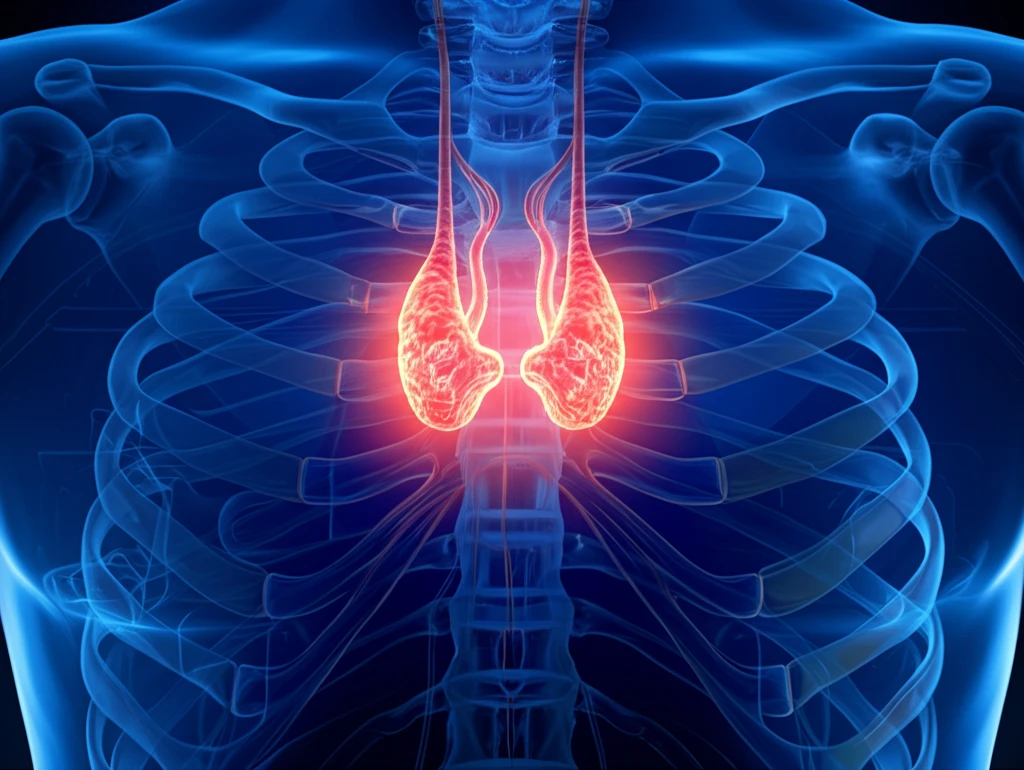
Fragile bone structure with hidden parathyroid gland, symbolizing hyperparathyroidism.

Broken Bones, Silent Thief: Could Hyperparathyroidism Be Weakening Your Bones?

"Uncover the link between primary hyperparathyroidism and unexpected fractures, and learn how early screening can safeguard your bone health."


Imagine a seemingly ordinary fall leading to extraordinary consequences: a bilateral hip fracture. This was the reality for an 84-year-old man whose case, detailed in a recent European Geriatric Medicine report, unveiled a surprising connection between bone fragility and an often overlooked endocrine disorder: primary hyperparathyroidism (PHPT). This case underscores the importance of considering underlying conditions when addressing fractures, especially in older adults.

The patient, who had a history of essential hypertension and atrial fibrillation, experienced two falls, each from his own height, resulting in hip contusions. Subsequent examination revealed bilateral subcapital fractures, necessitating admission to the Orthogeriatrics Unit for thorough evaluation and surgical intervention. What initially appeared as a consequence of aging and falls soon revealed a more complex underlying issue.

Beyond the immediate fractures, the man's geriatric assessment highlighted his independent living status and autonomous mobility, aided only by a walking stick outdoors. Cognitive function was intact, suggesting a physically driven cause for his falls. Routine osteoporosis screening, however, revealed significant abnormalities: acute renal failure, elevated calcium levels, markedly elevated parathyroid hormone (PTH), and vitamin D deficiency. These findings pointed towards primary hyperparathyroidism.

What is Primary Hyperparathyroidism (PHPT) and How Does It Weaken Bones?

Fragile bone structure with hidden parathyroid gland, symbolizing hyperparathyroidism.

Primary hyperparathyroidism (PHPT) is an endocrine disorder characterized by excessive secretion of parathyroid hormone (PTH) by one or more of the parathyroid glands. This leads to elevated calcium levels in the blood (hypercalcemia). While many individuals with PHPT may experience mild or no symptoms, the chronic elevation of calcium can have significant effects on various organs, most notably the bones and kidneys.

Here’s how PHPT silently weakens bones:

  • Increased Bone Resorption: PTH stimulates the breakdown of bone tissue (resorption) to release calcium into the bloodstream, trying to correct the calcium imbalance. Over time, this excessive bone resorption leads to decreased bone density and increased risk of fractures.
  • Disrupted Bone Remodeling: Bone is constantly being remodeled, with old bone being removed and new bone being formed. PHPT disrupts this balance, favoring bone resorption over bone formation, leading to weaker, more porous bones.
  • Cortical Bone Loss: PHPT primarily affects cortical bone, which is the dense outer layer of bone that provides strength and support. This type of bone loss is particularly detrimental to long bones like the hip, increasing the risk of fractures.
In the case of the 84-year-old man, elevated PTH levels (1912 pg/mL, far exceeding the normal range of 14.0-72.0 pg/mL) were indicative of significant parathyroid gland overactivity. Further investigation using thyroid ultrasound and 99mTc-MIBI gammagraphy identified a parathyroid adenoma (a benign tumor) on the left inferior parathyroid gland, confirming the diagnosis of PHPT. The adenoma was subsequently surgically removed.

The Takeaway: Don't Ignore the Silent Signs

This case highlights a critical lesson: fractures, especially in older adults, should prompt a thorough investigation for underlying causes like primary hyperparathyroidism. Early diagnosis and appropriate management, including surgical intervention when necessary, are crucial for preventing further bone loss, reducing fracture risk, and improving overall quality of life. Be proactive about your bone health and discuss any concerns with your doctor. Simple screening tests can make a world of difference.

About this Article -

This article was crafted using a human-AI hybrid and collaborative approach. AI assisted our team with initial drafting, research insights, identifying key questions, and image generation. Our human editors guided topic selection, defined the angle, structured the content, ensured factual accuracy and relevance, refined the tone, and conducted thorough editing to deliver helpful, high-quality information.See our About page for more information.

This article is based on research published under:

DOI-LINK: 10.1016/j.eurger.2017.07.009, Alternate LINK

Title: Bilateral Hip Fracture, First Clinical Manifestation Of Secondary Osteoporosis By Primary Hyperparathyroidism. Case Report

Subject: Geriatrics and Gerontology

Journal: European Geriatric Medicine

Publisher: Elsevier BV

Authors: A. Gamboa, E. Duaso, P. Marimón, J. Miquel, J. Gisbert, D. Grados, E. Serra-Planas, A. Romero

Published: 2017-11-01

Everything You Need To Know

1

What is primary hyperparathyroidism (PHPT), and how does it lead to bone fractures?

Primary hyperparathyroidism (PHPT) is an endocrine disorder where the parathyroid glands produce too much parathyroid hormone (PTH). This excess PTH causes increased calcium levels in the blood (hypercalcemia). While PHPT can present with few symptoms initially, the chronic elevation of calcium triggers increased bone resorption, disrupting bone remodeling. This leads to decreased bone density, particularly affecting the cortical bone, making the bones weaker and more susceptible to fractures. In the case study, an 84-year-old man with PHPT experienced bilateral hip fractures due to this bone fragility, highlighting the serious impact of the condition.

2

What role does parathyroid hormone (PTH) play in the development of bone problems in PHPT?

In individuals with Primary Hyperparathyroidism (PHPT), the parathyroid glands overproduce parathyroid hormone (PTH). PTH's primary function is to regulate calcium levels in the blood. When PTH is excessively high, it stimulates increased bone resorption, the process where bone tissue is broken down to release calcium. This is the body's attempt to correct the hypercalcemia caused by the PHPT. Over time, this overstimulation of bone resorption leads to a decrease in bone density and weakens the skeletal structure, leading to a greater risk of fractures. In addition, PTH disrupts the normal balance of bone remodeling, favoring bone breakdown over bone formation.

3

What are the typical symptoms of PHPT, and why might they be overlooked, leading to delayed diagnosis?

Many individuals with Primary Hyperparathyroidism (PHPT) may have mild or no noticeable symptoms, making it difficult to detect early. When symptoms do occur, they can be vague or easily attributed to other conditions. Some people may experience fatigue, weakness, or bone pain. The impact on the bones is insidious, leading to reduced bone density and increased fracture risk. The absence of clear symptoms and the focus on managing immediate fracture consequences, as seen in the case of the 84-year-old man, can contribute to delayed diagnosis. His falls and hip fractures, while appearing related to aging, were ultimately linked to underlying PHPT after thorough investigation and screening.

4

How can a seemingly minor fall reveal a serious underlying condition like PHPT, and what diagnostic steps are involved?

A seemingly minor fall, especially in older adults, can trigger a cascade of investigations that may unveil underlying conditions like Primary Hyperparathyroidism (PHPT). In the case presented, the 84-year-old man's falls and hip fractures prompted a thorough evaluation within an Orthogeriatrics Unit. The diagnostic process typically involves a comprehensive geriatric assessment, which includes assessing mobility, cognitive function, and medical history. Routine osteoporosis screening, like bone density tests and blood tests, is critical. In the presented case, elevated calcium levels, markedly elevated parathyroid hormone (PTH), and vitamin D deficiency were key indicators. Further investigation may involve imaging tests such as thyroid ultrasound and 99mTc-MIBI gammagraphy to locate parathyroid adenomas, which often confirm the diagnosis of PHPT.

5

What is the importance of early diagnosis and treatment of PHPT, and what kind of interventions are available?

Early diagnosis and treatment of Primary Hyperparathyroidism (PHPT) are crucial to preventing further bone loss and reducing the risk of fractures. Once PHPT is identified, the primary goal is to manage the excessive PTH production and correct the elevated calcium levels. The main treatment for PHPT, especially when caused by a parathyroid adenoma (as in the case study), is surgical intervention. The removal of the overactive parathyroid gland (parathyroidectomy) often resolves the underlying problem. In addition to surgery, lifestyle modifications and medical management may be implemented. This includes ensuring adequate vitamin D intake, maintaining a balanced diet, and regular monitoring of calcium levels to improve the overall quality of life and prevent further complications related to bone health and the skeletal system.

Newsletter Subscribe

Subscribe to get the latest articles and insights directly in your inbox.