
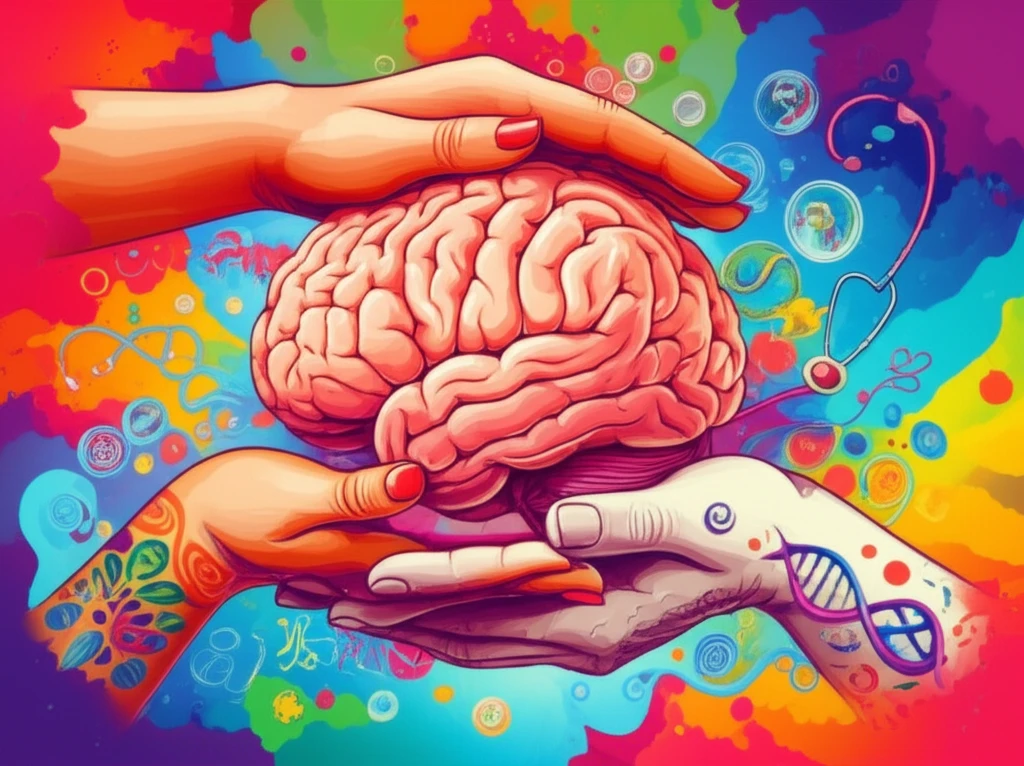
Two hands, one traditional, one medical, holding a brain representing intercultural mental health.

Bridging Worlds: How Traditional Mexican Medicine Can Enhance Modern Mental Healthcare

"Exploring the integration of indigenous healing practices and psychiatry for improved mental health outcomes in Mexico and beyond."


In Mexico, a fascinating intersection is occurring between traditional indigenous medicine and modern psychiatry, offering new pathways for understanding and treating mental health. For centuries, indigenous communities have relied on traditional healers and practices to address various ailments, including those of the mind. Now, these ancestral approaches are gradually finding recognition and integration within the formal healthcare system.

This article delves into the rich history of traditional Mexican medicine, its unique perspectives on mental health, and the ongoing efforts to bridge it with contemporary psychiatric practices. We'll explore the potential benefits of this intercultural approach, the challenges it faces, and the innovative ways in which healthcare providers are working to create a more holistic and culturally sensitive system of care.

Whether you're a healthcare professional, a student of anthropology or psychology, or simply someone interested in alternative approaches to mental wellness, this exploration will provide valuable insights into the evolving landscape of mental healthcare in Mexico and the potential for similar integrations worldwide.

A Historical Perspective: Traditional Healing and Mental Health in Mexico

Two hands, one traditional, one medical, holding a brain representing intercultural mental health.

The roots of mental healthcare in Mexico extend far back to pre-Hispanic times, where magical and religious beliefs intertwined with practical healing methods. Mental illnesses were often attributed to the wrath of gods, calendar signs, or malevolent intentions, and were addressed by specialized healers known as Tlamatini.

These healers employed a range of treatments, including religious rituals, magical practices, and empirical remedies. The Nahua people, for example, recognized distinct categories of mental disorders, such as anxiety, affliction, madness, melancholy, and hysteria, each requiring specific interventions.

  • Spiritual Cleansing: Rituals to purify the spirit and restore balance.
  • Herbal Remedies: Utilizing plants with psychoactive or therapeutic properties.
  • Community Support: Engaging the family and community in the healing process.
  • Symbolic Healing: Using symbols, chants, and dances to connect with the spiritual realm.
Over time, the blending of indigenous practices with the beliefs and practices of conquerors created a unique approach to care that still resonates today. This historical context underscores the importance of cultural sensitivity and the recognition of diverse healing traditions in modern mental healthcare.

Looking Ahead: Embracing Intercultural Mental Healthcare

The integration of traditional Mexican medicine into modern mental healthcare is an ongoing process, but it holds immense promise for creating a more comprehensive and culturally relevant system of care. By recognizing the value of indigenous knowledge and practices, and by fostering collaboration between traditional healers and mental health professionals, Mexico can lead the way in developing innovative approaches to mental wellness.

The challenges are significant, including the need for greater understanding and acceptance of traditional medicine within the medical community, the development of culturally appropriate assessment tools and treatment protocols, and the implementation of policies that support intercultural healthcare initiatives.

Ultimately, the goal is to create a system where individuals can access the best of both worlds – the scientific rigor of modern medicine and the holistic, culturally sensitive approach of traditional healing – to achieve optimal mental health and well-being.

About this Article -

This article was crafted using a human-AI hybrid and collaborative approach. AI assisted our team with initial drafting, research insights, identifying key questions, and image generation. Our human editors guided topic selection, defined the angle, structured the content, ensured factual accuracy and relevance, refined the tone, and conducted thorough editing to deliver helpful, high-quality information.See our About page for more information.

This article is based on research published under:

DOI-LINK: 10.5944/comunitania.11.8, Alternate LINK

Title: Medicina Indígena Tradicional, Su Enlace Con La Psiquiatría Y La Salud Pública.

Subject: General Medicine

Journal: Comunitania. Revista Internacional de Trabajo Social y Ciencias Sociales

Publisher: UNED - Universidad Nacional de Educacion a Distancia

Authors: Iván Noé Martínez-Salazar, Erika Acevedo-Stefanoni, Luis Angel Martínez-Hernández

Published: 2016-01-01

Everything You Need To Know

1

What is traditional Mexican medicine and how is it relevant to mental healthcare?

Traditional Mexican medicine refers to the indigenous healing practices that have been used in Mexico for centuries. These practices, such as spiritual cleansing, herbal remedies, community support, and symbolic healing, have been used to address various ailments, including mental health issues. The article emphasizes the rich history and unique perspectives of these practices and their integration into modern psychiatry. This integration aims to create a more holistic and culturally sensitive system of care.

2

Why is the integration of traditional Mexican medicine into modern mental healthcare important?

The significance of integrating traditional Mexican medicine into modern mental healthcare lies in its potential to create a more comprehensive and culturally relevant system. By recognizing the value of indigenous knowledge and practices, the healthcare system can offer more effective treatments. This approach acknowledges the historical context and cultural sensitivity, allowing for a more inclusive and understanding approach to mental wellness. It also fosters collaboration between traditional healers and mental health professionals.

3

Who were the Tlamatini and what role did they play in ancient mental healthcare?

The Tlamatini were specialized healers in pre-Hispanic times in Mexico. They played a crucial role in addressing mental illnesses, which were often attributed to various factors like the wrath of gods. The Tlamatini employed a range of treatments, including religious rituals, magical practices, and empirical remedies. They recognized distinct categories of mental disorders, such as anxiety, affliction, madness, melancholy, and hysteria. Their interventions were tailored to the specific needs of the individual, highlighting the personalized nature of their care and demonstrating the historical depth of traditional healing methods.

4

What are the key components of traditional healing practices, like spiritual cleansing, and how do they work?

Spiritual cleansing involves rituals performed to purify the spirit and restore balance. Herbal remedies utilize plants with psychoactive or therapeutic properties. Community support engages the family and community in the healing process. Symbolic healing uses symbols, chants, and dances to connect with the spiritual realm. These practices reflect a holistic approach, addressing not just the physical symptoms but also the spiritual and social aspects of mental health. The combination of these practices highlights the depth and breadth of traditional Mexican medicine and its approach to mental wellness.

5

What are the implications of embracing an intercultural approach to mental healthcare in Mexico?

The intercultural approach to mental healthcare, as discussed, embraces the integration of traditional Mexican medicine with modern psychiatric practices. The implications of this integration are far-reaching. It leads to a more comprehensive, culturally relevant, and effective system of care. It fosters collaboration between traditional healers and mental health professionals, creating a more holistic system that considers both the historical context and the individual's cultural background. This approach can lead to improved mental health outcomes and a more inclusive healthcare system in Mexico and potentially worldwide.

Newsletter Subscribe

Subscribe to get the latest articles and insights directly in your inbox.