
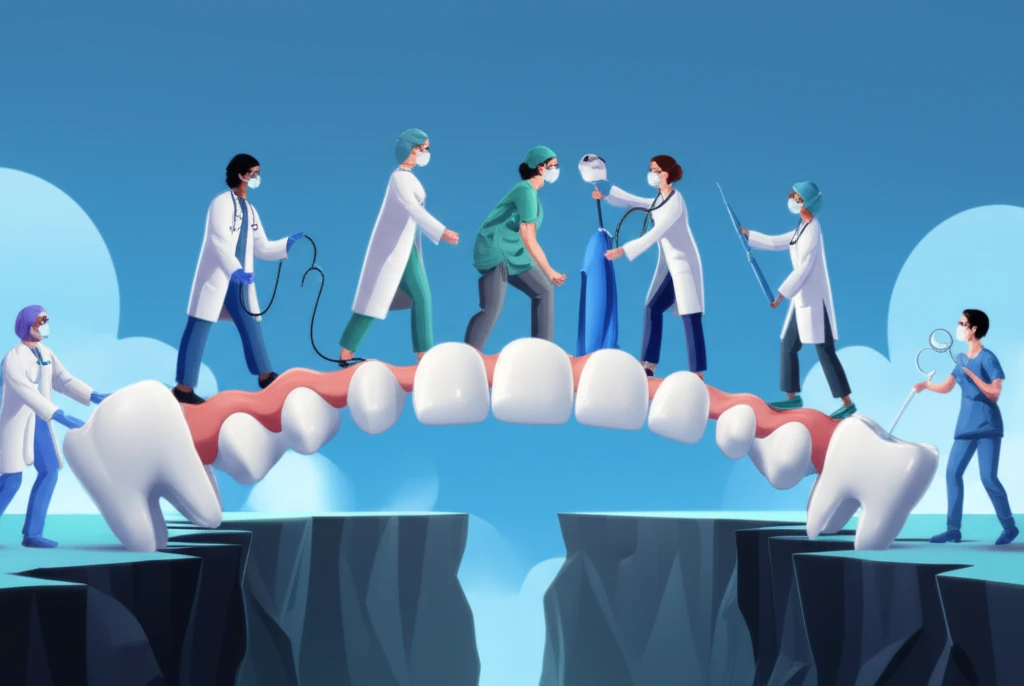
Healthcare professionals collaboratively building a bridge of teeth to represent integrated oral health.

Bridging the Gap: How Integrated Oral Health Can Revolutionize Primary Care

"Explore perceptions of healthcare teams in Quebec, Canada, and the potential of integrating oral health into primary care for better patient outcomes."


In recent years, there's been a growing push to integrate oral health into primary care. The idea is simple: by bringing dental and medical services together, we can improve overall patient health and access to care. However, new models of integration are not successful unless they adapt to each health system's local context.

A groundbreaking study explored the perceptions of primary health care teams in Quebec, Canada, regarding the integration of oral health into their practice. Through qualitative research, including in-depth interviews and focus groups, the study identified key challenges and opportunities in making integrated oral health a reality.

This article delves into the findings of that study, revealing how healthcare providers and managers view the integration of oral health, the barriers they face, and the enablers that can pave the way for a more comprehensive and patient-centered approach to healthcare.

The Missing Piece: Oral Health in Primary Care

Healthcare professionals collaboratively building a bridge of teeth to represent integrated oral health.

Many healthcare professionals in the study felt that oral health services were notably absent or insufficient within publicly funded primary care. This gap leaves many patients, especially vulnerable populations like the elderly and those with intellectual or physical impairments, without adequate access to dental care.

For example, study participants shared concerns about the difficulties in referring older patients needing extractions to hospitals, highlighting a lack of dental support within their primary care settings. For many, this absence isn't just an inconvenience; it's a critical missing piece in providing holistic care.

  • Lack of awareness among parents about children's oral health.
  • Trauma or pain related to teeth/oral mucosa.
  • Oral health problems stemming from rare or genetic diseases.
  • Lack of general anesthesia services for children with special needs.
For the elderly, particularly those in long-term care facilities, the demand for integrated oral health services is rising. An increase in patients with multiple health issues, impaired physical and mental health, and evolving oral health needs underscores the urgency of addressing this gap.

Making Integration a Reality: A Path Forward

The study’s findings underscore that primary health care teams in Quebec recognize the critical need for integrated oral health services. To bridge this gap, implementation of governance policies, prioritization of educational and management measures, and fostering inter-professional collaboration are essential.

By addressing the barriers and leveraging the enablers identified in this research, healthcare systems can move towards a more integrated, comprehensive, and patient-centered approach to care. This includes

Ultimately, integrating oral health into primary care isn't just about better teeth; it's about improving overall health, access, and equity for all.

About this Article -

This article was crafted using a human-AI hybrid and collaborative approach. AI assisted our team with initial drafting, research insights, identifying key questions, and image generation. Our human editors guided topic selection, defined the angle, structured the content, ensured factual accuracy and relevance, refined the tone, and conducted thorough editing to deliver helpful, high-quality information.See our About page for more information.

This article is based on research published under:

DOI-LINK: 10.1371/journal.pone.0205465, Alternate LINK

Title: How Primary Health Care Teams Perceive The Integration Of Oral Health Care Into Their Practice: A Qualitative Study

Subject: Multidisciplinary

Journal: PLOS ONE

Publisher: Public Library of Science (PLoS)

Authors: Hermina Harnagea, Lise Lamothe, Yves Couturier, Elham Emami

Published: 2018-10-12

Everything You Need To Know

1

What does it mean to integrate oral health into primary care?

Integrating oral health into primary care means merging dental and medical services to improve overall patient health and increase access to care. This approach addresses the critical gap where oral health services are often absent or insufficient, especially for vulnerable populations like the elderly and those with disabilities. The implementation of governance policies, prioritization of educational and management measures, and fostering inter-professional collaboration are essential to make this integration a reality.

2

Why is the integration of oral health in primary care so important?

The primary significance of integrating oral health in primary care lies in its potential to transform healthcare by addressing critical gaps and improving patient outcomes. Healthcare professionals in Quebec recognize the critical need for integrated oral health services, as it allows for a more comprehensive, patient-centered approach. This integration is especially important for populations like the elderly, who often have multiple health issues and evolving oral health needs, and for children with special needs who may require general anesthesia for dental procedures.

3

What are the main challenges faced by healthcare professionals regarding oral health integration?

The key challenges identified by healthcare professionals in Quebec include the lack of oral health services within publicly funded primary care. This absence makes it difficult to provide holistic care, as it hinders access to dental care, particularly for vulnerable populations. For instance, difficulties in referring older patients for dental procedures, such as extractions, underscore the existing gap. Another factor is the lack of awareness among parents about children's oral health and the need for better access to general anesthesia services for children with special needs.

4

What are the potential implications of not integrating oral health services?

The implications of not integrating oral health into primary care are significant. Many patients, particularly vulnerable populations, lack adequate access to dental care, leading to potential health complications. The absence of integrated services can result in untreated oral health problems, such as trauma or pain related to teeth or oral mucosa. In Quebec, the lack of integrated services leads to difficulties in referring patients for dental care, which is especially true for the elderly, which also increases the urgency of addressing the gap in care.

5

What are the proposed solutions to achieve the integration of oral health into primary care?

To make integrated oral health a reality, several solutions have been identified. These include implementing governance policies, prioritizing educational and management measures, and fostering inter-professional collaboration. These solutions involve bringing dental and medical services together to ensure a more comprehensive, patient-centered approach to healthcare. Healthcare providers in Quebec are aware of the critical need for integrated oral health services to bridge existing gaps and improve overall patient outcomes.

Newsletter Subscribe

Subscribe to get the latest articles and insights directly in your inbox.