
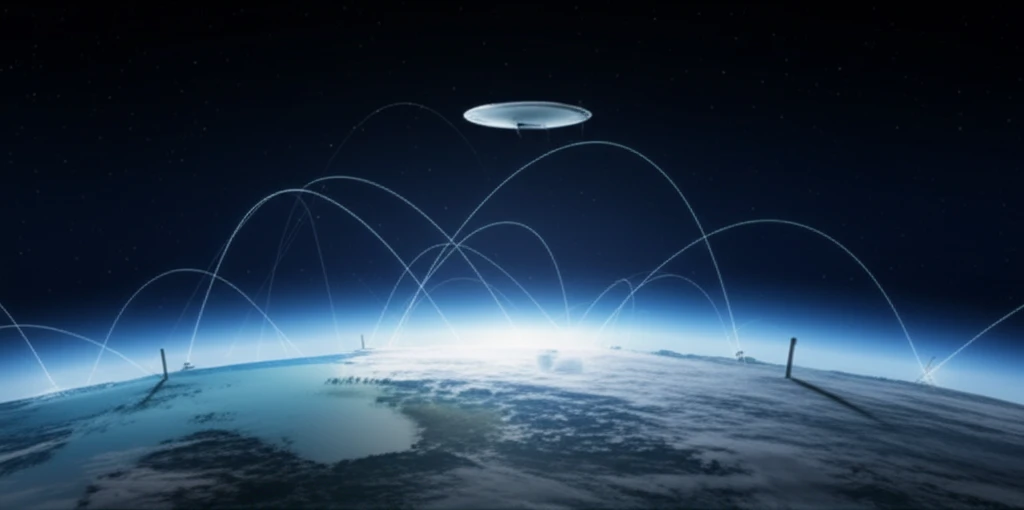
Near space communication with DS signal systems.

Bridging the Gap: How DS Signal Systems are Revolutionizing Near Space Communication

"Unlocking Reliable Connectivity: Exploring channel modeling and performance analysis based on DS signal systems."


In an era where seamless communication is paramount, the spotlight is increasingly turning towards near space—the region between 20 km and 100 km above the Earth's surface. This zone, situated between conventional aviation and orbiting satellites, presents both unprecedented opportunities and unique challenges for communication technologies. As we venture further into exploring and utilizing this space, the need for robust and reliable communication systems becomes ever more critical.

Conventional satellite communication systems often fall short in meeting the demands of near space environments. Factors such as significant signal attenuation, multipath fading, and interference pose considerable hurdles. To overcome these limitations, researchers and engineers are exploring advanced techniques, with Direct Sequence (DS) signal systems emerging as a promising solution.

This article delves into the innovative application of DS signal systems in near space communication. We'll explore how channel modeling techniques are being employed to analyze and mitigate the impact of various environmental factors, ultimately paving the way for enhanced connectivity and performance. Whether you're an engineer, a researcher, or simply someone curious about the future of communication, this exploration will provide valuable insights into a rapidly evolving field.

Why Near Space Needs a Communication Revolution

Near space communication with DS signal systems.

Near space is more than just an under-explored frontier; it's a strategic zone with immense potential. Consider these factors:

Near space communication faces significant hurdles. Traditional methods struggle with:

  • Signal Attenuation: Atmospheric conditions, including rain and atmospheric absorption, can weaken signals.
  • Multipath Fading: Signals bounce off various objects, creating interference and reducing signal quality.
  • Interference: The near space environment is susceptible to interference from various sources, both natural and man-made.
That is where DS signal systems come in.

The Future of Near Space Communication

The journey to unlock the full potential of near space communication is ongoing, and the integration of DS signal systems represents a significant leap forward. By addressing the challenges of signal attenuation, multipath fading, and interference, these innovative techniques are paving the way for more reliable, efficient, and robust communication networks. As technology advances and research continues, we can anticipate even greater strides in near space communication, unlocking new possibilities for scientific exploration, disaster management, and global connectivity.

About this Article -

This article was crafted using a human-AI hybrid and collaborative approach. AI assisted our team with initial drafting, research insights, identifying key questions, and image generation. Our human editors guided topic selection, defined the angle, structured the content, ensured factual accuracy and relevance, refined the tone, and conducted thorough editing to deliver helpful, high-quality information.See our About page for more information.

Everything You Need To Know

1

What are the primary communication challenges that Direct Sequence (DS) signal systems are designed to overcome in near space?

Direct Sequence (DS) signal systems are specifically designed to tackle the hurdles of signal attenuation, multipath fading, and interference, which are major impediments to reliable communication in near space. Signal attenuation occurs due to atmospheric conditions, multipath fading arises from signals bouncing off objects, and interference comes from various natural and man-made sources. Without addressing these issues, near space communication would remain unreliable and inefficient. Overcoming these challenges is crucial for unlocking the potential of near space for various applications.

2

Why is there a growing interest in establishing reliable communication systems in near space, and what makes this environment unique?

Near space, situated between 20 km and 100 km above the Earth's surface, is drawing increasing attention due to its strategic potential. It bridges the gap between conventional aviation and orbiting satellites, presenting unique opportunities for various applications like scientific exploration, disaster management, and enhanced global connectivity. However, near space also poses distinct communication challenges, necessitating innovative solutions like Direct Sequence (DS) signal systems to ensure robust and reliable connectivity.

3

How does channel modeling contribute to the advancement of Direct Sequence (DS) signal systems for near space communication?

Channel modeling plays a pivotal role in enhancing Direct Sequence (DS) signal systems by enabling researchers to analyze and mitigate the impact of environmental factors prevalent in near space. Through channel modeling, engineers can better understand and counteract signal attenuation, multipath fading, and interference. This understanding is essential for optimizing the design and performance of DS signal systems, leading to more reliable and efficient communication networks in the challenging near space environment. Without accurate channel models, the effectiveness of DS signal systems would be significantly compromised.

4

In what ways do traditional satellite communication systems fall short when applied to the near space environment, necessitating the development of alternative solutions like Direct Sequence (DS) signal systems?

Traditional satellite communication systems often struggle in the near space environment due to significant signal attenuation caused by atmospheric conditions, multipath fading resulting from signal reflections, and interference from various sources. These factors can severely degrade signal quality and reliability. Direct Sequence (DS) signal systems offer a promising alternative by employing innovative techniques to mitigate these challenges, paving the way for more robust and efficient communication networks specifically tailored for near space applications. Relying solely on conventional satellite communication would limit the potential of near space exploration and utilization.

5

What future advancements can be anticipated in near space communication as technology evolves and research progresses, particularly concerning Direct Sequence (DS) signal systems?

As technology advances and research progresses, we can anticipate even greater strides in near space communication through the continued development and refinement of Direct Sequence (DS) signal systems. Future advancements may include more sophisticated channel modeling techniques, improved signal processing algorithms, and enhanced hardware components. These innovations will likely lead to more reliable, efficient, and robust communication networks, unlocking new possibilities for scientific exploration, disaster management, and global connectivity in the near space environment. The ongoing evolution of DS signal systems promises to be a key driver in realizing the full potential of near space.

Newsletter Subscribe

Subscribe to get the latest articles and insights directly in your inbox.