
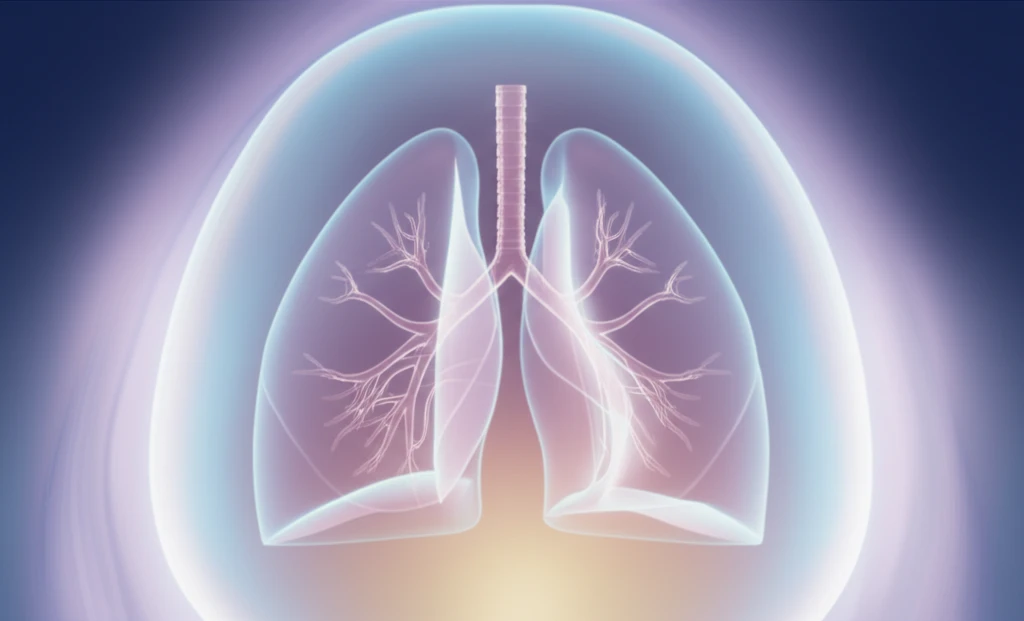
Breathing Easy: How to Protect Your Lungs During Spontaneous Breathing

"Understanding and mitigating ventilator-induced lung injury (VILI) and patient self-inflicted lung injury (P-SILI) for better respiratory health."
In the early 2000s, medical professionals became increasingly aware of ventilator-induced lung injury (VILI) when using mechanical ventilation to support patients with acute respiratory failure. This heightened awareness stemmed from a significant randomized controlled trial by the ARDS Network, highlighting the importance of understanding and preventing VILI.
VILI is associated with the excessive stretch of alveoli in the lungs. To minimize VILI during passive ventilation, doctors often use a strategy called lung-protective ventilation, which involves limiting tidal volume to 6 mL/kg of ideal body weight and maintaining plateau pressure below 28-30 cmH2O. While effective, this method is primarily designed for patients under passive ventilation, raising questions about its effectiveness during spontaneous breathing.
The question arises: can spontaneous breathing itself cause lung injury? Research suggests the answer is yes, leading to the concept of patient self-inflicted lung injury (P-SILI). Two studies in 1988 demonstrated that both negative pressure ventilation in animals and spontaneous hyperventilation in sheep could lead to lung injury similar to VILI. Understanding how to minimize P-SILI is crucial for optimizing respiratory care.
How to Minimize P-SILI: Balancing Assistance and Protection
Minimizing P-SILI involves two main strategies. The first is complete elimination of spontaneous effort through full ventilatory support. While effective, this can lead to disuse atrophy of the respiratory muscles. Therefore, the second strategy involves using positive ventilation to support the patient's spontaneous effort, known as assisted ventilation. Optimizing this approach requires a reliable way to assess lung overstretch at the bedside.
- Eliminate Spontaneous Effort: Complete ventilatory support to rest the respiratory muscles.
- Support Spontaneous Effort (Assisted Ventilation): Balance positive ventilation with the patient's breathing.
- Monitor Lung Overstretch: Assess lung strain or stress to prevent excessive deformation.
The Path Forward: Preserving Spontaneous Effort While Protecting Lungs
The journey to optimizing ventilator settings and modes to reduce P-SILI remains ongoing. From a physiological perspective, developing a ventilatory strategy that minimizes P-SILI while preserving spontaneous effort is a continuous and essential pursuit. Future research and clinical trials are needed to refine our understanding and improve patient outcomes.