
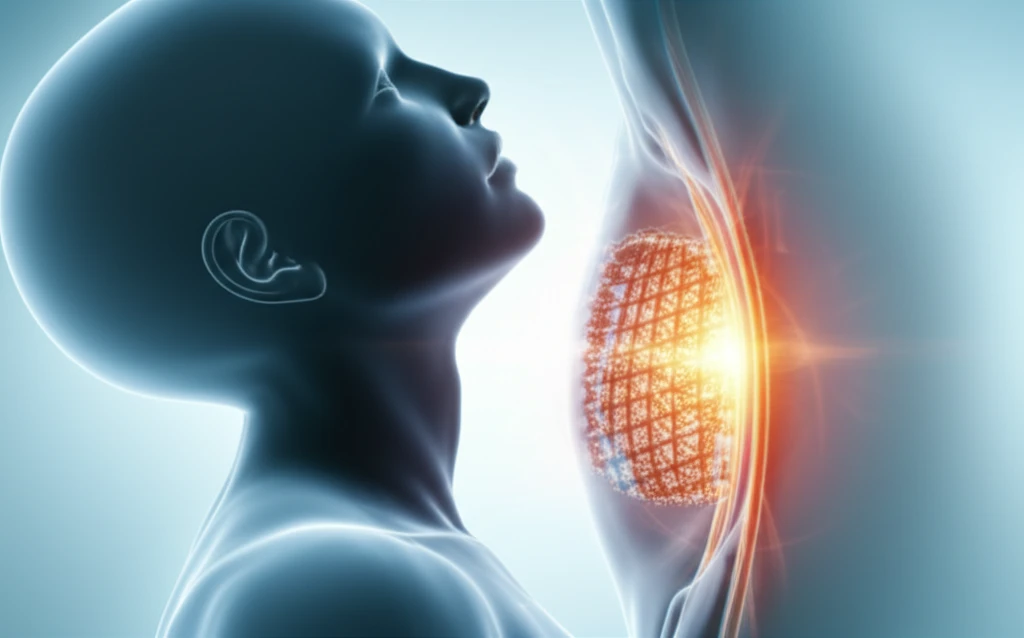
Illustration of healthy lungs and a repaired diaphragm using biological mesh, representing bronchopleural fistula treatment.

Breathing Easy After Pneumonectomy: How a Novel Surgical Technique Offers Hope for Bronchopleural Fistula

"Learn about a groundbreaking approach combining biologic mesh and a diaphragm flap to repair bronchopleural fistulas post-pneumonectomy, offering new hope for patients."


Undergoing a pneumonectomy—the removal of a lung—is a significant and sometimes life-saving procedure, most often performed to treat lung cancer. However, like any major surgery, it carries potential complications. One of the most challenging and feared of these is the development of a bronchopleural fistula (BPF). This occurs when an abnormal connection forms between the airway (bronchus) and the space between the lung and chest wall (pleural space), leading to air leakage and potential infection.

Bronchopleural fistulas can be incredibly difficult to treat, leading to prolonged hospital stays, increased morbidity, and even mortality. The reported occurrence rates range from 5% to 20% after pneumonectomy, with higher incidence after treatments like chemotherapy or radiation and on the right side. Traditional approaches to BPF closure often involve complex surgeries with uncertain outcomes, particularly when the fistula is large or the surrounding tissues are inflamed.

But there's reason for optimism. A recent study highlights a promising surgical technique that combines the use of biologic mesh with a pedicled diaphragm muscle flap to close these stubborn fistulas. This innovative approach offers a potential solution for achieving durable closure and improving patient outcomes. Let’s delve into how this technique works and why it could be a game-changer.

The Innovative Solution: Biologic Mesh and Diaphragm Flap

Illustration of healthy lungs and a repaired diaphragm using biological mesh, representing bronchopleural fistula treatment.

The study describes the case of a 77-year-old man who developed a bronchopleural fistula after undergoing a right intrapericardial pneumonectomy for squamous cell carcinoma. After an initially uneventful recovery, he was readmitted with a constellation of concerning symptoms: a right-sided empyema (pus in the pleural space), the bronchopleural fistula itself, and a pulmonary embolus (blood clot in the lung).

The surgical team at the Cleveland Clinic employed a unique approach to address this complex situation. Here's a breakdown of the technique:

  • Debridement and Preparation: The initial step involved thoroughly cleaning and removing any infected or damaged tissue from the chest cavity.
  • Biologic Mesh Closure: A round piece of AlloDerm, a type of acellular dermal matrix (a biologic mesh derived from donated human skin), was used to cover and close the opening of the bronchopleural fistula. This mesh provides a scaffold for the body's own cells to grow and repair the defect.
  • Diaphragm Flap Reinforcement: To further reinforce the closure and provide a robust blood supply to the area, a pedicled flap of diaphragm muscle was harvested. This involves carefully dissecting a section of the diaphragm muscle while preserving its blood supply from the inferior phrenic pedicle (the main blood vessels to the diaphragm).
  • Flap Placement and Closure: The diaphragm flap was then rotated and secured over the AlloDerm-covered fistula, providing a layer of vascularized tissue to promote healing and prevent recurrence. The resulting defect in the diaphragm was carefully repaired.
The outcome in this case was remarkable. The patient recovered well after the procedure, with the chest tubes being removed after a few days of irrigation. A follow-up bronchoscopy confirmed complete healing of the bronchial stump. While the patient experienced some post-operative complications, the fistula closure itself was a success.

A Promising Step Forward

This case study, along with other published research, suggests that the combination of biologic mesh and diaphragm muscle flaps may offer a valuable tool in the treatment of bronchopleural fistulas after pneumonectomy. The use of biologic mesh provides a framework for tissue regeneration, while the diaphragm flap brings a rich blood supply to the area, promoting healing and reducing the risk of infection and recurrence. While further research is always needed, this technique offers renewed hope for patients facing this challenging complication. If you or a loved one are dealing with a bronchopleural fistula, discuss this innovative approach with your medical team to see if it might be a suitable option.

About this Article -

This article was crafted using a human-AI hybrid and collaborative approach. AI assisted our team with initial drafting, research insights, identifying key questions, and image generation. Our human editors guided topic selection, defined the angle, structured the content, ensured factual accuracy and relevance, refined the tone, and conducted thorough editing to deliver helpful, high-quality information.See our About page for more information.

This article is based on research published under:

DOI-LINK: 10.1016/j.athoracsur.2017.04.015, Alternate LINK

Title: Postpneumonectomy Bronchopleural Fistula Closure With Biologic Mesh And Diaphragm Flap

Subject: Cardiology and Cardiovascular Medicine

Journal: The Annals of Thoracic Surgery

Publisher: Elsevier BV

Authors: Usman Ahmad, Maryna Chumakova, Siva Raja, David P. Mason, Sudish C. Murthy

Published: 2017-09-01

Everything You Need To Know

1

What is a bronchopleural fistula (BPF) and why is it a concern after a pneumonectomy?

A bronchopleural fistula (BPF) is an abnormal connection that forms between the bronchus (airway) and the pleural space (area between the lung and chest wall). After a pneumonectomy (lung removal), a BPF is a significant complication because it can lead to air leakage, infection, prolonged hospital stays, increased morbidity, and even mortality. Occurrence rates range from 5% to 20% after pneumonectomy.

2

What innovative surgical technique is being used to treat bronchopleural fistulas post-pneumonectomy?

A novel surgical technique combines the use of biologic mesh, specifically AlloDerm (an acellular dermal matrix), with a pedicled diaphragm muscle flap. The AlloDerm is used to close the opening of the bronchopleural fistula, providing a scaffold for tissue regeneration. The diaphragm flap, harvested while preserving its blood supply from the inferior phrenic pedicle, is then rotated and secured over the AlloDerm to provide a robust blood supply, promoting healing and reducing the risk of infection and recurrence.

3

How does the biologic mesh contribute to the repair of a bronchopleural fistula?

The biologic mesh, such as AlloDerm, serves as a scaffold for the body's own cells to grow and repair the defect caused by the bronchopleural fistula. This acellular dermal matrix provides a framework that encourages tissue regeneration at the site of the fistula, facilitating closure and healing.

4

Why is the diaphragm flap considered an essential component of this surgical technique for BPF closure?

The diaphragm flap is a crucial part of the technique because it brings a rich blood supply to the area of the bronchopleural fistula. By using a pedicled flap, where the blood supply from the inferior phrenic pedicle is maintained, the vascularized tissue promotes healing, reduces the risk of infection, and helps prevent recurrence of the fistula. This robust blood supply is especially important in areas where tissues may be inflamed or have compromised healing capabilities.

5

What are the potential implications of using biologic mesh and diaphragm flaps for treating bronchopleural fistulas after pneumonectomy, and what follow-up is typically involved?

The use of biologic mesh and diaphragm flaps offers a promising approach to achieving durable closure of bronchopleural fistulas, potentially leading to improved patient outcomes, reduced hospital stays, and lower morbidity and mortality rates. However, it's important to note that post-operative complications can still occur, as seen in the case study. Follow-up typically involves monitoring for infection, ensuring proper healing, and conducting bronchoscopies to confirm complete closure of the bronchial stump. Further research is needed to fully evaluate the long-term effectiveness and identify which patients are most likely to benefit from this innovative technique. The success also relies on thorough debridement and preparation of the chest cavity to remove any infected or damaged tissue.

Newsletter Subscribe

Subscribe to get the latest articles and insights directly in your inbox.