
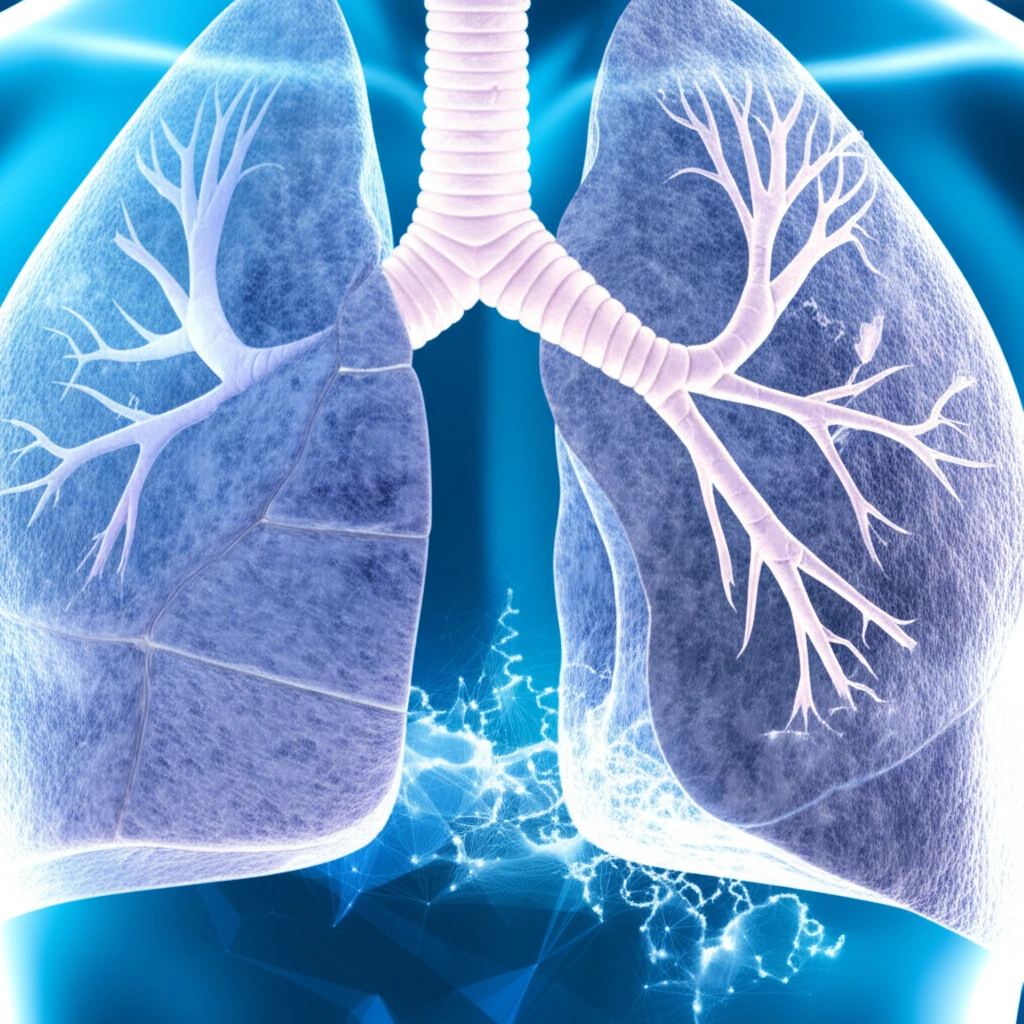
Digital artwork representing the lungs, symbolizing hope and innovation in IPF treatment research.

Breathing Easier: Unlocking the Secrets of Idiopathic Pulmonary Fibrosis (IPF) Treatments

"New research offers hope for those battling IPF, highlighting the latest advancements in understanding and treating this challenging lung disease."


Idiopathic Pulmonary Fibrosis (IPF) is a serious and progressive lung disease that can significantly impact the quality of life for those affected. Characterized by the scarring of lung tissue, IPF makes it difficult to breathe, and the condition can worsen over time. While there's no cure, significant progress has been made in understanding the disease and developing treatments to slow its progression.

Recent advances in medical research have shed light on the complex factors that contribute to IPF. Scientists now believe that a combination of genetic, environmental, and cellular factors play a role. New diagnostic tools and treatments are emerging as a result of these discoveries, providing a glimmer of hope for those living with this condition.

This article delves into the latest research on IPF treatments, offering a clear overview of the current landscape. We'll explore the mechanisms of action behind the latest medications and highlight the ongoing studies working to improve the lives of individuals affected by this challenging disease. Our goal is to provide a comprehensive yet easily understandable guide to the latest developments in IPF care.

Understanding Idiopathic Pulmonary Fibrosis: Causes, Symptoms, and Diagnosis

Digital artwork representing the lungs, symbolizing hope and innovation in IPF treatment research.

IPF, as the name suggests, has no known cause (idiopathic) and affects the lungs (pulmonary), leading to scarring or fibrosis. This scarring makes it difficult for the lungs to function correctly, and over time, the condition can lead to respiratory failure. It primarily affects older adults, typically those over 50, but it can sometimes occur in younger individuals. While the exact causes of IPF are still being investigated, research suggests a complex interplay of genetic predisposition and environmental factors.

Symptoms of IPF often develop gradually and may initially be mistaken for other, less serious respiratory conditions. Common symptoms include shortness of breath (dyspnea), a dry cough, fatigue, and chest discomfort. As the disease progresses, these symptoms worsen, making everyday activities increasingly challenging. The diagnostic process for IPF usually begins with a thorough medical history, physical examination, and various tests to assess lung function and identify any underlying causes.

  • Medical History: Doctors will ask about your symptoms, any relevant medical history, and family history of lung diseases.
  • Physical Examination: A doctor will listen to the lungs with a stethoscope and check for other signs of the disease.
  • Imaging Tests: Chest X-rays and high-resolution computed tomography (HRCT) scans are essential to visualize the lungs and detect patterns of scarring.
  • Pulmonary Function Tests: These tests assess lung capacity and how efficiently your lungs transfer oxygen.
  • Bronchoscopy: In some cases, a bronchoscopy with a lung biopsy may be performed to obtain tissue samples for examination.
Accurate and timely diagnosis is critical for effective management of IPF. Early diagnosis allows for the timely initiation of therapies aimed at slowing the progression of the disease and improving the quality of life for those affected.

The Road Ahead: Ongoing Research and Future Directions

The journey to conquer IPF is ongoing, with researchers and clinicians constantly working to improve treatments and outcomes. Recent advances offer hope, and the future promises further breakthroughs, improved diagnostic tools, and innovative therapies that will provide relief and improve the quality of life for those battling this condition. Continuous research and clinical trials are essential to building on the knowledge gained thus far, which will lead to more effective treatments for IPF.

About this Article -

This article was crafted using a human-AI hybrid and collaborative approach. AI assisted our team with initial drafting, research insights, identifying key questions, and image generation. Our human editors guided topic selection, defined the angle, structured the content, ensured factual accuracy and relevance, refined the tone, and conducted thorough editing to deliver helpful, high-quality information.See our About page for more information.

This article is based on research published under:

DOI-LINK: 10.5858/arpa.2018-0080-ra, Alternate LINK

Title: Idiopathic Pulmonary Fibrosis And Antifibrotic Treatments: Focus On Experimental Studies

Subject: Medical Laboratory Technology

Journal: Archives of Pathology & Laboratory Medicine

Publisher: Archives of Pathology and Laboratory Medicine

Authors: Francesca Lunardi, Federica Pezzuto, Stefania Edith Vuljan, Fiorella Calabrese

Published: 2018-09-01

Everything You Need To Know

1

What exactly is Idiopathic Pulmonary Fibrosis (IPF), and how does it affect breathing?

Idiopathic Pulmonary Fibrosis (IPF) is a progressive lung disease characterized by the scarring of lung tissue. The term 'idiopathic' means the cause is unknown. This scarring, or fibrosis, makes it difficult for the lungs to function correctly, hindering the transfer of oxygen and leading to shortness of breath. Over time, IPF can worsen, leading to respiratory failure. While the exact causes are still under investigation, research suggests a complex interplay of genetic predisposition and environmental factors are at play.

2

What are the initial symptoms of IPF, and how is it typically diagnosed?

The initial symptoms of Idiopathic Pulmonary Fibrosis (IPF) often develop gradually and can easily be mistaken for symptoms of other respiratory conditions. Common early symptoms include shortness of breath (dyspnea), a dry cough, fatigue, and chest discomfort. Diagnosis typically involves a thorough medical history, a physical examination, imaging tests like chest X-rays and high-resolution computed tomography (HRCT) scans to visualize lung scarring, and pulmonary function tests to assess lung capacity and oxygen transfer efficiency. In some instances, a bronchoscopy with lung biopsy is performed to examine tissue samples.

3

What kind of advancements have been made in understanding the underlying causes of IPF?

Recent medical research has made progress by identifying complex factors that are believed to contribute to Idiopathic Pulmonary Fibrosis (IPF). Scientists are exploring a combination of genetic, environmental, and cellular factors, as well as looking into new diagnostic tools and treatments. Further investigation of the disease's mechanisms are needed.

4

Are there any treatments available to slow down the progression of Idiopathic Pulmonary Fibrosis (IPF) and improve the quality of life for patients?

While there is currently no cure for Idiopathic Pulmonary Fibrosis (IPF), treatments are available to help slow the progression of the disease and manage its symptoms. These treatments may include medications and therapies aimed at reducing lung inflammation and fibrosis, improving lung function, and alleviating symptoms like shortness of breath and cough. Early diagnosis and intervention are crucial for maximizing the effectiveness of these treatments and improving the quality of life for those affected by IPF. Continuous research and clinical trials are essential to building on the knowledge gained thus far, which will lead to more effective treatments for IPF.

5

Given that the causes of Idiopathic Pulmonary Fibrosis (IPF) are still being investigated, what are some potential avenues of research that could lead to new treatments or even a cure?

Since the causes of Idiopathic Pulmonary Fibrosis (IPF) are not fully understood, ongoing research focuses on several key areas. These include identifying specific genes or genetic mutations that may predispose individuals to developing IPF, investigating the role of environmental factors such as exposure to pollutants or certain occupations, and studying the cellular and molecular mechanisms that drive lung scarring. Additionally, research is exploring potential therapeutic targets, such as specific proteins or pathways involved in fibrosis, which could lead to the development of new drugs or therapies to prevent or reverse the progression of IPF. Advances in areas like personalized medicine, regenerative medicine, and gene therapy also hold promise for future IPF treatments.

Newsletter Subscribe

Subscribe to get the latest articles and insights directly in your inbox.