
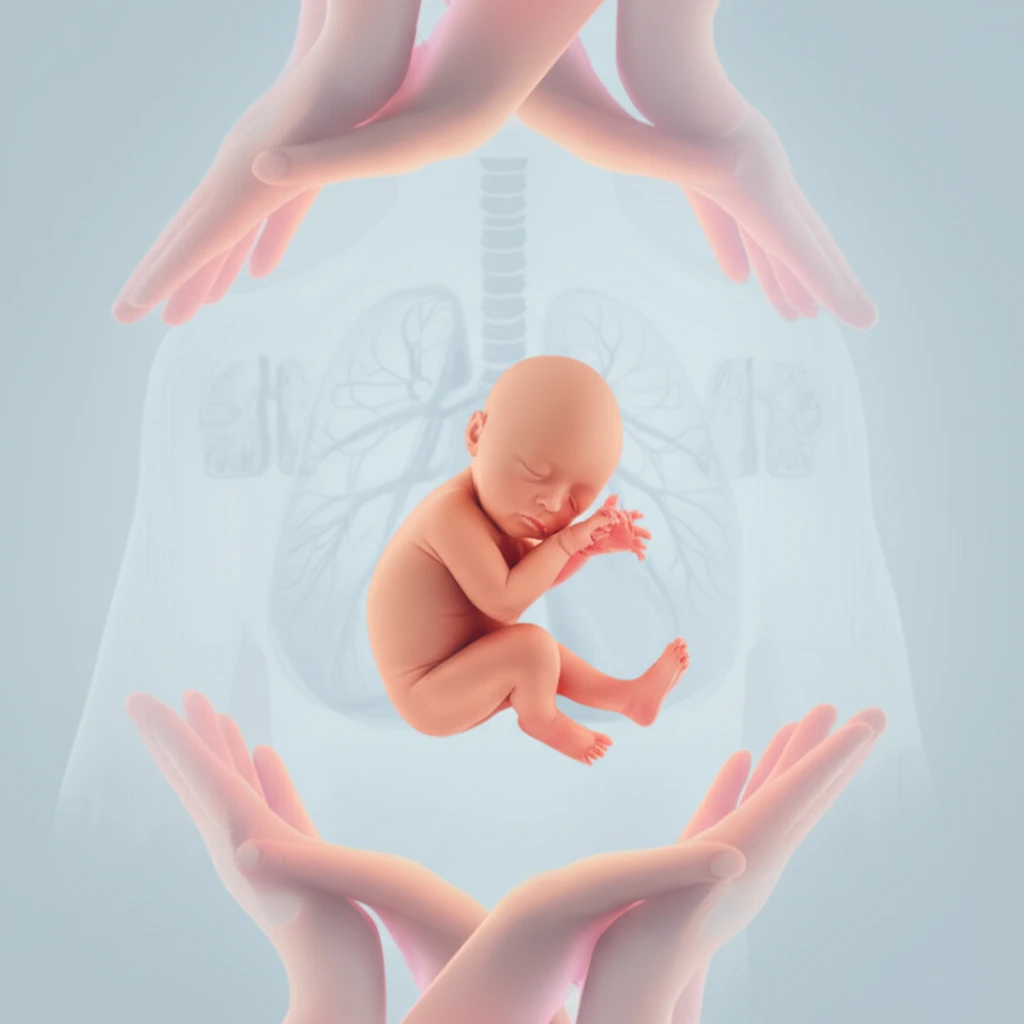
Supportive hands surrounding a newborn, symbolizing care for infants with PPHN.

Breathing Easier: How to Navigate Persistent Pulmonary Hypertension in Newborns

"A comprehensive guide for parents and caregivers on understanding, managing, and finding hope in the face of PPHN."


Welcoming a newborn should be a time of immense joy. However, for some families, this joy is mixed with the worry and stress of a serious condition known as Persistent Pulmonary Hypertension of the Newborn, or PPHN. If you've found yourself navigating this challenging diagnosis, know that you're not alone. PPHN is a condition where a newborn's circulatory system doesn't transition normally after birth, leading to insufficient oxygen in the blood.

In simpler terms, PPHN occurs when the blood vessels in the baby's lungs don't relax as they should after birth. Before birth, the baby's lungs are not used for breathing; instead, the baby receives oxygenated blood from the mother through the placenta. After birth, the baby needs to quickly switch to using their lungs to get oxygen. In PPHN, the pulmonary blood vessels remain constricted, causing blood to bypass the lungs. This results in the baby not receiving enough oxygen, which can lead to severe health problems.

This article aims to provide you with a comprehensive, easy-to-understand guide to PPHN. We'll explore what it is, why it happens, how it's diagnosed, and what treatment options are available. Our goal is to empower you with the knowledge and resources you need to advocate for your child and navigate this challenging journey with confidence and hope.

What Causes PPHN? Unraveling the Reasons Behind Persistent Pulmonary Hypertension

Supportive hands surrounding a newborn, symbolizing care for infants with PPHN.

Several factors can contribute to the development of PPHN. Understanding these can help healthcare providers identify at-risk infants and implement preventive measures where possible. While the exact cause can be complex and multifactorial, here are some key factors associated with PPHN:

Sometimes, PPHN arises because the baby's lungs or heart didn't develop properly during pregnancy. Other times, it's due to problems that happen around the time of birth. Here are the main reasons why PPHN might occur:

  • Lung Development Issues: If the lungs don't grow as they should while the baby is in the womb, it can lead to PPHN.
  • Breathing Problems at Birth: When babies have issues like inhaling meconium (the first stool) or dealing with infections, it can cause PPHN.
  • Heart Problems: Sometimes, PPHN is linked to heart defects that a baby is born with.
  • Blood Vessel Issues: If the baby's blood vessels in the lungs don't open up like they should after birth, it can lead to PPHN.
  • Maternal Factors: Moms who take certain medicines like NSAIDs during pregnancy or have conditions like diabetes can increase the risk of their baby developing PPHN.
It's important to remember that PPHN can be complex, with several factors often playing a role. Early identification and treatment are key to improving outcomes for affected newborns.

Hope for the Future: Emerging Therapies and Long-Term Outlook

While PPHN is undoubtedly a serious condition, advancements in neonatal care continue to improve outcomes for affected infants. Researchers are constantly exploring new therapies and strategies to better manage PPHN and minimize long-term complications. Staying informed and proactive in your child's care is key. Don't hesitate to ask questions, seek second opinions, and connect with support networks. With early intervention, dedicated care, and ongoing research, there is reason for optimism and hope for a brighter future for children diagnosed with PPHN.

About this Article -

This article was crafted using a human-AI hybrid and collaborative approach. AI assisted our team with initial drafting, research insights, identifying key questions, and image generation. Our human editors guided topic selection, defined the angle, structured the content, ensured factual accuracy and relevance, refined the tone, and conducted thorough editing to deliver helpful, high-quality information.See our About page for more information.

Everything You Need To Know

1

What is Persistent Pulmonary Hypertension of the Newborn (PPHN)?

Persistent Pulmonary Hypertension of the Newborn (PPHN) is a serious condition affecting newborns. It occurs when the blood vessels in a baby's lungs don't relax after birth. This constriction prevents the lungs from receiving enough blood flow, leading to insufficient oxygen in the blood. The condition is characterized by the circulatory system failing to transition normally after birth, which is essential for the baby to breathe independently and receive adequate oxygen.

2

What causes Persistent Pulmonary Hypertension of the Newborn (PPHN)?

Several factors can lead to Persistent Pulmonary Hypertension of the Newborn (PPHN). These include lung development issues during pregnancy, breathing problems at birth (like meconium aspiration or infections), heart defects, blood vessel issues in the lungs that prevent them from opening properly, and maternal factors such as the use of certain medications (e.g., NSAIDs) during pregnancy or conditions like diabetes. These factors can individually or collectively contribute to the development of PPHN.

3

How does PPHN affect a baby's ability to get oxygen?

PPHN disrupts the normal transition of a newborn's circulatory system. Before birth, the baby receives oxygen from the mother via the placenta. After birth, the baby's lungs need to take over this function. In PPHN, the pulmonary blood vessels in the lungs remain constricted, preventing adequate blood flow through the lungs. This means the baby's blood doesn't pick up enough oxygen, leading to a decrease in oxygen levels in the body, which can cause significant health problems.

4

Are there any emerging therapies for Persistent Pulmonary Hypertension of the Newborn (PPHN)?

Yes, there is ongoing research and advancements in neonatal care aimed at improving outcomes for infants with PPHN. While this content does not specify particular emerging therapies, it emphasizes that researchers are actively exploring new strategies to manage PPHN and reduce long-term complications. Staying informed and proactive in your child's care is essential, and further details on specific therapies could be available through consultation with medical professionals and through recent medical publications.

5

Why is early identification and treatment so important for babies with PPHN?

Early identification and treatment are critical for newborns with Persistent Pulmonary Hypertension of the Newborn (PPHN) because they significantly improve outcomes. Timely intervention helps to manage the condition effectively, providing the best possible chance for the baby's circulatory system to adapt and for the lungs to function properly. This can minimize the severity of the health problems caused by insufficient oxygen and reduce the potential for long-term complications. Prompt medical attention is key in ensuring that affected newborns receive the care they need to thrive.

Newsletter Subscribe

Subscribe to get the latest articles and insights directly in your inbox.