
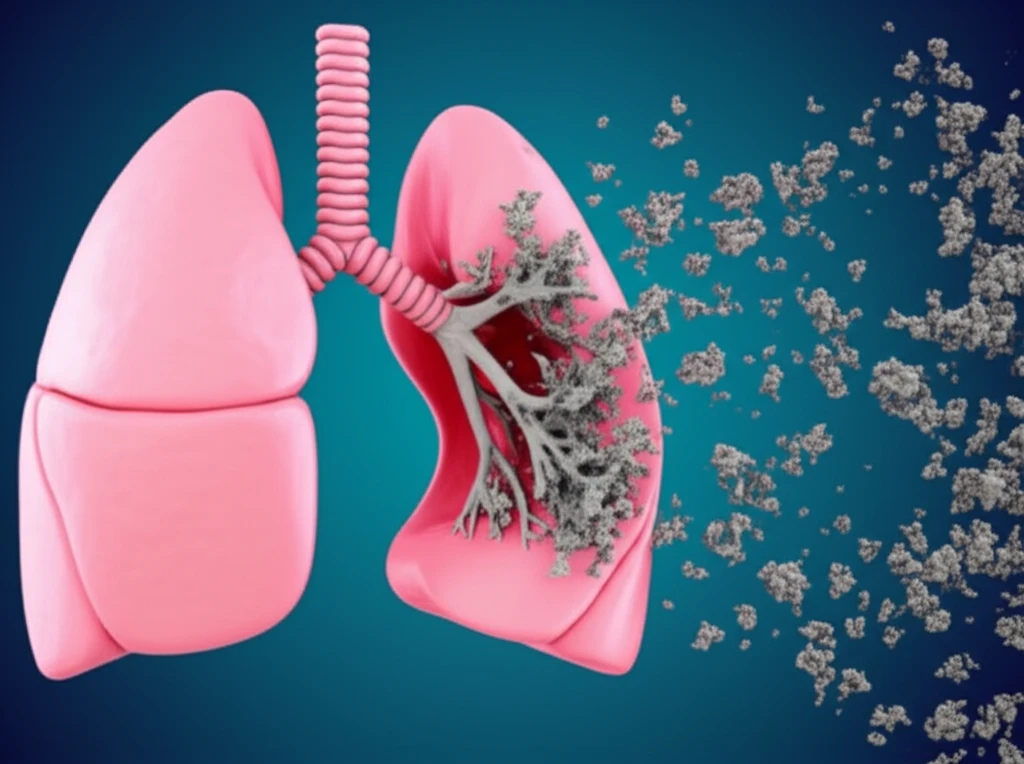
Breathe Easier: Exploring Bronchoscopic Treatments for Emphysema and Air Leaks

"Discover how minimally invasive techniques are revolutionizing the management of emphysema and persistent air leaks, offering new hope for improved lung function and quality of life."
For decades, thoracic surgeries have been the standard approach for correcting air leaks and addressing conditions like emphysema. These procedures, while often effective, can be invasive and carry significant risks. However, the last decade has witnessed the rise of bronchoscopic techniques, offering a less invasive alternative to tackle these challenging conditions.
Chronic Obstructive Pulmonary Disease (COPD), a progressive and debilitating illness, significantly impacts millions worldwide. COPD, as defined by the Global Initiative for Chronic Obstructive Lung Disease (GOLD), is characterized by persistent airflow limitation typically associated with an enhanced chronic inflammatory response in the airways and the lungs to noxious particles or gases. Lung volume reduction surgeries are employed to alleviate the strain caused by COPD.
Bronchoscopic techniques offer promise in lung volume reduction surgery alongside medical and surgical interventions. These techniques include, but are not limited to, silicone balloons, endobronchial valves, endobronchial coils, Watanabe spigots, biologic therapy, artificial accessory airways and vapor therapy. This article offers a concise overview of these bronchoscopic techniques, with a focus on endobronchial valves and their effectiveness in treating emphysema and persistent air leaks.
What Bronchoscopic Options Are Available for Emphysema and Air Leaks?
Several bronchoscopic methods have emerged as potential therapies for lung volume reduction. Each approach has its mechanisms, benefits, and considerations. Here's a brief overview of some key techniques:
- Silicone Balloons: These were studied on eight patients, showing questionable efficacy, with pneumonia being a common complication.
- Endobronchial Coils: These nitinol self-actuating devices retract pulmonary parenchyma, reducing volume and restoring lung tissue tension, placed via bronchoscope.
- Artificial Accessory Airway: This was Suggested in 1978, creating an extra anatomic passage between the emphysematous lung parenchyma and the larger airway [20]. This collateral channel helps to provide a homogenous distribution of the ventilation [14].
- Biologic Agents: These involves using biologic agents to work as sealant to block off airways, causing atelectasis of that segment and hence reducing lung volume.
- Thermal Vapor Ablation: This technique involves using a vapor generator to deliver heated water vapor into the bronchial tree [5]. The heated vapor can lead to permanent fibrosis.
The Future of Bronchoscopic Interventions
Significant strides have been made in the last fifteen years in developing bronchoscopic solutions for severe emphysema, offering a non-surgical alternative to lung volume reduction. While promising, the field requires ongoing research and large-scale trials to solidify the role and refine the application of these devices. As technology evolves and further studies validate their effectiveness, bronchoscopic interventions may become a cornerstone in treating emphysema and persistent air leaks, providing patients with less invasive options and improved outcomes.