
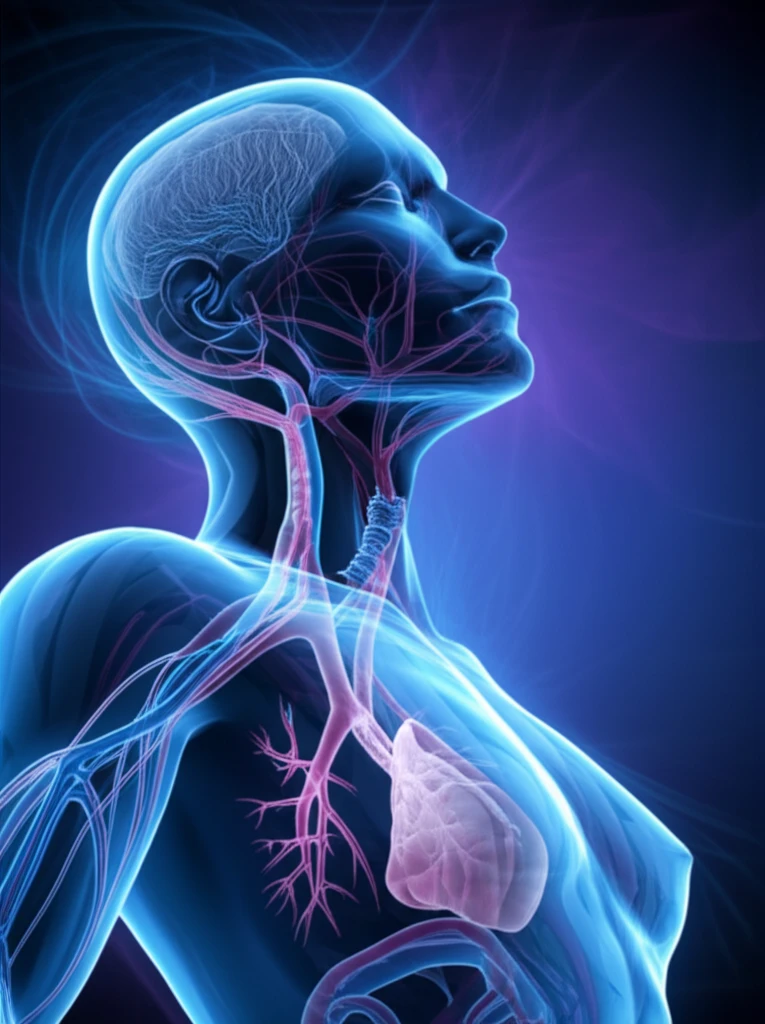
Suspended animation with interconnected neural pathways and respiratory system.

Breath Interrupted: How Short Pauses Impact Your Body Differently Than Longer Ones

"Uncover the surprising ways intermittent pauses in breathing affect motor functions, challenging what we know about respiratory control and motor skills."


Our bodies are remarkably adaptable, especially when it comes to breathing. The respiratory system can change in response to different conditions. One fascinating area of study is how reduced respiratory activity, specifically pauses in breathing (apnea), affects motor functions. When breathing is temporarily reduced, the body responds by increasing motor output, a phenomenon called inactivity-induced facilitation. This response, however, isn't the same for all motor functions.

A key area of interest is understanding how the patterns of breathing pauses influence this motor output. Intermittent hypoxia (IH), where oxygen levels drop briefly and repeatedly, can lead to increased motor output in areas that control breathing and tongue movement. But what happens when the pauses are sustained versus intermittent? Research suggests that the body reacts differently, and this difference is crucial for understanding respiratory control.

Recent research dives into whether inactivity-induced facilitation is pattern-sensitive, meaning the body responds differently to intermittent versus sustained neural apnea. This article explores the study's findings, revealing how the body's motor functions react to various breathing patterns, shedding light on motor skills and overall respiratory health.

What Happens When Breathing Stops? Exploring Motor Function Response

Suspended animation with interconnected neural pathways and respiratory system.

The study looked at how different patterns of reduced respiratory activity affected both phrenic and hypoglossal motor functions in rats. Phrenic motor function controls the diaphragm, which is essential for breathing, while hypoglossal motor function controls tongue movement. Researchers induced central neural apnea, or pauses in breathing, by reducing carbon dioxide levels below the apneic threshold. The rats experienced one of three patterns:

The different breathing patterns were:

  • Brief Intermittent Apneas: Five short apneas of about 1.5 minutes each, separated by roughly 5 minutes of normal breathing.
  • Brief Massed Apnea: A single, longer apnea lasting 7.5 minutes.
  • Prolonged Apnea: One continuous apnea lasting 30 minutes.
Researchers then monitored the phrenic and hypoglossal nerve activity to measure motor output. They found that intermittent and prolonged apneas led to long-lasting increases in phrenic motor output (iPMF), whereas only prolonged apnea led to increased hypoglossal motor output (iHMF), and that response was short lived. Massed apnea did not lead to any of these responses.

The Bigger Picture: Implications for Respiratory Health

This research highlights the nuanced ways our bodies adapt to changes in breathing patterns. The fact that intermittent and sustained apneas have different effects on motor output suggests that the nervous system can distinguish between these patterns and respond accordingly. It indicates that respiratory neural activity affects functions differently.

Understanding these mechanisms could have significant implications for conditions characterized by irregular breathing patterns, such as sleep apnea, chronic heart failure, or even altitude sickness. By gaining insights into how the body responds to different patterns of reduced respiratory activity, we can develop more targeted interventions to improve respiratory health and motor control.

Further research is needed to fully elucidate the mechanisms underlying these responses. This research is important to investigate cause and effect, however it lays the groundwork for understanding the physiological adaptations to the apnea and to improving clinical outcomes.

About this Article -

This article was crafted using a human-AI hybrid and collaborative approach. AI assisted our team with initial drafting, research insights, identifying key questions, and image generation. Our human editors guided topic selection, defined the angle, structured the content, ensured factual accuracy and relevance, refined the tone, and conducted thorough editing to deliver helpful, high-quality information.See our About page for more information.

This article is based on research published under:

DOI-LINK: 10.1152/japplphysiol.00018.2013, Alternate LINK

Title: Inactivity-Induced Phrenic And Hypoglossal Motor Facilitation Are Differentially Expressed Following Intermittent Vs. Sustained Neural Apnea

Subject: Physiology (medical)

Journal: Journal of Applied Physiology

Publisher: American Physiological Society

Authors: N. A. Baertsch, T. L. Baker-Herman

Published: 2013-05-15

Everything You Need To Know

1

What happens to the body when breathing is interrupted?

When breathing is interrupted, the body's motor output changes, a process called inactivity-induced facilitation. This means the nervous system boosts motor control in response to pauses in breathing (apnea). This response varies depending on the pattern of pauses. The implications of this are significant for both motor skills and overall respiratory health.

2

What are the different types of apnea examined in the study?

Apnea refers to pauses in breathing. In this context, the study examined three patterns: Brief Intermittent Apneas (multiple short pauses), Brief Massed Apnea (a single, moderately long pause), and Prolonged Apnea (a single, very long pause). The study used these patterns to see how different types of respiratory pauses affect motor output, specifically phrenic and hypoglossal motor functions.

3

What is the significance of phrenic motor function in the context of this research?

The phrenic motor function controls the diaphragm, which is key for breathing. The study found that both Brief Intermittent Apneas and Prolonged Apnea led to long-lasting increases in phrenic motor output (iPMF). This suggests that the pattern of apnea influences how the body regulates breathing. The implications of iPMF are that the diaphragm's response to breathing interruptions varies based on pause duration and frequency.

4

What is the significance of hypoglossal motor function in this research?

Hypoglossal motor function controls tongue movement. Only Prolonged Apnea resulted in increased hypoglossal motor output (iHMF), but the response was short lived. The nervous system's reaction to sustained breathing pauses can influence motor control of the tongue, which is important for activities such as speaking and swallowing. The study demonstrates that the nervous system distinguishes between different patterns of apnea and responds uniquely to them.

5

How did the researchers conduct the study to understand the impact of breathing pauses?

The study used rats and induced central neural apnea by reducing carbon dioxide levels. Researchers then observed phrenic and hypoglossal nerve activity. They found that Brief Intermittent Apneas and Prolonged Apnea affected phrenic motor output differently, but only Prolonged Apnea affected hypoglossal motor output. Brief Massed Apnea did not elicit any of these responses. This provides insights into how the nervous system responds to various breathing patterns, and its impact on motor skills and respiratory health.

Newsletter Subscribe

Subscribe to get the latest articles and insights directly in your inbox.