
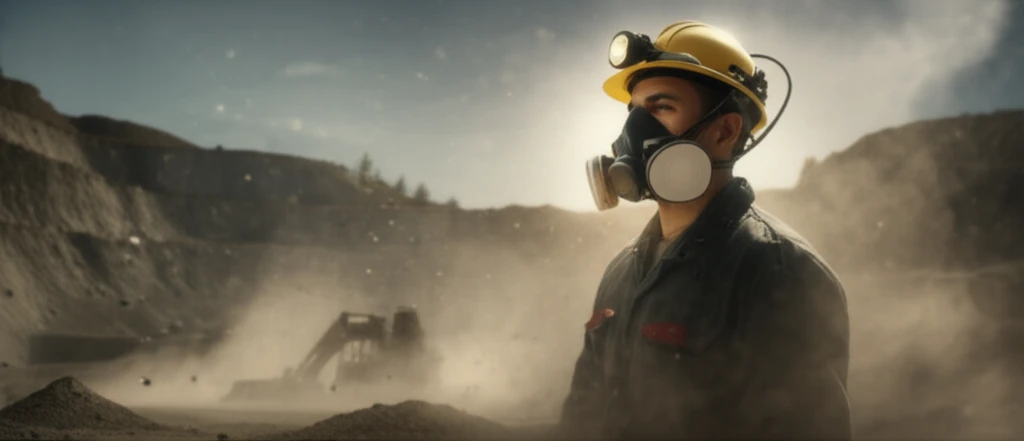
Quarry worker in a dusty environment wearing respiratory protection.

Breath Easy: Protecting Quarry Workers' Lungs in Nigeria

"Discover the respiratory risks facing quarry workers in Edo State, Nigeria, and the urgent need for better safety measures."


Quarrying, a long-standing economic activity, is essential for accessing vital resources like marble, limestone, and gypsum. However, this industry exposes workers to significant health hazards, primarily through the inhalation of airborne particulates.

These particulates can lead to various respiratory issues, dermal and ocular irritations, and long-term lung damage. Exposure to dust generated from crushing granite rocks impairs lung function, leading to both respiratory and non-respiratory symptoms among quarry workers. A key concern is the inhalation of silica dust, which can cause silicosis, an irreversible lung disease characterized by inflammation and breathing difficulties that can persist even after exposure ceases.

A recent study conducted in Edo State, Nigeria, highlights the urgent need for better health and safety measures. This study reveals a significant lack of awareness regarding the hazards and diseases associated with quarry work, resulting in the underutilization of safety equipment. By examining the respiratory symptoms and ventilatory functions of quarry workers, this article aims to shed light on the critical need for enhanced protective measures and regular health evaluations.

What Risks Do Quarry Workers Face?

Quarry worker in a dusty environment wearing respiratory protection.

The study, conducted in Ikpeshi community in Edo State, Nigeria, involved 113 quarry workers, dividing them into two groups: site workers (those directly involved in mining and stone processing) and office workers (controls). Researchers used questionnaires and spirometry to assess respiratory symptoms and lung function, measuring key indicators such as FEV1 (Forced Expiratory Volume in one second), FVC (Forced Vital Capacity), and PEFR (Peak Expiratory Flow Rate).

The findings revealed alarming disparities between the two groups. Site workers exhibited significantly higher occurrences of chest tightness (35.5%) compared to the control group (16.2%). Additionally, symptoms like cough (23.7% vs. 13.5%), sputum production (21.1% vs. 16.2%), and dyspnea (7.9% vs. 5.4%) were more prevalent among the exposed group. Importantly, the study also found that the mean FEV1 and FVC were significantly lower in the exposure group, indicating reduced lung function.

  • Chest Tightness: Site workers reported a significantly higher incidence of chest tightness (35.5%) compared to office workers (16.2%).
  • Respiratory Symptoms: Cough, sputum, and dyspnea were more common among site workers, indicating a direct impact of quarry dust on respiratory health.
  • Reduced Lung Function: Site workers showed lower mean FEV1 and FVC values, key indicators of lung function, underscoring the detrimental effects of prolonged dust exposure.
These findings emphasize the urgent need for implementing protective measures and regular health check-ups for quarry workers. The risks are evident, and the solutions are within reach. By prioritizing worker safety, we can mitigate these health hazards and ensure a healthier working environment.

What Can Be Done to Protect Quarry Workers?

This study underscores the pressing need for action. It's imperative that quarry owners provide and enforce the use of personal protective equipment (PPE) such as respirators and facemasks. Regular evaluations of lung function are also essential to detect early signs of respiratory impairment. By implementing these measures, we can create a safer and healthier working environment for quarry workers, safeguarding their long-term respiratory health and well-being.

About this Article -

This article was crafted using a human-AI hybrid and collaborative approach. AI assisted our team with initial drafting, research insights, identifying key questions, and image generation. Our human editors guided topic selection, defined the angle, structured the content, ensured factual accuracy and relevance, refined the tone, and conducted thorough editing to deliver helpful, high-quality information.See our About page for more information.

Everything You Need To Know

1

What are the primary respiratory risks faced by quarry workers in Edo State, Nigeria?

The primary respiratory risks for quarry workers in Edo State, Nigeria, stem from inhaling airborne particulates, particularly silica dust. This exposure can lead to chest tightness, cough, sputum production, and dyspnea. The inhalation of silica dust can cause silicosis, an irreversible lung disease characterized by inflammation and breathing difficulties. The study conducted in the Ikpeshi community highlighted significant health disparities between site workers and office workers, with site workers showing a higher incidence of respiratory symptoms and reduced lung function, as measured by FEV1 and FVC.

2

What specific health challenges did the study in Ikpeshi community reveal regarding quarry workers' lung health?

The study in the Ikpeshi community in Edo State, Nigeria, revealed several health challenges. Site workers, those directly involved in mining and stone processing, reported higher rates of chest tightness (35.5%) compared to office workers (16.2%). Respiratory symptoms like cough (23.7% vs. 13.5%), sputum production (21.1% vs. 16.2%), and dyspnea (7.9% vs. 5.4%) were more prevalent among site workers. Crucially, the study found that site workers had significantly lower mean FEV1 and FVC values, indicating reduced lung function due to prolonged exposure to quarry dust.

3

How does exposure to quarry dust impact lung function, and what are the key indicators used to measure this impact?

Exposure to quarry dust impairs lung function primarily through the inhalation of silica dust, leading to inflammation and breathing difficulties. This exposure can lead to silicosis, an irreversible lung disease. The study in Edo State, Nigeria, used spirometry to assess lung function, measuring key indicators: FEV1 (Forced Expiratory Volume in one second), FVC (Forced Vital Capacity), and PEFR (Peak Expiratory Flow Rate). Lower values of FEV1 and FVC in site workers, who are exposed to the dust, indicated reduced lung function compared to office workers. These metrics provide objective measures of respiratory health, highlighting the impact of dust exposure.

4

What are the implications of reduced FEV1 and FVC values in quarry workers, as indicated by the study?

Reduced FEV1 (Forced Expiratory Volume in one second) and FVC (Forced Vital Capacity) values in quarry workers indicate a significant impairment in their lung function. FEV1 measures the amount of air exhaled in the first second of a forced breath, and FVC measures the total amount of air exhaled during the forced breath. Lower values suggest that the lungs are not functioning efficiently, making it harder for workers to breathe. These findings imply that prolonged exposure to quarry dust, especially silica dust, is causing respiratory damage that could lead to chronic conditions such as silicosis, reducing the worker's quality of life and potentially shortening their lifespan. It emphasizes the urgency for preventative measures.

5

What practical solutions are suggested to protect the respiratory health of quarry workers in Nigeria?

The study underscores the need for action to protect quarry workers' respiratory health. The most important practical solution is the provision and enforcement of personal protective equipment (PPE), such as respirators and facemasks, to reduce dust inhalation. Regular health evaluations, including spirometry to measure FEV1, FVC, and PEFR, are essential to detect early signs of respiratory impairment. Implementing these measures will create a safer and healthier working environment, mitigating the health hazards associated with quarry work, and safeguarding the long-term respiratory health and well-being of the quarry workers.

Newsletter Subscribe

Subscribe to get the latest articles and insights directly in your inbox.