
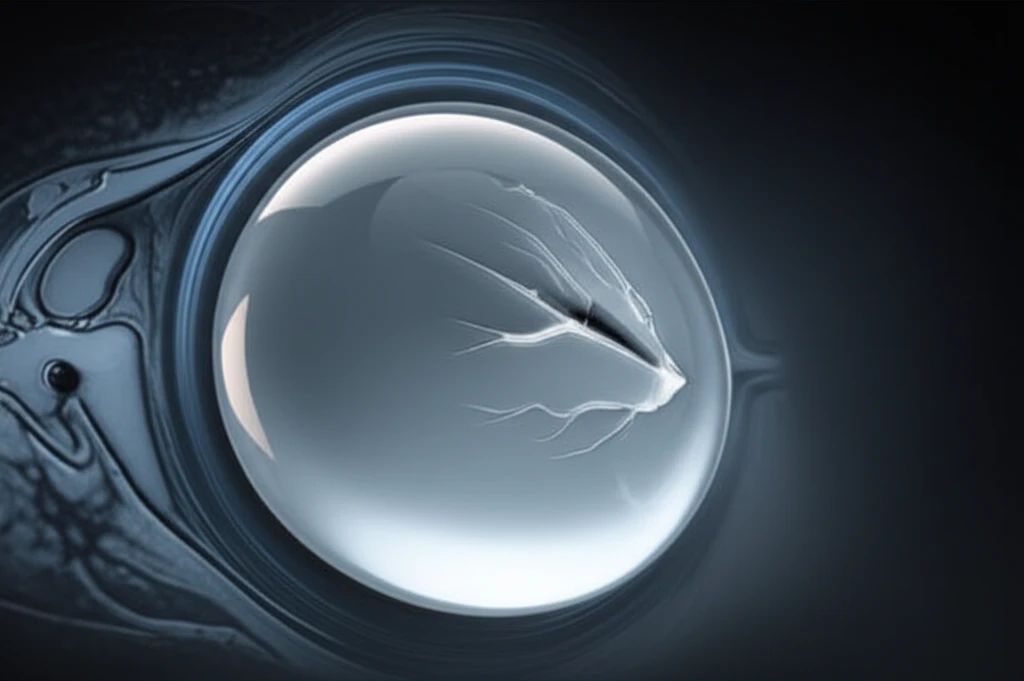
Breast implant with inner crack, MRI scan lines

Breast Implant MRI: Are Your Scans Telling the Whole Story?

"Uncover the truth about MRI accuracy and silicone breast implant rupture, and what it means for your health decisions."


For individuals with silicone breast implants, routine monitoring is essential to ensure their integrity and overall health. Magnetic Resonance Imaging (MRI) has become a primary tool for detecting silent ruptures, where implants may silently break down without noticeable symptoms. This article investigates the accuracy of MRI in diagnosing implant ruptures and explores the factors that can lead to misinterpretations.

According to recent data, a significant number of individuals undergo breast augmentation or reconstruction each year, making the longevity and safety of breast implants a widespread concern. While MRI is highly regarded for its detailed imaging capabilities, understanding its limitations is crucial for both patients and healthcare providers. This ensures informed decisions about monitoring, potential interventions, and overall well-being.

This article analyzes the complexities of MRI results in the context of silicone breast implants, examining a study that correlates MRI findings with surgical outcomes. By understanding the nuances of implant rupture diagnosis, individuals can better navigate their healthcare journey and avoid unnecessary procedures based on potentially misleading information.

MRI vs. Reality: Unpacking the Accuracy of Breast Implant Scans

Breast implant with inner crack, MRI scan lines

A study published in the International Journal of Women's Health investigated the accuracy of MRI in detecting silicone breast implant ruptures. The research included 50 patients with 85 silicone gel implants, assessing both clinical examinations and MRI results. Post-surgery, the intraoperative findings were compared to the MRI diagnoses to determine the imaging technique's reliability.

The study revealed some surprising discrepancies. While MRI diagnosed implant rupture in 26% of the implants, only a portion of these diagnoses were confirmed during surgery. Specifically, in the 17 removed implants, MRI's positive results corresponded with intraoperative findings in just 41% of cases. This means that a significant number of MRI scans indicated rupture when the implants were, in fact, intact.

  • False Positives: MRI indicated rupture, but surgery showed the implant was intact.
  • Symptom Disconnect: Some patients with confirmed ruptures had no clinical symptoms.
  • Inner Layer Issues: Ultrasound revealed disruptions in the inner layers of the implant, even when the outer shell was intact.
These findings highlight a critical issue: MRI results may not always provide a complete or accurate picture of implant integrity. The study suggests that ruptures involving only the inner layers of the implant shell, while the outer shell remains intact, can lead to misdiagnosis on MRI. This is particularly relevant because such subtle ruptures may not always present clinical symptoms, making them harder to detect through physical examination alone.

Making Informed Choices: What This Means for You

The decision to undergo breast implant removal or replacement should not rest solely on MRI results. It's crucial to consider your symptoms, conduct a thorough clinical examination, and discuss your specific concerns and wishes with your plastic surgeon. Understanding the limitations of MRI and exploring alternative diagnostic methods can empower you to make well-informed choices about your health and well-being.

About this Article -

This article was crafted using a human-AI hybrid and collaborative approach. AI assisted our team with initial drafting, research insights, identifying key questions, and image generation. Our human editors guided topic selection, defined the angle, structured the content, ensured factual accuracy and relevance, refined the tone, and conducted thorough editing to deliver helpful, high-quality information.See our About page for more information.

Everything You Need To Know

1

What is a breast implant MRI and why is it used?

An MRI, or Magnetic Resonance Imaging, is a sophisticated imaging technique used to monitor the integrity of silicone breast implants. It is valued for its detailed images that can help detect silent ruptures, where implants break down without causing obvious symptoms. However, its accuracy isn't absolute, and results can sometimes be misleading, leading to potential misinterpretations regarding implant health.

2

How accurate are MRI scans for detecting breast implant ruptures?

The accuracy of MRI scans in detecting silicone breast implant ruptures can be variable. A study in the International Journal of Women's Health showed that MRI sometimes indicates rupture when implants are actually intact. This discrepancy highlights the importance of not relying solely on MRI results for decisions about implant removal or replacement. Clinical examinations and patient symptoms should also play significant roles in the evaluation process.

3

What are 'false positives' in the context of breast implant MRI, and why are they important?

False positives occur when an MRI suggests a silicone breast implant has ruptured, but surgery reveals the implant is intact. These misleading results can lead to unnecessary anxiety and potentially unwarranted surgical procedures. This is significant because it emphasizes the need for comprehensive evaluation beyond MRI findings alone, considering clinical symptoms and other diagnostic methods to confirm the actual state of the implant.

4

What are 'inner layer ruptures' and how do they affect MRI accuracy?

Inner layer ruptures refer to disruptions in the inner layers of a silicone breast implant while the outer shell remains intact. These types of ruptures can be particularly challenging to detect with MRI, potentially leading to misdiagnosis. Ultrasound may be useful in such cases. Because these ruptures might not present noticeable clinical symptoms, they highlight the necessity of using a combination of diagnostic approaches and careful clinical assessment for accurate evaluation.

5

How can I make informed decisions about my breast implants based on MRI results and other factors?

To make informed decisions about your breast implants, it's crucial to consider your symptoms, undergo thorough clinical examinations, and openly discuss concerns with your plastic surgeon. The limitations of MRI should be understood, and alternative diagnostic methods might be explored to get a comprehensive view of your implant's condition. Decisions about implant removal or replacement should not rest solely on MRI results but should incorporate a holistic evaluation of your health and well-being.

Newsletter Subscribe

Subscribe to get the latest articles and insights directly in your inbox.