
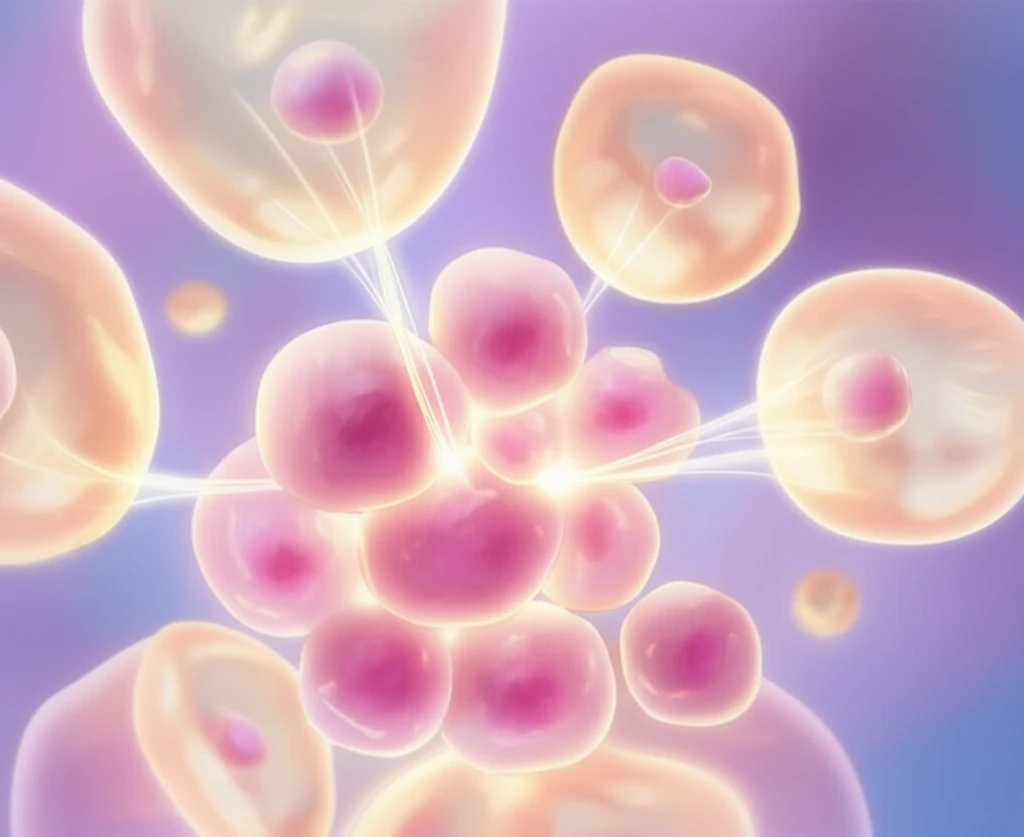
Breast Cancer's Hidden Allies: How Fat Cells Fuel Tumor Growth

"Unveiling the role of fat tissue and its complex relationship with breast cancer progression, offering new targets for therapy."
Breast cancer is a major health concern for women, affecting one in eight during their lifetime. While advancements in detection and treatment have improved outcomes, resistance to therapies remains a significant challenge. Researchers are constantly seeking new targets to disrupt cancer's growth and spread, and one promising area involves understanding the tumor microenvironment – the complex ecosystem surrounding cancer cells.
A key player in this microenvironment is fat tissue, specifically the adipocytes (fat cells) that reside within it. These cells aren't just passive bystanders; they actively interact with cancer cells, influencing their behavior. Recent studies have highlighted the role of autotaxin (ATX), a protein produced by fat cells, in promoting breast cancer progression. ATX leads to the creation of lysophosphatidic acid (LPA) in the body.
New research dives into the specific roles different mammary cell types play in the ATX-LPA axis, aiming to pinpoint the main contributors of ATX within both cancerous and healthy breast tissue. By understanding these cellular interactions, scientists hope to identify more effective therapeutic targets.
Decoding the Fat-Cancer Connection: ATX and LPA
The study meticulously isolated and compared various cell populations from breast tumors and healthy mammary tissue. These included:
- Epithelial cells (cells that line the mammary ducts)
- Mesenchymal cells (cells that provide structural support)
- Adipose-derived stem cells (ADSCs) from fat tissue near and far from tumors
- Healthy ADSCs
- ADSCs and mesenchymal cells predominantly expressed LPAR1, while epithelial cells mainly expressed LPAR6.
- ADSCs were the primary producers of ATX, particularly those found in tumor-adjacent fat tissue. This production decreased when healthy ADSCs were induced to differentiate into mature fat cells, but increased in ADSCs from tumor patients.
- Cancer cell lines themselves did not express ATX.
Targeting the Source: A New Avenue for Treatment
This research underscores the complex interplay between cancer cells and their surrounding environment. By identifying ADSCs and adipocytes as the main producers of ATX in breast cancer, the study points to a potential new therapeutic strategy: targeting the ATX-LPA axis.
The study also found that each mammary cell population plays a different role in the ATX-LPA axis with ADSCs and adipocytes being the main source of ATX in tumor patients in our experimental setting. Inhibitors of this axis may therefore present a valuable target for pharmacological therapies.
Inhibiting ATX could disrupt the LPA production, potentially starving the tumor and reducing its ability to grow and spread. Further research is needed to explore the effectiveness and safety of ATX inhibitors in breast cancer treatment, but this study provides a strong rationale for pursuing this approach. It also opens avenues for personalized medicine, where treatments are tailored based on the specific characteristics of a patient's tumor microenvironment.