
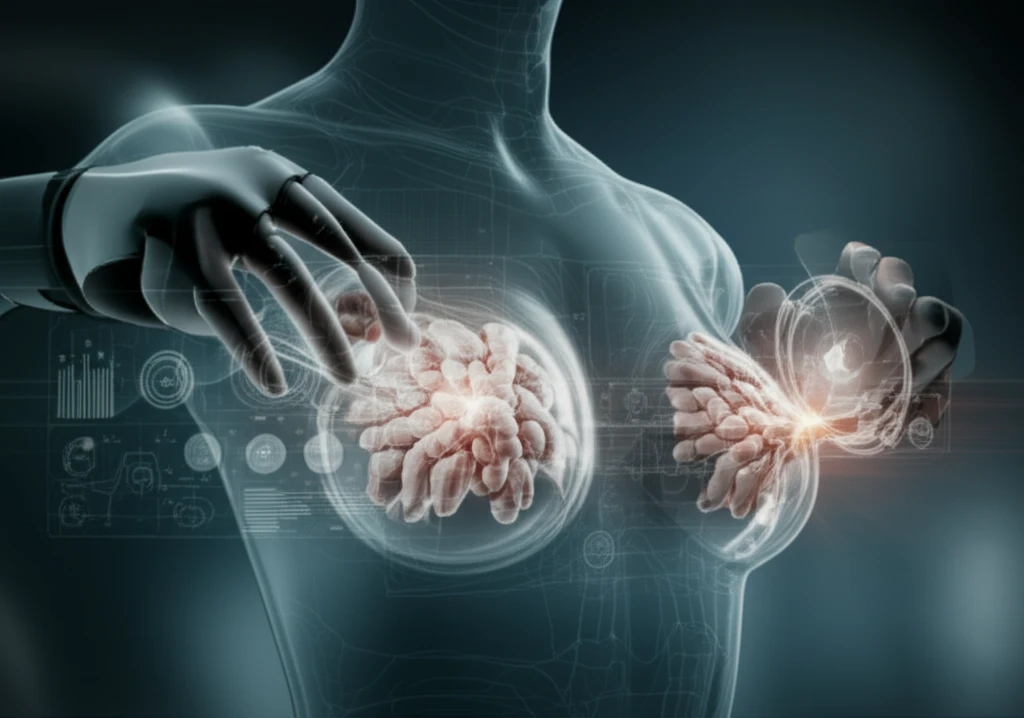
Breast Augmentation Training: Is This Simulator the Future?

"A new simulator offers a safe, effective way for surgeons to master breast augmentation, potentially transforming training and improving patient outcomes."
In surgical education, mastering aesthetic procedures like breast augmentation presents a unique challenge. Residency programs often limit exposure to these techniques, creating a gap in training. This is where simulation steps in, offering a risk-free environment for honing skills and building confidence.
Recognizing the need for better training tools, researchers developed the Montreal Augmentation Mammoplasty Operation (MAMO) simulator. This innovative device aims to provide an adjunctive training method, and assessment tool to complement the evolving competency-based surgical curriculum, allowing residents to practice and refine their skills before operating on patients.
The study detailed in this article explores the MAMO simulator's design, validation, and potential impact on breast augmentation training. By assessing its realism, effectiveness, and reliability, the research highlights a significant step forward in surgical education for aesthetic procedures.
The MAMO Simulator: A Hands-On Approach to Surgical Excellence
The Montreal Augmentation Mammoplasty Operation (MAMO) simulator was meticulously designed to replicate the key anatomical structures and procedural steps involved in breast augmentation. Key features are:
- Skin envelope with disposable skin patches: Allows markings and incisions without compromising the base structure.
- Velcro attachments: Secures the pectoralis major muscle to the rib cage, mimicking subpectoral plane development via electrocautery.
- Reusable base: Costs approximately $350, with disposables estimated at $10-12 per use.
The Future of Surgical Training: Enhanced Competence, Improved Outcomes
The study's findings suggest that the MAMO simulator holds significant promise as a training tool for breast augmentation. Expert surgeons consistently outperformed residents, demonstrating the simulator's ability to differentiate skill levels. The simulator's construct validity proves the simulator to be valid and the assessment scales to be reliable.
While the MAMO simulator represents a significant advancement, the authors acknowledge certain limitations. The simulator cannot fully replicate the complexities of a live surgery, such as bleeding. Development is underway to overlay augmented reality to produce a hybrid virtual environment that provides realistic animated clinical scenarios.
The MAMO simulator serves as a model for future innovations. As competency-based education becomes the standard, tools like this will play a vital role in shaping the next generation of plastic surgeons, ultimately leading to enhanced patient care and outcomes.