
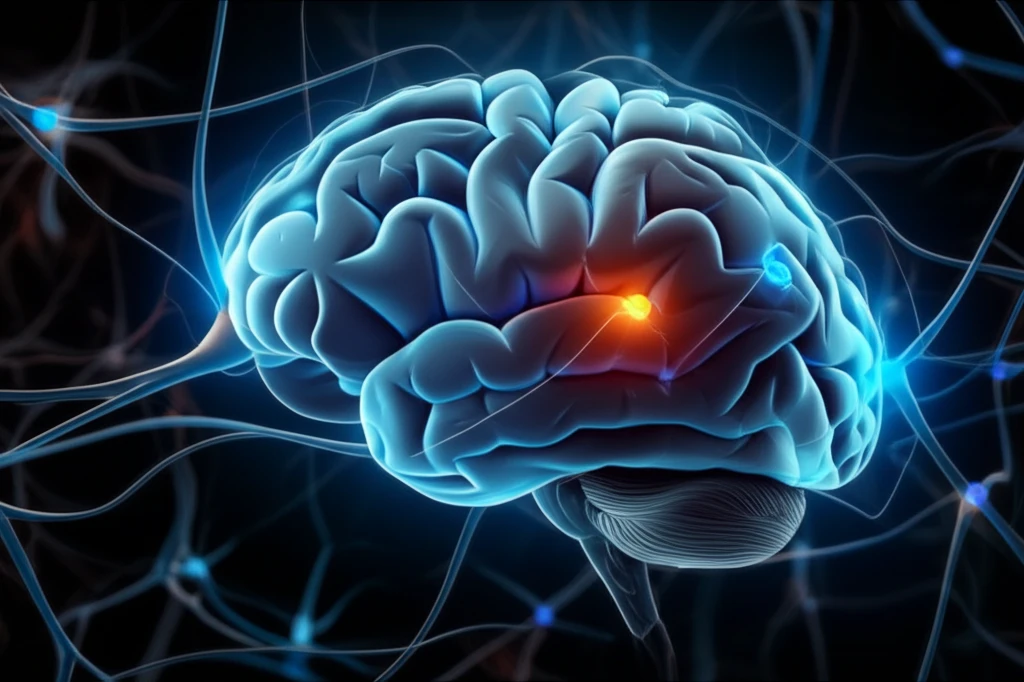
Illustration of mGluR5 and NMDA receptors within a brain, symbolizing morphine tolerance

Breaking Down Morphine Tolerance: How Your Brain Responds and What It Means for Pain Management

"Understanding the Neuroscience Behind Opioid Tolerance: A Look at mGluR5, NMDA Receptors, and the Complex Dance of Pain and Relief"


Morphine, a powerful opioid medication, has long been a cornerstone in pain management. Its ability to provide relief from severe pain is undeniable, but the path to pain relief with morphine isn't always smooth. Chronic use often leads to a significant hurdle: tolerance. As the body adapts, the initial effective dose becomes less potent, requiring higher doses to achieve the same level of pain relief, and in some cases, making the medication ineffective.

This phenomenon of tolerance is not merely a matter of the body getting used to the drug; it's a complex interplay of neurological processes. Within the brain, specific receptors and pathways are activated or suppressed, leading to altered responses to the drug. Recent research delves into the interactions between key receptors, particularly the metabotropic glutamate receptor 5 (mGluR5) and the N-methyl-D-aspartate (NMDA) receptor, to shed light on the mechanisms driving morphine tolerance.

This article delves into the science behind morphine tolerance, examining the roles of mGluR5 and NMDA receptors in this process. We'll explore the findings of recent studies, providing insights into the brain's adaptation to morphine and exploring the potential implications for more effective and sustainable pain management strategies.

The Cellular Dance: How mGluR5 and NMDA Receptors Interact

Illustration of mGluR5 and NMDA receptors within a brain, symbolizing morphine tolerance

At the heart of understanding morphine tolerance lies the intricate relationship between mGluR5 and NMDA receptors in the brain. These receptors are crucial players in the central nervous system, involved in various functions, including pain processing. mGluR5, in particular, is a type of receptor that responds to the neurotransmitter glutamate, a key chemical messenger in the brain. NMDA receptors, on the other hand, are ion channels that are also activated by glutamate. They play a vital role in synaptic plasticity, the brain's ability to adapt and learn.

Chronic morphine use can trigger changes in the expression and activity of both mGluR5 and NMDA receptors. Studies show that the levels of mGluR5 increase with the development of tolerance. Furthermore, the NMDA receptors, specifically their subunits, become altered. One critical change is the phosphorylation of the NR2B subunit of the NMDA receptor. Phosphorylation, the addition of a phosphate group to a protein, can modify the receptor's activity, often making it more responsive. The interaction of these receptors within the brain's structure has significant implications.

  • mGluR5's Role: Responds to glutamate; involved in various brain functions, including pain.
  • NMDA Receptors: Ion channels activated by glutamate; essential for synaptic plasticity.
  • Morphine's Impact: Chronic use increases mGluR5 levels and alters NMDA receptor subunits, notably NR2B phosphorylation.
  • Functional Significance: These changes influence the brain's response to morphine and contribute to tolerance.
The research indicates that mGluR5-mediated signaling pathways, particularly those involving protein kinase C (PKC), have a significant role in morphine tolerance. This suggests that targeting mGluR5 and related pathways could provide new avenues for managing tolerance and improving pain relief. The interplay between these receptors and the subsequent signaling cascades creates a complex environment where tolerance is not merely an adaptation, but a series of molecular events that lead to changes in brain function and, consequently, the effectiveness of the medication.

Charting the Course: Future Directions in Pain Management

Understanding the role of mGluR5 and NMDA receptors in morphine tolerance opens up exciting avenues for future pain management strategies. By targeting these specific receptors and pathways, researchers aim to develop more effective treatments that minimize tolerance and maximize pain relief. Further investigation into these neurological mechanisms will likely pave the way for innovative approaches, improving the lives of individuals who depend on opioid medications to manage their pain.

About this Article -

This article was crafted using a human-AI hybrid and collaborative approach. AI assisted our team with initial drafting, research insights, identifying key questions, and image generation. Our human editors guided topic selection, defined the angle, structured the content, ensured factual accuracy and relevance, refined the tone, and conducted thorough editing to deliver helpful, high-quality information.See our About page for more information.

This article is based on research published under:

DOI-LINK: 10.1016/j.biopha.2018.12.042, Alternate LINK

Title: Metabotropic Glutamate Receptor 5 Signalling Induced Nmda Receptor Subunits Alterations During The Development Of Morphine-Induced Antinociceptive Tolerance In Mouse Cortex

Subject: Pharmacology

Journal: Biomedicine & Pharmacotherapy

Publisher: Elsevier BV

Authors: Min Huang, Limin Luo, Yu Zhang, Wenying Wang, Jing Dong, Wenjie Du, Wei Jiang, Tao Xu

Published: 2019-02-01

Everything You Need To Know

1

What is morphine tolerance, and why does it matter in pain management?

Morphine tolerance occurs when chronic morphine use leads to a reduced response to the drug. This means that higher doses of morphine are needed to achieve the same level of pain relief that was initially obtained with a lower dose. In some cases, morphine can become ineffective. This matters in pain management because it complicates treatment, potentially leading to increased dosage, side effects, and reduced quality of life for individuals relying on morphine for pain relief. Understanding the mechanisms behind morphine tolerance is essential for developing better pain management strategies that minimize tolerance and maximize pain relief.

2

How do mGluR5 and NMDA receptors contribute to morphine tolerance in the brain?

mGluR5 and NMDA receptors are key players in the development of morphine tolerance. Chronic morphine use can trigger changes in these receptors. Specifically, the levels of mGluR5 increase, and NMDA receptors undergo alterations, such as the phosphorylation of the NR2B subunit. These changes modify how the brain responds to morphine, decreasing its effectiveness and contributing to tolerance. The interaction of mGluR5 and NMDA receptors within the brain's structure has significant implications for pain processing and the brain's ability to adapt.

3

What role does glutamate play in the context of mGluR5 and NMDA receptors regarding morphine tolerance?

Glutamate is a neurotransmitter that activates both mGluR5 and NMDA receptors. mGluR5 responds to glutamate, influencing various brain functions, including pain processing. NMDA receptors are ion channels that are also activated by glutamate and are crucial for synaptic plasticity. When morphine is used chronically, the interaction between glutamate and these receptors changes. Targeting mGluR5-mediated signaling pathways, particularly those involving protein kinase C (PKC), could be a new avenue for managing tolerance and improving pain relief.

4

How does the phosphorylation of the NR2B subunit of the NMDA receptor impact morphine tolerance, and why is it significant?

The phosphorylation of the NR2B subunit of the NMDA receptor is a critical change that occurs with chronic morphine use. Phosphorylation, which is the addition of a phosphate group to a protein, modifies the receptor's activity, often making it more responsive. This alteration influences the brain's response to morphine and contributes to the development of tolerance. Understanding the specific mechanisms by which NR2B phosphorylation affects receptor function can provide insights into potential therapeutic targets for reducing or preventing morphine tolerance.

5

What future pain management strategies are being explored based on the understanding of mGluR5 and NMDA receptors?

Based on the understanding of the roles of mGluR5 and NMDA receptors in morphine tolerance, future pain management strategies involve targeting these specific receptors and pathways. Researchers aim to develop more effective treatments that minimize tolerance and maximize pain relief. This could involve drugs that modulate the activity of mGluR5 or NMDA receptors, or interventions that prevent the changes in receptor expression and function that occur with chronic morphine use. Further investigation into these neurological mechanisms will likely lead to innovative approaches, improving the lives of individuals who depend on opioid medications to manage their pain.

Newsletter Subscribe

Subscribe to get the latest articles and insights directly in your inbox.