
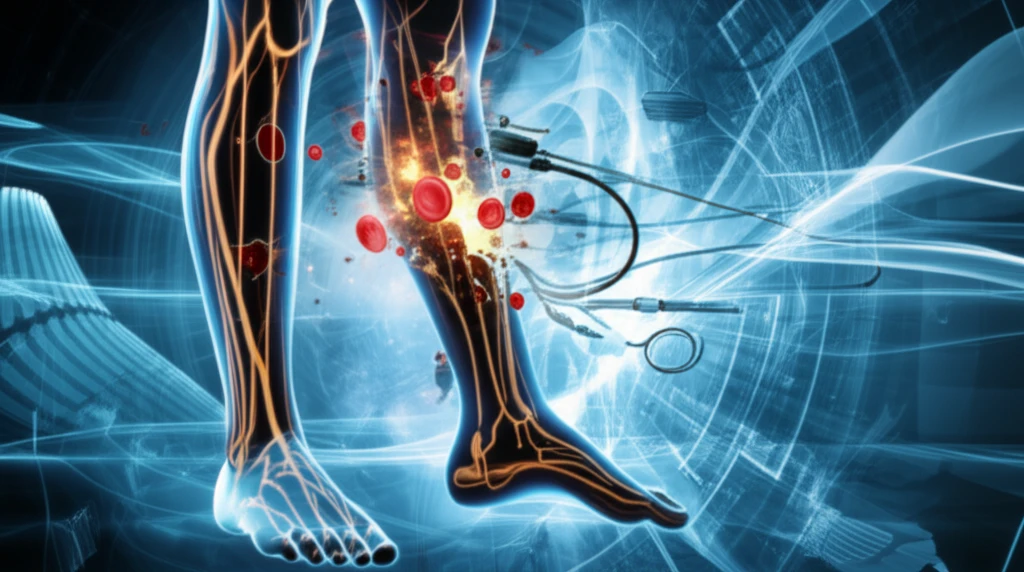
Illustration of advanced medical treatments for DVT.

Breaking Down Blood Clots: A Guide to Innovative Treatments for Leg Health

"From Calf-Squeezes to Cutting-Edge Techniques: Understanding the Latest in Deep Vein Thrombosis Treatment"


Deep vein thrombosis (DVT), a serious condition involving blood clots in the deep veins, often in the legs, affects millions worldwide. It's a condition that can be painful, debilitating, and even life-threatening if left untreated. But, there's good news: medical science continues to make strides in treating and managing DVT, providing hope and effective solutions for those affected. This article delves into the innovative treatments, offering insights into the methods that are changing the game in leg health.

Understanding DVT is the first step toward effective management. This isn't just about knowing the symptoms; it's about understanding the underlying causes and the range of treatment options available. From the latest surgical techniques to lifestyle adjustments, we'll explore how modern medicine is tackling this condition.

This guide will help you navigate the complex world of DVT treatments, demystifying medical jargon and focusing on the most promising, cutting-edge approaches. Whether you're a patient, caregiver, or simply curious about leg health, you'll find valuable information to make informed decisions and improve your quality of life.

Unveiling DVT: Understanding the Enemy Within

Illustration of advanced medical treatments for DVT.

Before diving into treatments, it's crucial to understand DVT. This condition typically occurs when a blood clot forms in one or more of the deep veins in your leg or arm. Several factors can increase your risk, including prolonged immobility, surgery, certain medications, and underlying medical conditions. Recognizing the symptoms—swelling, pain, redness, and warmth in the affected area—is the first step in seeking timely medical attention.

The standard treatments have evolved significantly over the years. Anticoagulants, or blood thinners, remain a cornerstone of DVT treatment, helping to prevent clots from growing and new ones from forming. However, the focus is increasingly shifting towards methods that not only dissolve clots but also address the underlying causes, aiming for long-term health and well-being.

  • Symptoms: Pain, Swelling, Redness, Warmth
  • Causes: Immobility, Surgery, Medications
  • Complications: Pulmonary Embolism, Post-Thrombotic Syndrome
The impact of DVT extends beyond immediate physical symptoms. Untreated DVT can lead to serious complications, including pulmonary embolism (a clot traveling to the lungs) and post-thrombotic syndrome, which can cause chronic pain, swelling, and skin changes in the affected limb. That's why early detection and effective treatment are absolutely critical.

Empowering Your Leg Health: The Path Forward

DVT can be a frightening condition, but with the right information and proactive steps, you can effectively manage it. This article offers a starting point for understanding the disease and exploring the different treatment options available. Remember that consulting with healthcare professionals is very important. They can provide personalized medical advice, treatment, and support to help you achieve the best possible outcome. As research continues, the outlook for DVT treatment grows brighter, offering hope and improved quality of life for individuals around the world.

About this Article -

This article was crafted using a human-AI hybrid and collaborative approach. AI assisted our team with initial drafting, research insights, identifying key questions, and image generation. Our human editors guided topic selection, defined the angle, structured the content, ensured factual accuracy and relevance, refined the tone, and conducted thorough editing to deliver helpful, high-quality information.See our About page for more information.

This article is based on research published under:

DOI-LINK: 10.3348/jksr.2011.64.3.231, Alternate LINK

Title: Aspiration Thrombectomy Using A Guiding Catheter In Acute Lower Extremity Deep Vein Thrombosis: Usefulness Of The Calf-Squeeze Technique

Subject: Radiology, Nuclear Medicine and imaging

Journal: Journal of the Korean Society of Radiology

Publisher: The Korean Society of Radiology

Authors: Jae A Lee, Hyo Sung Kwak, Young Min Han, Hee Chul Yu

Published: 2011-01-01

Everything You Need To Know

1

What are the initial signs and symptoms I should watch out for that might indicate I have Deep Vein Thrombosis (DVT)?

The primary symptoms of Deep Vein Thrombosis (DVT) include pain, swelling, redness, and warmth in the affected limb, typically the leg. Recognizing these symptoms early is crucial for seeking timely medical attention and preventing potential complications. Ignoring these symptoms can lead to more serious issues such as Pulmonary Embolism or Post-Thrombotic Syndrome.

2

Beyond just knowing the symptoms, what are some of the main factors that can actually increase my risk of developing Deep Vein Thrombosis (DVT)?

Several factors can elevate your risk of developing Deep Vein Thrombosis (DVT). These include prolonged immobility, such as during long flights or bed rest, recent surgery, the use of certain medications, and underlying medical conditions that affect blood clotting. Awareness of these risk factors can help individuals and healthcare providers take preventive measures.

3

What are the most serious complications that can arise if Deep Vein Thrombosis (DVT) is left untreated?

Untreated Deep Vein Thrombosis (DVT) can lead to significant complications. The most immediate threat is Pulmonary Embolism, which occurs when a clot breaks free and travels to the lungs, potentially causing life-threatening blockage. Another serious long-term complication is Post-Thrombotic Syndrome, characterized by chronic pain, swelling, and skin changes in the affected limb, significantly impacting quality of life.

4

I've heard about blood thinners. How do anticoagulants work in treating Deep Vein Thrombosis (DVT), and are there any new approaches that go beyond just preventing more clots?

Anticoagulants, or blood thinners, remain a cornerstone in the treatment of Deep Vein Thrombosis (DVT). They work by preventing existing clots from growing larger and reducing the risk of new clots forming. Newer treatment approaches are focusing on methods that not only dissolve the existing clots but also address the underlying causes of DVT, aiming for more comprehensive and long-term health. This includes innovative surgical methods and lifestyle adjustments.

5

Since lifestyle adjustments are mentioned, what specific lifestyle changes can I make to help manage or prevent Deep Vein Thrombosis (DVT), and how do these changes complement medical treatments?

While specific lifestyle adjustments are not detailed, the text suggests that they play a role in managing or preventing Deep Vein Thrombosis (DVT). These changes could include regular exercise to improve circulation, maintaining a healthy weight to reduce pressure on the veins, and staying hydrated. Such adjustments likely complement medical treatments like anticoagulants by supporting overall vascular health and reducing risk factors associated with DVT. However, the exact nature of these lifestyle changes and their integration with medical treatments would require further clarification from healthcare professionals.

Newsletter Subscribe

Subscribe to get the latest articles and insights directly in your inbox.