
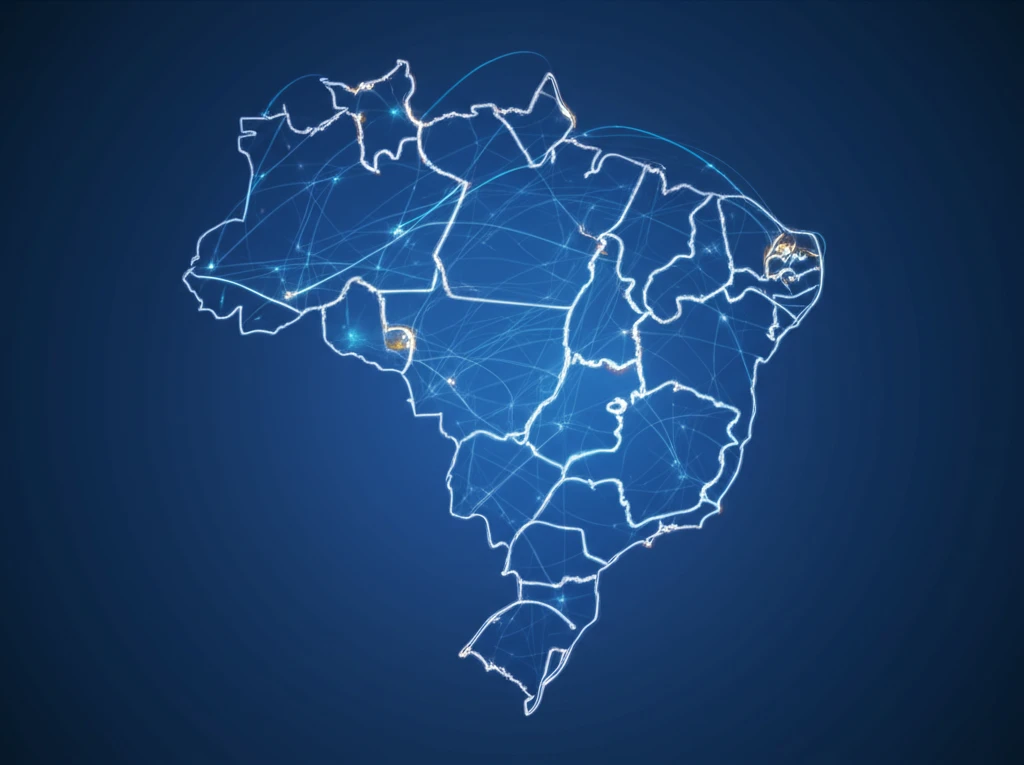
Brazil's Health Surveillance System: How Far Has It Come?

"An inside look at the advancements and persistent challenges in Brazil's health surveillance infrastructure."
Since its establishment in 1988, Brazil's Unified Health System (SUS) has marked significant progress in public health, including reduced infant mortality and successful programs for infectious diseases and family health. These advancements, coupled with political and administrative reforms, have aimed to create more effective health interventions.
However, the implementation of these strategies has also led to fragmented health actions and a centralized approach, limiting the potential impact of health promotion and protection efforts. This fragmentation necessitates a more organized approach to reduce health risks and improve the system's responsiveness.
In the 1990s, discussions emerged about the need for interventions beyond mere prevention and damage control, focusing on the dynamic nature of health and disease. For SUS, aiming to be an integrated system, the importance of implementing organizational structures toward strengthening became clear. This gave rise to the concept of Health Surveillance (VS), a central idea for public health theory and practice, seeking more effective responses to health demands through coordinated actions.
The Trajectory of Health Surveillance in Brazil: A Historical Overview
The evolution of health surveillance in Brazil is marked by distinct phases, each shaped by specific health challenges and policy responses. Initially focused on epidemiological surveillance of communicable diseases, the system gradually expanded to include environmental and sanitary aspects.
- Early Focus on Communicable Diseases: Up to the 1940s, surveillance primarily targeted contacts of individuals with communicable diseases.
- Expansion in the 1950s: The concept broadened to include the systematic monitoring of adverse health events to improve control measures.
- Creation of the National System of Epidemiological Surveillance (SNVE) in the 1970s: Influenced by the World Health Organization (WHO) and the Pan American Health Organization (PAHO), this system formalized the role of epidemiological surveillance.
- Decentralization in the 1990s: The implementation of the Unified Health System (SUS) led to the decentralization of surveillance activities, with municipalities gaining greater autonomy.
- Establishment of the Health Surveillance Secretariat (SVS) in 2003: This marked a significant step toward integrating epidemiological, environmental, and sanitary surveillance efforts.
Looking Ahead: Challenges and Opportunities for Brazil's Health Surveillance System
While Brazil's Health Surveillance System has come a long way, significant challenges persist. These include overcoming fragmented actions, promoting better coordination among different levels of government, and ensuring that surveillance efforts translate into concrete improvements in public health outcomes.
To move forward, it is crucial to foster a more collaborative environment where epidemiological, environmental, and sanitary surveillance practices are integrated and tailored to the specific needs of each territory. This requires innovative approaches to data collection, analysis, and the implementation of targeted interventions.
Ultimately, the success of Brazil's Health Surveillance System depends on its ability to adapt to evolving health challenges, promote intersectoral collaboration, and empower local communities to take ownership of their health. By addressing these challenges, Brazil can unlock the full potential of its health surveillance system and create a healthier future for all its citizens.