
Brass Under Pressure: Unlocking the Secrets to Stronger, Longer-Lasting Metals

"Discover how laser shock peening (LSP) can revolutionize the fatigue resistance of brass and other metal alloys, leading to safer and more durable products."
In today's world, the demand for robust and reliable metal components is ever-increasing. From the springs in your car to the bearings in heavy machinery, metal alloys are the unsung heroes of countless applications. However, these components often face a relentless enemy: fatigue. Fatigue, the weakening of a material due to repeated stress, is a leading cause of failure in metallic structures. Understanding and mitigating fatigue is therefore crucial for ensuring the safety, longevity, and efficiency of countless products.
Copper alloys, prized for their excellent workability and fatigue resistance, are frequently used in critical applications. Yet, even these materials are susceptible to fatigue failure under cyclic loading. Enter laser shock peening (LSP), a revolutionary surface modification technology that's changing the game for metal durability. LSP can dramatically improve the fatigue resistance of materials by inducing compressive residual stress and modifying the material's microstructure.
Imagine a world where bridges last longer, airplanes fly safer, and machinery operates more reliably – all thanks to a deeper understanding of how to strengthen metals at a microscopic level. This is the promise of LSP, and researchers are working tirelessly to unlock its full potential. Let's delve into the science behind LSP, exploring how it works, its benefits, and its transformative impact on the world of metal alloys.
The Hidden Cost of Metal Fatigue
Metal fatigue is responsible for more in-service structural failures than any other single damage mechanism, making it the dominant threat to long-lived metal components. Understanding how metals behave under repeated stress is therefore central to extending the service life of everything from structural steel to rated flanges. The practical challenge is compounded by the fact that most metals are dense, strong, and ductile, yet still fail unexpectedly as fatigue accumulates.
Surface Treatments and Their Limits
Surface engineering methods such as laser peening and mechanical shot peening are the accepted approaches for hardening metals, working by imparting deep, high-magnitude compressive residual stresses that boost fatigue resistance. Both processes are comparable and generally applicable to the surface treatment of various metals and alloys. However, benefits depend on consistent processing, and irregular crystals can still cause metals to be brittle despite treatment.
From Crystals to Shock Waves
Foundational metallurgy established that the regular arrangement of atoms in metals gives them their crystalline structure, while irregular crystals can cause metals to be brittle. Building on that basis, engineers developed accepted theories of metal fatigue along with design practices to reduce it. Laser shock peening has since matured through roughly three decades of documented innovation as a surface strengthening technique.
The Science of Laser Shock Peening: Transforming Metal from the Inside Out
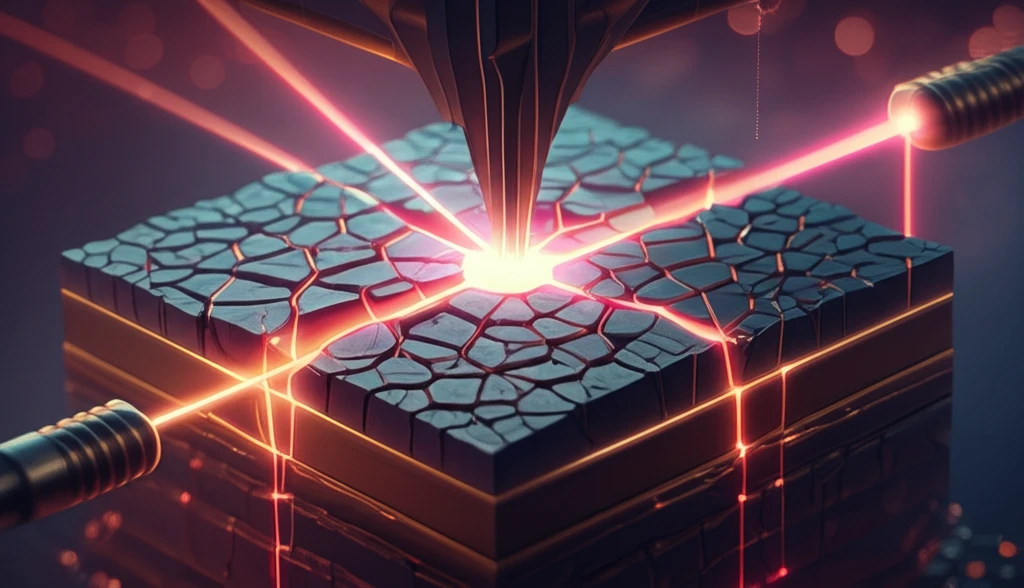
Laser shock peening (LSP) is a sophisticated process that uses high-energy laser pulses to create shockwaves on the surface of a metal. This process isn't just skin-deep; it alters the very microstructure of the material, leading to significant improvements in its resistance to fatigue and other forms of stress. It works by using focused bursts of high-energy laser light to create plasma on the surface of the material. This plasma rapidly expands, generating a powerful shockwave that propagates through the metal.
- Increases compressive residual stress: Making the metal more resistant to cracking.
- Refines grain structure: Enhancing strength and toughness.
- Extends fatigue life: Allowing metal components to last longer under stress.
- Transfers fatigue crack initiation from surface to subsurface.
The 2026 Patent Landscape
The 2026 laser shock peening patent landscape reflects three decades of accumulated innovation, with key assignees continuing to advance surface strengthening technology. Emerging directions highlighted in recent analysis include applications in hydrogen environments and spatio-temporal beam shaping. Reviews describe laser shock peening as a new, effective, and rapidly developing surface modification technology.
When Metals Still Break
Despite advanced surface treatment, fatigue theory acknowledges design considerations that must be respected to reduce metal fatigue, and no single technique eliminates risk entirely. Irregular crystals can still cause metals to be brittle, undermining the integrity of treated components. Fatigue testing via S-N curves therefore remains essential, since fatigue causes more in-service failures than any other single damage mechanism.
Laser Peening Versus Shot Peening
Laser shock peening and conventional mechanical shot peening are comparable processes generally applicable to the surface treatment of various metals and alloys. Laser shock peening, also known as laser shot peening, is described as a new, effective, and rapidly developing surface modification technology that imparts deep compressive residual stresses. Both methods target increased fatigue resistance, but they differ in the depth and magnitude of the residual stresses produced.
The Future of Metals: Stronger, Safer, and More Sustainable
Laser shock peening represents a paradigm shift in how we approach metal durability. By understanding and harnessing the power of LSP, engineers and scientists can create materials that are stronger, safer, and more sustainable. As research continues, we can expect to see even more innovative applications of LSP across diverse industries, from aerospace and automotive to medical devices and infrastructure.
Designing Around Fatigue
Expert commentary converges on the idea that lasting metal strength comes from combining material knowledge with deliberate design practice. Accepted theories of metal fatigue are explained alongside relevant design considerations to reduce fatigue, and the regular crystalline arrangement of atoms underpins metal strength and ductility. Peening technologies are therefore seen as complementary to, not a replacement for, sound design.
Beam Shaping and Hydrogen Readiness
Future work in laser shock peening is pointing toward spatio-temporal beam shaping, which could tailor residual stress fields with greater precision. Analysts also highlight emerging directions in hydrogen-related applications as the technology's patent landscape continues to evolve. These frontiers suggest that surface strengthening techniques will keep advancing in the coming years.
The Wider Cost of Failure
Fatigue is responsible for more in-service structural failures than any other single damage mechanism, which is why engineering reference data, such as melting temperatures and pressure ratings for components like flanges, matters so much in design. Standardizing testing through S-N curves and accepting the limitations of current methods remain systemic industry challenges. Addressing them requires not only better materials but also consistent processes across design, manufacturing, and inspection.
From Industry to Culture
The phrase 'under pressure' carries weight beyond engineering, and the theme of metals enduring stress has also inspired creative works, including an AI-generated track titled 'Brass Under Pressure' built around a dark industrial steampunk atmosphere with heavy mechanical percussion. This cultural echo underscores how broadly the idea of material endurance resonates. Meanwhile, fatigue failures continue to affect the people who rely on metal structures every day.