
Brand Hate: Why Consumers Turn Against Their Favorite Brands

"Exploring the roots of brand hate and what companies can do to win back disgruntled customers."
In an era where consumer loyalty can shift with a single tweet, understanding the darker side of brand relationships is crucial. It's easy to talk about brand love, but what happens when those warm feelings turn cold? Brand hate, a concept that's gaining traction in marketing and consumer behavior studies, explores the intense negative emotions consumers can harbor towards brands.
Think about it: we've all had that moment when a brand we once admired suddenly rubs us the wrong way. Maybe it's a change in product quality, a tone-deaf marketing campaign, or a perceived ethical lapse. Whatever the reason, that shift from fondness to frustration—or even outright animosity—can have serious consequences for a company's bottom line.
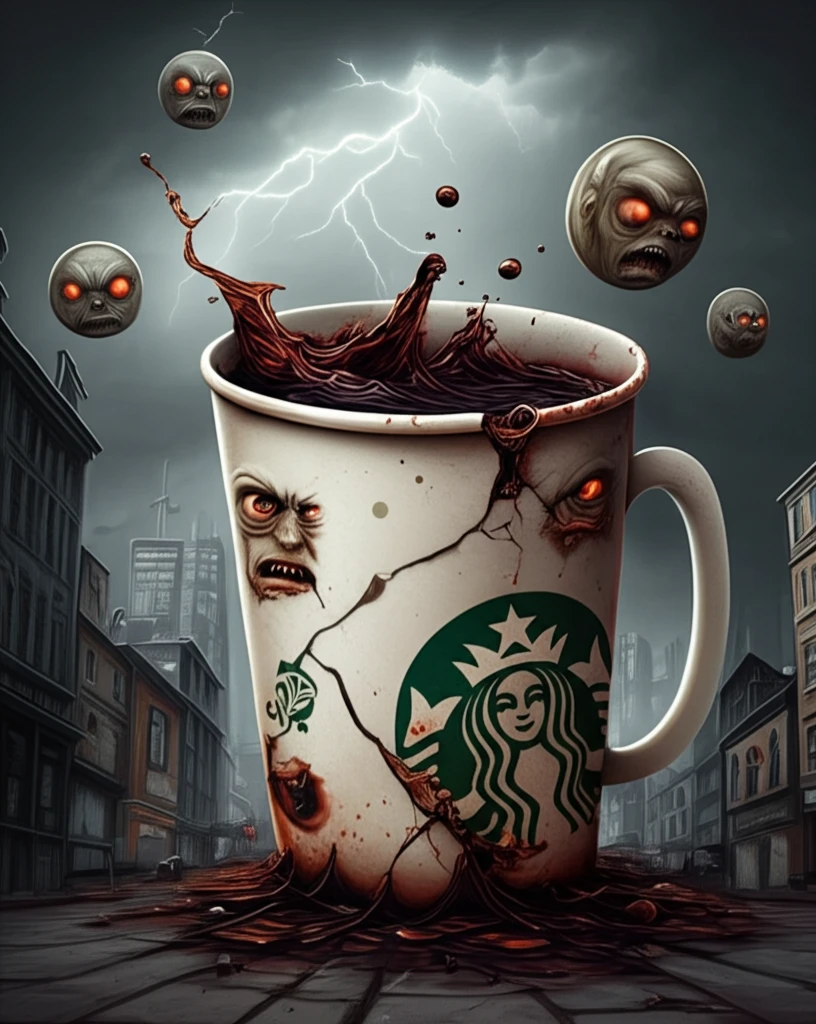
This article dives into the phenomenon of brand hate, using Starbucks as a fascinating case study. By examining the factors that contribute to negative perceptions, we'll uncover valuable insights for brands looking to navigate the complexities of consumer sentiment and avoid becoming the target of widespread disapproval.
A Problem in Need of Reliable Numbers
Reliable, up-to-date figures on brand hate are scarce, and published numbers tend to vary widely depending on how "hate" is defined (persistent avoidance, active public criticism, or one-off boycotts). Rather than resting on any single headline statistic, it is safer to observe that consumer distrust and brand backlash are widely reported across markets and product categories. Survey-based measures of negative sentiment frequently show that a meaningful minority of consumers feel actively negative toward at least one brand they once favored. Because methodologies and sample populations differ, any figures should be treated as indicative rather than definitive.
Tracking Attitudes, Missing Behavior
Research on negative consumer-brand relationships typically relies on self-reported attitude scales that measure dislike, distrust, and switching intention. These instruments are convenient and widely used, but they capture stated attitudes far more easily than actual behavior such as abandoning a brand permanently. Social-desirability bias and survey fatigue can distort responses, and most scales treat brand hate as a stable trait rather than a situation-dependent state. As a result, the standard toolkit describes correlates well but predicts when dislike escalates into sustained, public animosity much less reliably.
A Long History, A Recent Vocabulary
The idea that consumers can turn against brands is not new; boycotts and corporate scandals have been part of commercial history for generations. What has changed is the speed and visibility of backlash, with digital communication letting grievances spread and organize far faster than in earlier eras. The academic vocabulary for these dynamics, such as consumer animosity and negative brand relationships, is comparatively recent, so much of the historical record exists in journalistic and anecdotal accounts rather than systematic data. Any milestone-style timeline of brand hate should therefore be read as narrative reconstruction rather than firmly established measurement.
What Fuels Brand Hate? Exploring the Roots of Consumer Discontent
A research paper titled "Brand hate: the case of Starbucks in France" sheds light on the multifaceted nature of brand hate, revealing that it's not a monolithic emotion but rather exists on a spectrum. The researchers identified varying degrees of animosity, ranging from mild aversion to intense anger. This suggests that not all "haters" are created equal, and their reasons for disliking a brand can differ significantly.
- Cold Brand Hate: Seeing the brand as worthless.
- Warm Brand Hate: Experiencing negative emotions like repulsion, resentment, or revolt.
- Hot Brand Hate: Feeling extreme anger and anxiety towards the brand.
An Emerging Field, Still Exploratory
Recent academic work has shifted from studying satisfaction and loyalty toward the "dark side" of consumer-brand relationships, treating brand hate as a distinct phenomenon worth its own attention. Reviews in this area commonly separate antecedents (betrayal, poor service, value misalignment) from outcomes (complaining, protest, avoidance), though the specific frameworks vary from author to author. Because this strand of research is still young, most findings are exploratory and based on limited samples, so conclusions should be read as emerging rather than settled. Scholars broadly agree the area is growing, but consensus on definitions and measurement is still forming.
When the Construct Falls Short
Not all negative feelings translate into brand hate, and some observers argue the construct risks being overstated or conflated with ordinary dissatisfaction. Field evidence is mixed: consumers sometimes complain loudly yet continue repurchasing, and brands can recover from scandals that initially looked fatal. Defining exactly where dislike ends and genuine "hatred" begins has proved hard to settle, and predictive models that work in one market often fail to replicate in another. These failures point to a more nuanced picture in which alternatives, context, and the cost of switching all temper how far negative sentiment actually goes.
Hate, Avoidance, and Dissatisfaction Compared
Brand hate is commonly compared with related but distinct constructs such as general customer dissatisfaction, boycotts, and brand avoidance. Each differs in intensity, durability, and behavior: a merely disappointed customer may quietly switch, whereas brand hate implies a persistent and emotionally charged stance that can outlast any single bad experience. Comparisons also show that the same trigger can produce different outcomes depending on the consumer, the product category, and the alternatives available. Taken together, these contrasts suggest brand hate sits at the extreme end of a continuum of negative relationships rather than being a wholly separate phenomenon.
Turning the Tide: How Brands Can Combat and Overcome Negative Perceptions
Brand hate is a serious issue that can have lasting consequences. By understanding the factors that drive negative sentiment and taking proactive steps to address consumer concerns, companies can mitigate the risk of becoming a target of widespread disapproval. In today's hyper-connected world, a brand's reputation is more vulnerable than ever. Ignoring the warning signs of brand hate is a risk no company can afford to take.
What a Brand Is, and Why the Bond Can Break
Across marketing references, a brand is understood as the set of words, images, and associations that represent and distinguish a product or service in the marketplace, with strong brands eliciting an emotional response from consumers and adding value to what they represent. Because these associations are the foundation of a brand's value, the strategies of brand management that shape and protect them matter as much as the product itself. Brand names are not identical to generic or store brands, which shifts how consumers attach to—and can detach from—what a brand stands for. Even as the art and science of branding defines and communicates identity, that same emotional machinery explains why, when the bond is broken, consumer animosity can be so intense.
Directional Trends, Not Predictions
Looking ahead, brand hostility is likely to evolve together with communication platforms and consumer expectations. Earlier cycles of backlash have tended to intensify as sharing grievances becomes easier, so future research will probably need to track new channels and behaviors that existing frameworks do not yet anticipate. Any projection in this area is inherently uncertain and should be read as directional rather than predictive. The most defensible expectation is that brands will face rising scrutiny and shorter grace periods, though the precise shape of that change remains open.
Hate in a Wider System
Brand hate does not occur in isolation; it unfolds within a wider system of competition, regulation, media, and cultural expectations. Structural factors such as concentrated markets and limited alternatives can keep a disliked brand dominant even while it is widely criticized, complicating any simple link between animosity and commercial consequences. At the same time, systemic failures, such as supply-chain problems, data breaches, or value clashes, routinely ignite criticism of individual brands even when the root cause is industry-wide. A fuller understanding therefore requires looking beyond any single company to the environment in which negative sentiment forms and spreads.
Perception as the Human Bridge
According to the Ramotion explainer, a brand is defined by core elements that together work to change consumer perception and support business success. This framing suggests that how people feel about a company is shaped by deliberately crafted identity signals rather than by the product alone. If perception is the key mechanism, then the same process that builds positive associations can, when expectations are disappointed, fuel the frustration behind brand hate. Real-world impact, in this view, flows through emotional channels: perception shifts, trust erodes, and consumers distance themselves from brands that no longer reflect their expectations.