
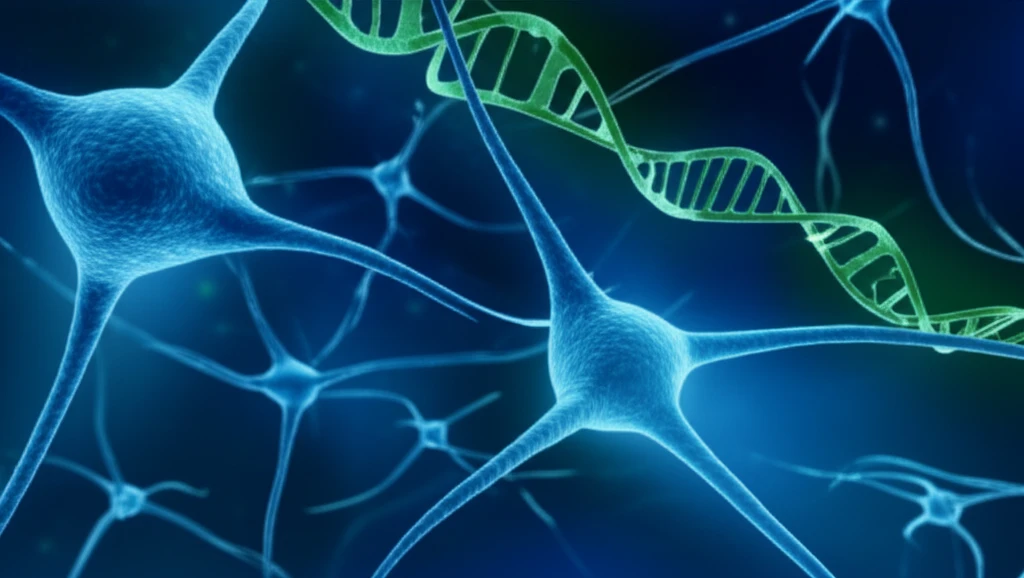
A digital illustration of interconnected neurons and DNA strands, representing the genetic basis of brain tumors.

Brain Tumor Breakthroughs: Unlocking New Avenues for Treatment and Understanding

"Dive into the latest research on brain tumors, exploring cutting-edge treatments, genetic insights, and innovative approaches that offer hope for patients and families."


Brain tumors represent a significant challenge in modern medicine, affecting individuals of all ages and backgrounds. These tumors, characterized by their complex nature and varied responses to treatment, necessitate continuous and innovative research to improve patient outcomes.

Recent advances in genomics, molecular biology, and imaging technologies have begun to unravel the intricacies of brain tumors, offering new targets for therapeutic intervention and personalized treatment strategies. Understanding the underlying mechanisms driving tumor growth and spread is crucial for developing more effective therapies.

This article synthesizes key findings from recent studies presented at a leading neuro-oncology conference, providing insights into novel treatment approaches, genetic discoveries, and innovative strategies aimed at enhancing the quality of life for those affected by brain tumors.

Decoding Tumor Migration: The PML/Polycomb/Slit Axis

A digital illustration of interconnected neurons and DNA strands, representing the genetic basis of brain tumors.

A groundbreaking study sheds light on the intricate mechanisms governing cell migration in the central nervous system (CNS), specifically focusing on the role of the Promyelocytic Leukemia protein (PML) and its interaction with the Polycomb and Slit pathways. Researchers have identified a novel axis, termed the PML/Polycomb/Slit axis, which plays a critical role in regulating the movement of both normal and neoplastic cells within the brain.

The migration of neural progenitor/stem cells (NPCs) through the rostral migratory stream (RMS) is essential for neurogenesis, the process by which new neurons are formed in the adult brain. Disruptions in this process can contribute to neoplastic transformation and the development of glioblastoma multiforme (GBM), an aggressive type of brain cancer. Understanding how GBM cells migrate through the brain parenchyma is crucial for developing strategies to inhibit their spread.

  • PML's Role: PML, a stem cell factor and RAS effector, regulates cell migration through the epigenetic control of Slit axon guidance genes.
  • Experimental Findings: Studies using genetically modified mice and human tissue samples revealed that loss of PML impairs NSC and neuroblast migration, leading to a smaller olfactory bulb.
  • Mechanism of Action: PML controls cell migration via Polycomb Repressive 2-dependent regulation of Slit axon guidance genes.
  • Clinical Significance: PML expression inversely correlates with Slit1 expression and patient prognosis in GBM, suggesting a potential therapeutic target.
  • Tumor Growth: PML loss impairs tumor growth in orthotopic animal models, further supporting its role in tumor progression.
These findings highlight a novel molecular axis that is fundamental to cell migration in both normal brain development and tumor progression, offering potential avenues for therapeutic intervention in GBM and other brain cancers.

Future Directions: Translating Research into Clinical Impact

The studies presented here represent significant strides in our understanding of brain tumors. As research continues to uncover the complex mechanisms driving tumor growth and progression, the focus shifts towards translating these findings into effective clinical strategies. By targeting specific molecular pathways and developing personalized treatment approaches, we can strive to improve outcomes and enhance the quality of life for individuals affected by these devastating conditions.

About this Article -

This article was crafted using a human-AI hybrid and collaborative approach. AI assisted our team with initial drafting, research insights, identifying key questions, and image generation. Our human editors guided topic selection, defined the angle, structured the content, ensured factual accuracy and relevance, refined the tone, and conducted thorough editing to deliver helpful, high-quality information.See our About page for more information.

Everything You Need To Know

1

What is the role of Promyelocytic Leukemia protein, or PML, in brain tumors, and why is it important?

The Promyelocytic Leukemia protein, or PML, is a stem cell factor and RAS effector that regulates cell migration. It achieves this by epigenetically controlling Slit axon guidance genes. PML's role is significant because it's a key component of the PML/Polycomb/Slit axis, which is crucial for cell movement in the brain, both during normal development and in tumor progression. Its implications are far-reaching, as PML expression inversely correlates with Slit1 expression and patient prognosis in Glioblastoma Multiforme, suggesting it could be a potential therapeutic target. Further, PML loss impairs tumor growth, highlighting its role in tumor progression.

2

What is the PML/Polycomb/Slit axis, and why is it important in the context of brain tumor research?

The PML/Polycomb/Slit axis is a novel molecular pathway that regulates cell migration within the central nervous system. It involves the interaction of the Promyelocytic Leukemia protein (PML) with Polycomb proteins and Slit axon guidance genes. This axis is significant because it plays a crucial role in both normal brain development and tumor progression, specifically in the migration of neural progenitor/stem cells and the spread of glioblastoma cells. Disruptions in this axis can lead to neoplastic transformation and impact patient prognosis in Glioblastoma Multiforme.

3

What are Slit axon guidance genes, and what is their significance in the study of brain tumors?

Slit axon guidance genes are a family of genes that play a role in guiding the growth and migration of axons, the long, thread-like parts of nerve cells that transmit signals. In the context of brain tumors, they are significant because their expression is regulated by the Promyelocytic Leukemia protein (PML) through the PML/Polycomb/Slit axis. Specifically, Slit1 expression has been found to inversely correlate with PML expression and patient prognosis in Glioblastoma Multiforme. This suggests that understanding and manipulating Slit axon guidance genes could be a therapeutic avenue for treating brain cancers. Further research might explore how to modulate the expression of Slit genes to inhibit tumor cell migration and improve patient outcomes.

4

What is Glioblastoma Multiforme, and how do the concepts discussed relate to its treatment?

Glioblastoma Multiforme, or GBM, is an aggressive type of brain cancer. It is significant because it is characterized by rapid tumor growth and the ability of tumor cells to migrate through the brain, making it difficult to treat. The Promyelocytic Leukemia protein (PML), the Polycomb proteins and Slit axon guidance genes all play a role in the migration of GBM cells and tumor progression. The inverse correlation between PML and Slit1 expression in GBM patients, as well as the finding that PML loss impairs tumor growth, suggests potential therapeutic targets for this devastating disease. Future treatment strategies might focus on modulating these molecular pathways to inhibit GBM cell migration and improve patient outcomes.

5

What is the rostral migratory stream, and why is it important in the context of brain tumors?

The rostral migratory stream, or RMS, is a pathway in the brain through which new neurons are formed in the adult brain. Specifically Neural progenitor/stem cells (NPCs) migrate through the RMS. This process is crucial for neurogenesis, the creation of new neurons. Disruptions in the migration of cells through the RMS can contribute to neoplastic transformation and the development of Glioblastoma Multiforme. The study of the RMS is significant because understanding how cells migrate through this pathway can provide insights into both normal brain development and the mechanisms that drive tumor progression, potentially leading to new therapeutic strategies.

Newsletter Subscribe

Subscribe to get the latest articles and insights directly in your inbox.