
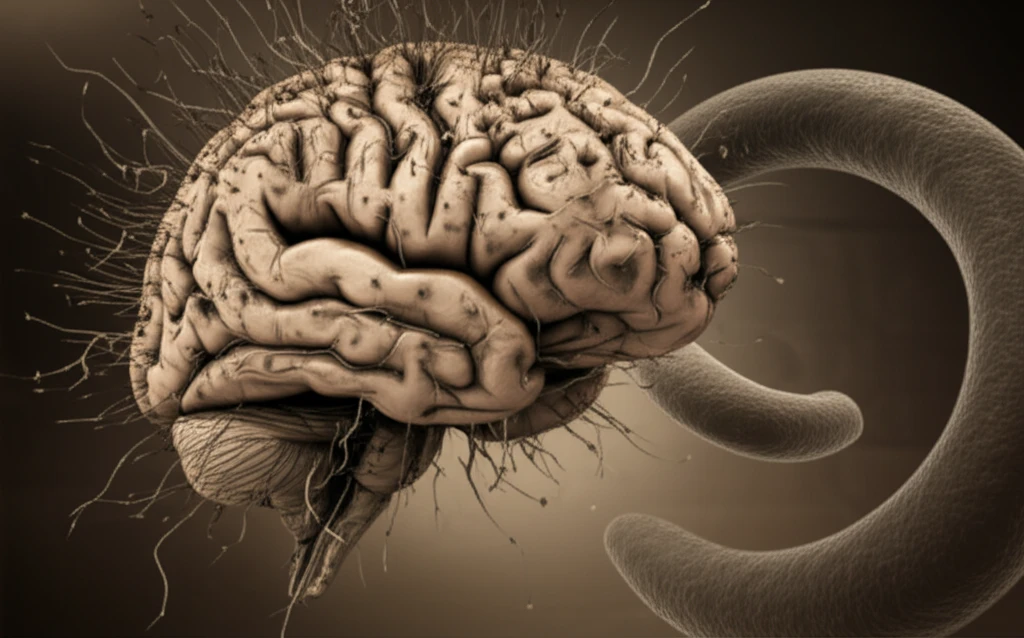
Illustration of a brain with iron structures, symbolizing iron accumulation in sickle cell disease.

Brain Iron in Sickle Cell Disease: Unveiling the Hidden Risks

"New research explores the link between iron accumulation in the brain and silent cerebral infarction in sickle cell disease, offering potential pathways for future treatments."


Sickle cell disease (SCD) is a genetic blood disorder affecting millions worldwide. While the disease is known for its impact on red blood cells and various organs, its effects on the brain are increasingly coming into focus. A significant concern is the occurrence of silent cerebral infarctions (SCI), often without obvious symptoms, yet potentially damaging to cognitive function and overall brain health.

In the latest issue of Blood, researchers led by Miao et al. delved into the intricate relationship between brain iron accumulation and SCI in SCD patients. Iron deposition, while essential for bodily functions, can become detrimental when excessive, potentially leading to organ damage. Although the role of iron in other organs has been studied, its impact on the brain in SCD has remained relatively unexplored – until now.

Miao and team harnessed the power of quantitative susceptibility mapping (QSM), an advanced magnetic resonance imaging (MRI) technique. QSM provides a detailed measure of tissue magnetic susceptibility, which directly correlates with iron content. This innovative approach allowed the team to map and quantify iron levels in various brain regions, comparing SCD patients with and without SCI to healthy controls.

What Did the Study Find About Iron Accumulation?

Illustration of a brain with iron structures, symbolizing iron accumulation in sickle cell disease.

The QSM results revealed some startling insights: Adolescent and young adult SCD patients exhibited significantly higher iron levels in key brain regions, including the putamen, substantia nigra, and red nucleus, compared to their healthy counterparts. Specifically, patients with SCI showed elevated susceptibility (indicating higher iron content) in the globus pallidus and substantia nigra.

The study also uncovered a noteworthy connection between age and iron accumulation. When combining data from SCD patients and controls, the researchers observed a significant increase in susceptibility with age in the substantia nigra and other deep gray matter regions. This finding aligns with previous histological and MRI studies in healthy individuals, suggesting a natural age-related increase in iron deposition, potentially exacerbated in SCD.

  • Putamen, Substantia Nigra, Red Nucleus: Regions showing higher iron levels in SCD patients compared to controls.
  • Globus Pallidus, Substantia Nigra: Regions with even higher iron in SCD patients experiencing silent cerebral infarctions (SCI).
  • Substantia Nigra: Displays increased susceptibility with age in both SCD patients and healthy controls.
Another intriguing finding was the negative correlation between hemoglobin levels and susceptibility. This suggests that lower hemoglobin levels might drive increased deoxyhemoglobin in hypoxic brain regions, potentially influencing iron accumulation. Anemic hypoxia could play a crucial role over a lifespan, triggering a mechanism that improves tissue oxygenation. Interestingly, even patients on chronic transfusion regimes did not show an association between brain susceptibility and somatic iron status, reassuringly indicating that iron overload in the body does not automatically lead to brain iron accumulation. Larger studies, however, are needed to confirm this.

Why This Matters and What's Next

The study by Miao et al. highlights the potential for excessive brain iron to accelerate neurodegeneration in SCD, as seen in other conditions like Parkinson's, ALS, and Alzheimer's. While neurological symptoms and signs have been understudied in adults with SCD, this research underscores the importance of further investigation. Understanding the mechanisms behind iron accumulation and its impact on cognitive function could pave the way for targeted interventions, such as chelation therapies or other strategies to prevent or mitigate brain damage in SCD patients. Further studies clarifying the links between anemia, hypoxia, tissue damage/SCI, and brain iron accumulation are eagerly anticipated.

About this Article -

This article was crafted using a human-AI hybrid and collaborative approach. AI assisted our team with initial drafting, research insights, identifying key questions, and image generation. Our human editors guided topic selection, defined the angle, structured the content, ensured factual accuracy and relevance, refined the tone, and conducted thorough editing to deliver helpful, high-quality information.See our About page for more information.

This article is based on research published under:

DOI-LINK: 10.1182/blood-2018-08-867010, Alternate LINK

Title: Brain Iron In Sickle Cell Disease?

Subject: Cell Biology

Journal: Blood

Publisher: American Society of Hematology

Authors: Fenella J. Kirkham, Karin Shmueli

Published: 2018-10-11

Everything You Need To Know

1

What were the key findings regarding iron accumulation in the brains of individuals with Sickle Cell Disease (SCD)?

The study found that adolescent and young adult patients with Sickle Cell Disease (SCD) had significantly higher iron levels in specific brain regions, including the Putamen, Substantia Nigra, and Red Nucleus, when compared to healthy individuals. Moreover, patients with Silent Cerebral Infarctions (SCI) demonstrated even higher iron content in the Globus Pallidus and Substantia Nigra. This indicates a correlation between iron accumulation and the occurrence of SCI in SCD patients.

2

Why are Silent Cerebral Infarctions (SCI) significant in the context of this research?

Silent Cerebral Infarctions (SCI) are brain injuries that occur without noticeable symptoms, yet they can damage cognitive function and overall brain health. The research indicates that the presence of SCI in Sickle Cell Disease (SCD) patients is linked to increased iron accumulation in specific brain regions, such as the Globus Pallidus and Substantia Nigra. This suggests that iron buildup could be a factor contributing to the development and progression of SCI, thereby impacting the neurological health of individuals with SCD.

3

What method did the researchers use to measure iron levels in the brain?

The research utilized quantitative susceptibility mapping (QSM), a type of magnetic resonance imaging (MRI) technique. QSM enabled researchers to map and measure iron levels in the brain by quantifying tissue magnetic susceptibility, which directly correlates with iron content. This innovative approach allowed researchers to identify and compare iron levels in different brain regions of Sickle Cell Disease (SCD) patients, particularly those with and without Silent Cerebral Infarctions (SCI), against healthy controls.

4

What did the study reveal about the relationship between age and brain iron accumulation?

The Substantia Nigra showed an increase in susceptibility with age in both Sickle Cell Disease (SCD) patients and healthy controls, implying a natural age-related increase in iron deposition. This finding suggests that the aging process can lead to increased iron accumulation in the brain. In the context of SCD, this age-related iron accumulation may be exacerbated, potentially accelerating neurodegeneration and increasing the risk of neurological complications.

5

What is the significance of the relationship between Hemoglobin levels and iron accumulation?

The study suggests that lower Hemoglobin levels may drive increased deoxyhemoglobin in hypoxic brain regions, influencing iron accumulation. This highlights a potential link between anemia, hypoxia, and brain iron levels in Sickle Cell Disease (SCD). It is important to note that the study indicated that patients on chronic transfusion regimes did not show an association between brain susceptibility and somatic iron status. This study underlines the need for further investigation to clarify the relationships between anemia, hypoxia, tissue damage, Silent Cerebral Infarctions (SCI), and brain iron accumulation.

Newsletter Subscribe

Subscribe to get the latest articles and insights directly in your inbox.