
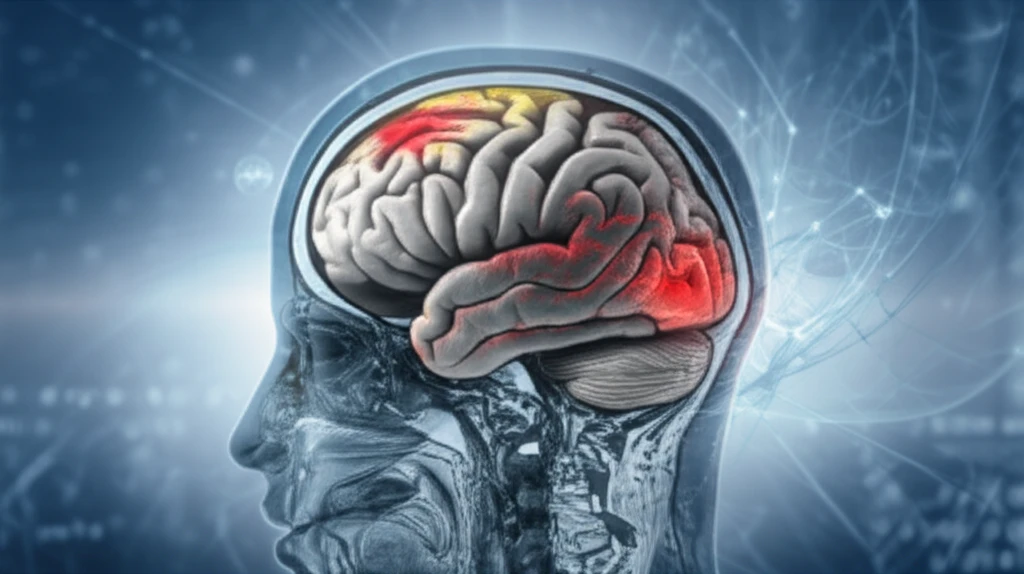
Illustration of a brain scan showing injury highlighting in red and yellow colors and healing.

Brain Injury's Hidden Story: How Cutting-Edge Scans Are Unveiling Grey Matter Secrets

"Groundbreaking MRI and histological analysis reveal the complex changes within the brain after injury, offering new hope for improved diagnosis and treatment."


Traumatic brain injuries (TBIs) are a significant public health concern, affecting millions globally each year. While advancements in medical care have improved survival rates, understanding the long-term consequences of these injuries remains a critical challenge. Recent studies are shedding light on the intricate damage that occurs within the brain, specifically focusing on the role of grey matter and the subtle changes that occur over time.

Traditional methods often focus on visible damage, leaving much of the injury's complexity unseen. But what if we could see the invisible? Recent research is utilizing cutting-edge techniques, like Diffusion Tensor Imaging (DTI) and Diffusion Kurtosis Imaging (DKI), to peer deep into the brain's structure. These methods, combined with traditional histological analysis, offer a powerful new way to track injury progression and understand how the brain responds to trauma.

This groundbreaking work isn't just about new technologies; it's about hope. By understanding the fine details of how grey matter changes after injury, we can move closer to more accurate diagnoses, targeted treatments, and ultimately, better outcomes for those affected by TBIs. This article explores these exciting new frontiers in brain injury research, explaining the science and its potential impact.

Unveiling the Secrets: How Advanced Imaging Works

Illustration of a brain scan showing injury highlighting in red and yellow colors and healing.

To truly appreciate the significance of this research, let's break down the key techniques being used. DTI and DKI are types of MRI scans that go beyond the standard images you might be familiar with. They measure the movement of water molecules within the brain's tissues. This movement is not random; it's influenced by the brain's structure, like the intricate network of nerve fibers.

DTI, the more established method, provides information about the direction and organization of these fibers. It's particularly useful for identifying damage to the white matter, the brain's communication pathways. DKI takes it a step further, providing a more detailed view of the brain's microstructure. It can detect subtle changes that DTI might miss, such as the impact of inflammation or cell swelling.

These advanced imaging techniques offer several advantages:
  • Non-Invasive: MRI is a safe, non-invasive way to study the brain.
  • Detailed Insights: DTI and DKI reveal changes at a microscopic level, giving researchers a deeper understanding of the injury.
  • Tracking Progress: These techniques allow doctors and researchers to track how the injury evolves over time, allowing for better monitoring and treatment decisions.
The study's researchers also used traditional methods. Histology is a method that uses microscopic examination of brain tissue after it has been specially processed and stained to see the changes the injuries made in the grey matter.

A New Era for Brain Injury Care

This research represents a significant step forward in our ability to understand and address traumatic brain injuries. By combining advanced imaging with traditional methods, scientists are gaining unprecedented insights into the brain's response to trauma. This knowledge holds the potential to transform how we diagnose, treat, and ultimately, care for those affected by TBIs, offering a beacon of hope for a brighter future.

About this Article -

This article was crafted using a human-AI hybrid and collaborative approach. AI assisted our team with initial drafting, research insights, identifying key questions, and image generation. Our human editors guided topic selection, defined the angle, structured the content, ensured factual accuracy and relevance, refined the tone, and conducted thorough editing to deliver helpful, high-quality information.See our About page for more information.

Everything You Need To Know

1

What are Diffusion Tensor Imaging (DTI) and Diffusion Kurtosis Imaging (DKI), and how do they help in understanding brain injuries?

Diffusion Tensor Imaging (DTI) and Diffusion Kurtosis Imaging (DKI) are advanced MRI techniques used to examine the brain's microstructure. DTI measures the movement of water molecules to assess the direction and organization of nerve fibers, particularly in the white matter, revealing damage to communication pathways. DKI enhances this by providing a more detailed view, detecting subtle changes like inflammation or cell swelling that DTI might miss. By tracking these changes, clinicians can gain a better understanding of how traumatic brain injuries evolve over time. These techniques are non-invasive and provide insights at a microscopic level, helping to improve monitoring and inform treatment decisions.

2

Why is understanding changes in the brain's grey matter important after a traumatic brain injury (TBI)?

Understanding changes in the grey matter following a traumatic brain injury (TBI) is crucial because the grey matter contains most of the brain's neuronal cell bodies and synapses, playing a key role in processing information. Traditional methods often miss subtle damage within the grey matter. However, by using advanced techniques like Diffusion Kurtosis Imaging (DKI) and combining these with histological analysis, researchers can better track the progression of injuries and how the brain responds to trauma. By understanding the fine details of how grey matter changes after injury, this can lead to more accurate diagnoses and targeted treatments, and better outcomes for TBI patients.

3

What are the advantages of using advanced MRI techniques like Diffusion Tensor Imaging (DTI) and Diffusion Kurtosis Imaging (DKI) compared to traditional methods for assessing brain injuries?

Advanced MRI techniques such as Diffusion Tensor Imaging (DTI) and Diffusion Kurtosis Imaging (DKI) offer several advantages over traditional methods. First, MRI is non-invasive, making it a safe way to study the brain. Second, DTI and DKI provide detailed insights at a microscopic level, revealing subtle changes in the brain's structure that traditional methods might miss. DTI is useful for identifying damage to the white matter, while DKI provides a more detailed view of the brain's microstructure. These techniques allow doctors and researchers to track how the injury evolves over time, allowing for better monitoring and treatment decisions. When combined with histological analysis, scientists can gain unprecedented insights into the brain's response to trauma.

4

What role does histological analysis play in combination with advanced MRI techniques like DTI and DKI in brain injury research?

Histological analysis complements advanced MRI techniques like Diffusion Tensor Imaging (DTI) and Diffusion Kurtosis Imaging (DKI) by providing a microscopic examination of brain tissue after it has been specially processed and stained. While DTI and DKI offer non-invasive insights into the brain's microstructure by measuring water molecule movement, histological analysis allows for direct visualization of cellular changes and damage within the grey matter. Combining these methods provides a more comprehensive understanding of how the brain responds to trauma. Histology confirms the changes found on the MRI scans. This combined approach enhances the accuracy of diagnoses and the development of targeted treatments for traumatic brain injuries.

5

How might the new insights from Diffusion Tensor Imaging (DTI), Diffusion Kurtosis Imaging (DKI), and histological analysis impact the future of brain injury care and treatment?

The new insights gained from Diffusion Tensor Imaging (DTI), Diffusion Kurtosis Imaging (DKI), and histological analysis are poised to transform the future of brain injury care and treatment. By providing a more detailed understanding of the subtle changes occurring in the brain's grey and white matter after trauma, these techniques enable more accurate diagnoses and allow for the tracking of injury progression. This knowledge can lead to the development of targeted treatments that address the specific types of damage observed. Ultimately, this comprehensive approach offers the potential for improved outcomes and a better quality of life for individuals affected by traumatic brain injuries.

Newsletter Subscribe

Subscribe to get the latest articles and insights directly in your inbox.