
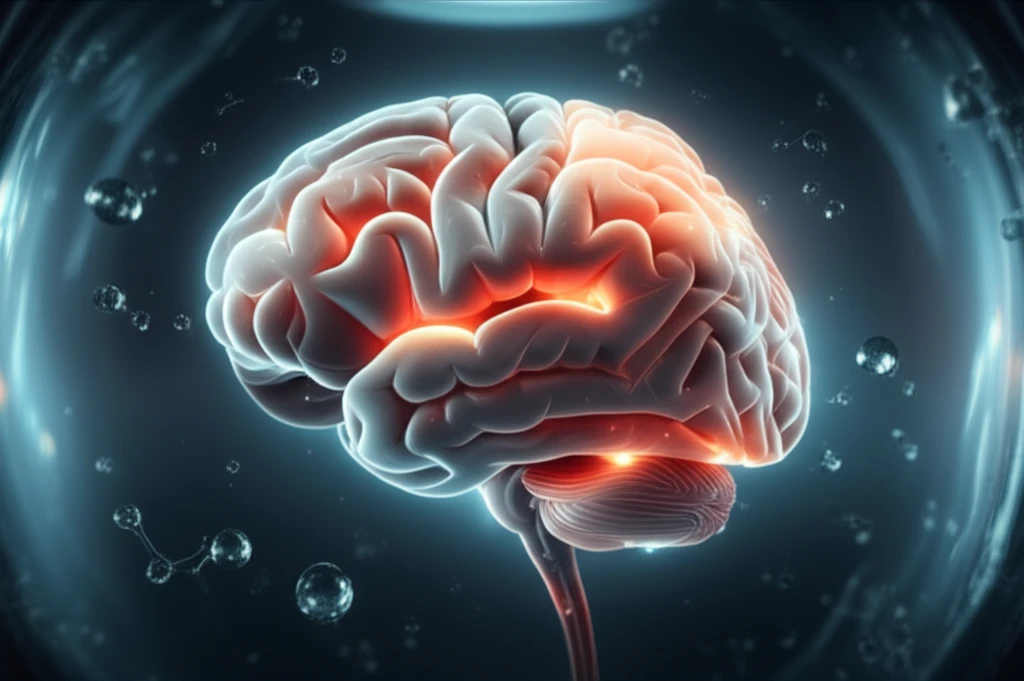
Glowing brain submerged in cerebrospinal fluid with floating molecules, representing Alzheimer's and Parkinson's disease research.

Brain Health Breakthrough: How CSF Biomarkers Could Revolutionize Alzheimer's and Parkinson's Treatment

"Unlocking the Potential of Cerebrospinal Fluid Analysis for Early Detection and Personalized Therapies in Neurodegenerative Diseases"


For years, Alzheimer's and Parkinson's disease have cast a long shadow, defying effective treatment and leaving countless individuals and families grappling with their devastating effects. The absence of therapies that can truly modify the course of these diseases has been a source of immense frustration.

However, a promising new frontier is emerging in the fight against these neurodegenerative conditions: cerebrospinal fluid (CSF) biomarkers. These biomarkers, found in the fluid surrounding the brain and spinal cord, offer a window into the intricate molecular processes underlying Alzheimer's and Parkinson's, potentially revolutionizing how we diagnose, treat, and even prevent these diseases.

Imagine a future where Alzheimer's is detected not just through memory tests, but through a simple analysis of your CSF, years before symptoms even appear. A future where Parkinson's patients receive treatments tailored to their specific disease pathways, maximizing effectiveness and minimizing side effects. This future is closer than you think, thanks to the power of CSF biomarkers.

Decoding the Brain: What are CSF Biomarkers and Why Do They Matter?

Glowing brain submerged in cerebrospinal fluid with floating molecules, representing Alzheimer's and Parkinson's disease research.

To understand the excitement surrounding CSF biomarkers, it's important to grasp what they are and how they provide valuable insights into brain health. Biomarkers, in general, are measurable indicators of a biological state or condition. In the context of neurodegenerative diseases, CSF biomarkers are specific proteins or other molecules found in the cerebrospinal fluid that can signal the presence, stage, or progression of a disease.

The CSF is in direct contact with the brain's extracellular space, making it an ideal source for detecting molecular changes happening within the brain itself. By analyzing the CSF, scientists can gain a glimpse into the biochemical processes that are altered in diseases like Alzheimer's and Parkinson's. This information is crucial for several reasons:

  • Early Detection: CSF biomarkers can detect the earliest signs of disease, even before symptoms become apparent. This opens the door to preventative treatments and lifestyle modifications that may slow or even halt disease progression.
  • Accurate Diagnosis: Clinical diagnoses of neurodegenerative diseases can be challenging due to overlapping symptoms. CSF biomarkers provide a more objective and accurate way to differentiate between different conditions, ensuring patients receive the correct diagnosis and treatment plan.
  • Personalized Therapies: Not all Alzheimer's or Parkinson's patients are the same. CSF biomarkers can help identify specific disease pathways that are activated in individual patients, allowing for personalized therapies that target those pathways.
  • Improved Clinical Trials: CSF biomarkers can be used to select the right patients for clinical trials, track the effectiveness of new drugs, and identify potential surrogate markers for clinical outcomes. This accelerates the development of new and more effective treatments.
In Alzheimer's disease, key CSF biomarkers include amyloid-beta 42 (Aβ42), total tau (t-tau), and phosphorylated tau (p-tau). These proteins are involved in the formation of amyloid plaques and neurofibrillary tangles, the hallmark pathological features of Alzheimer's. In Parkinson's disease, alpha-synuclein (α-syn) is a key CSF biomarker, as it is the main component of Lewy bodies, protein aggregates found in the brains of Parkinson's patients. Other potential Parkinson's biomarkers include DJ-1 and fractalkine.

The Future of Brain Health: A Call for Collaboration

The journey to fully harness the potential of CSF biomarkers is not without its challenges. Standardizing measurement techniques, reducing variability, and establishing clear cutoff values are crucial steps. Furthermore, larger and longer-term clinical trials are needed to validate the use of CSF biomarkers as surrogate endpoints. Overcoming these challenges requires collaborative efforts from researchers, clinicians, industry, and regulatory agencies. By working together, we can unlock the full potential of CSF biomarkers and usher in a new era of personalized and effective treatments for Alzheimer's and Parkinson's disease.

About this Article -

This article was crafted using a human-AI hybrid and collaborative approach. AI assisted our team with initial drafting, research insights, identifying key questions, and image generation. Our human editors guided topic selection, defined the angle, structured the content, ensured factual accuracy and relevance, refined the tone, and conducted thorough editing to deliver helpful, high-quality information.See our About page for more information.

This article is based on research published under:

DOI-LINK: 10.3988/jcn.2016.12.4.381, Alternate LINK

Title: Harnessing Cerebrospinal Fluid Biomarkers In Clinical Trials For Treating Alzheimer'S And Parkinson'S Diseases: Potential And Challenges

Subject: Neurology (clinical)

Journal: Journal of Clinical Neurology

Publisher: Korean Neurological Association

Authors: Dana Kim, Young-Sam Kim, Dong Wun Shin, Chang-Shin Park, Ju-Hee Kang

Published: 2016-01-01

Everything You Need To Know

1

What are CSF biomarkers, and how do they help in early detection of Alzheimer's and Parkinson's?

CSF biomarkers are specific proteins or molecules found in cerebrospinal fluid that indicate the presence, stage, or progression of a disease. They are crucial for early detection because they can signal the earliest signs of diseases like Alzheimer's and Parkinson's, even before symptoms appear. For Alzheimer's, key biomarkers include amyloid-beta 42 (Aβ42), total tau (t-tau), and phosphorylated tau (p-tau), while for Parkinson's, alpha-synuclein (α-syn) is a key biomarker. By analyzing these, preventative treatments and lifestyle modifications may be implemented to slow or halt disease progression, offering a significant advantage in managing these neurodegenerative conditions.

2

How do CSF biomarkers contribute to accurate diagnosis and personalized therapies for neurodegenerative diseases?

CSF biomarkers offer a more objective and accurate way to differentiate between conditions like Alzheimer's and Parkinson's, which often have overlapping symptoms. This leads to correct diagnoses and appropriate treatment plans. Moreover, these biomarkers help identify specific disease pathways in individual patients. By understanding each patient's unique condition, treatments can be tailored to target those specific pathways. This personalization can maximize treatment effectiveness and minimize side effects, reflecting a significant shift towards precision medicine in neurodegenerative disease treatment.

3

What are the specific CSF biomarkers for Alzheimer's and Parkinson's disease, and what do they indicate about the diseases?

In Alzheimer's disease, the key CSF biomarkers are amyloid-beta 42 (Aβ42), total tau (t-tau), and phosphorylated tau (p-tau). These proteins are involved in the formation of amyloid plaques and neurofibrillary tangles, which are the hallmark pathological features of Alzheimer's. In Parkinson's disease, alpha-synuclein (α-syn) is a key CSF biomarker, as it is the main component of Lewy bodies, protein aggregates found in the brains of Parkinson's patients. Other potential Parkinson's biomarkers include DJ-1 and fractalkine. Analyzing these biomarkers provides insights into the underlying molecular processes of each disease.

4

What are the challenges in fully utilizing CSF biomarkers, and what steps are needed to overcome these obstacles?

The challenges in fully harnessing the potential of CSF biomarkers include standardizing measurement techniques, reducing variability, and establishing clear cutoff values. Also, larger and longer-term clinical trials are needed to validate the use of CSF biomarkers as surrogate endpoints. Overcoming these challenges requires collaborative efforts from researchers, clinicians, industry, and regulatory agencies. By working together, the full potential of CSF biomarkers can be unlocked, which would usher in a new era of personalized and effective treatments for Alzheimer's and Parkinson's disease.

5

How can CSF biomarkers improve clinical trials, and what is the future outlook for their role in treating brain health issues?

CSF biomarkers can be used to select the right patients for clinical trials, track the effectiveness of new drugs, and identify potential surrogate markers for clinical outcomes. This can accelerate the development of new and more effective treatments for Alzheimer's and Parkinson's. The future of brain health looks promising, with CSF biomarkers playing a key role. They offer hope for early detection, personalized therapies, and improved clinical trial outcomes. Continued research and collaboration are vital to fully realize the potential of these biomarkers and transform the treatment landscape for neurodegenerative diseases.

Newsletter Subscribe

Subscribe to get the latest articles and insights directly in your inbox.