
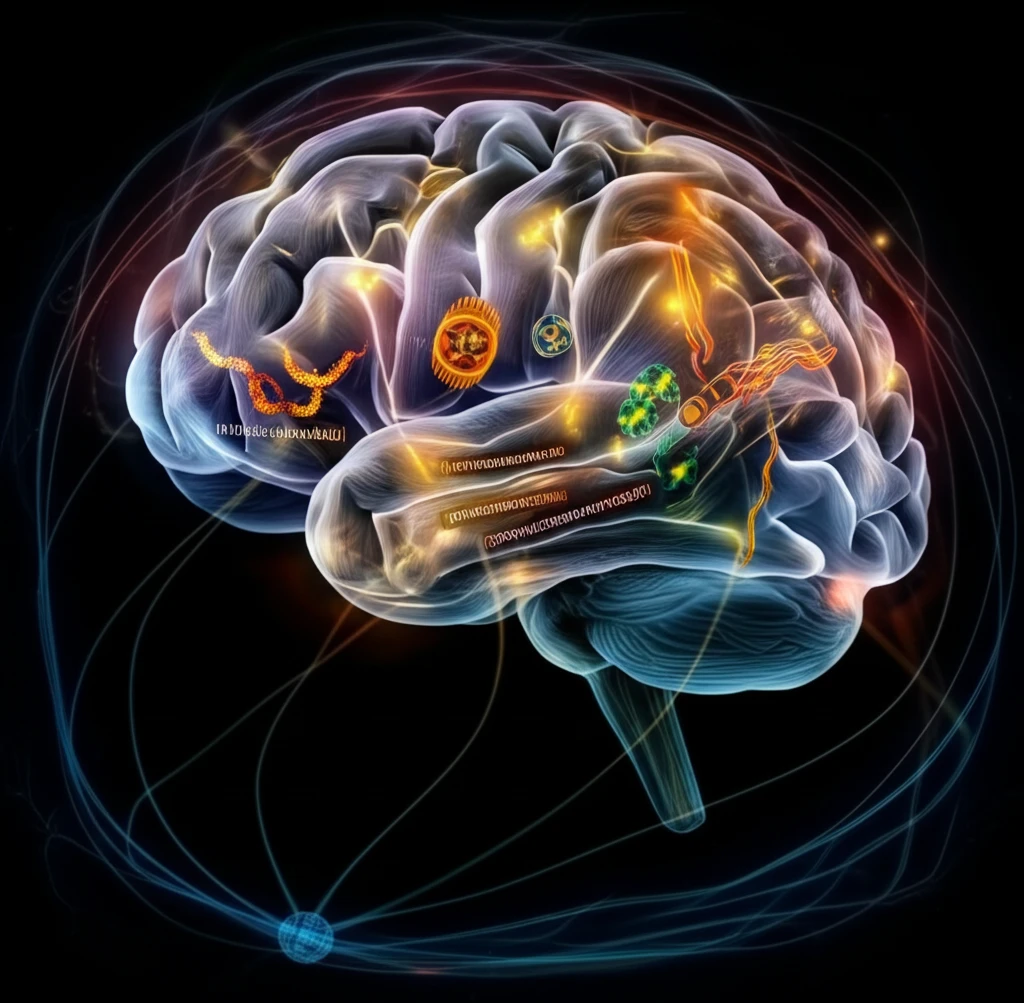
Brain Health Breakthrough: How a Common Cholesterol Metabolite Could Hold the Key to Preventing Parkinson's

"New research reveals a surprising link between a cholesterol byproduct and the development of Parkinson's disease, offering hope for future treatments."
The shadow of Parkinson's disease looms large, affecting millions worldwide and casting a pall of uncertainty over their futures. Characterized by tremors, rigidity, and movement difficulties, this neurodegenerative condition has long puzzled scientists, who continue to seek its origins. While the causes are complex, new research is shedding light on a previously unrecognized culprit: a common cholesterol metabolite.
This metabolite, known as 27-hydroxycholesterol (27-OHC), has been found to play a significant role in increasing levels of alpha-synuclein, a protein that accumulates in the brains of Parkinson's patients. This accumulation is a hallmark of the disease. The implications of this discovery are significant, potentially offering new strategies for preventing or slowing the progression of Parkinson's.
In this article, we delve into the groundbreaking research that reveals the connection between 27-OHC and Parkinson's. We'll explore the science behind the findings, the potential mechanisms at play, and the exciting possibilities for future treatments. This knowledge could represent a big step towards understanding, and ultimately conquering, this debilitating disease.
Unraveling the Mystery: The Link Between 27-OHC and Parkinson's
The research, published in the journal BMC Neuroscience, focuses on the role of 27-OHC in the development of Parkinson's. 27-OHC is a byproduct of cholesterol metabolism, and its levels can increase due to factors like aging, hypercholesterolemia (high cholesterol), and oxidative stress. These are also risk factors for developing synucleinopathies, a group of brain disorders that includes Parkinson's.
- 27-OHC's Impact on Alpha-Synuclein: The research showed that 27-OHC directly increases alpha-synuclein protein levels in human dopaminergic neurons, the type of brain cells that are damaged in Parkinson's.
- Mechanism of Action: The study indicates that 27-OHC increases alpha-synuclein by inhibiting the proteasomal degradation of this protein, and reducing the levels of HSP70.
- LXR Independence: The effects of 27-OHC appear to be independent of liver X receptors (LXR), indicating a different pathway than previously thought.
Looking Ahead: The Future of Parkinson's Research and Treatment
The discovery of 27-OHC's role in Parkinson's is a significant step forward, offering new hope for those affected by this devastating disease. By targeting the mechanisms by which 27-OHC increases alpha-synuclein levels, researchers may be able to develop new therapies that can slow or prevent the progression of Parkinson's. Further research is needed, but the potential is clear: a future where Parkinson's is better understood, managed, and potentially, cured.