
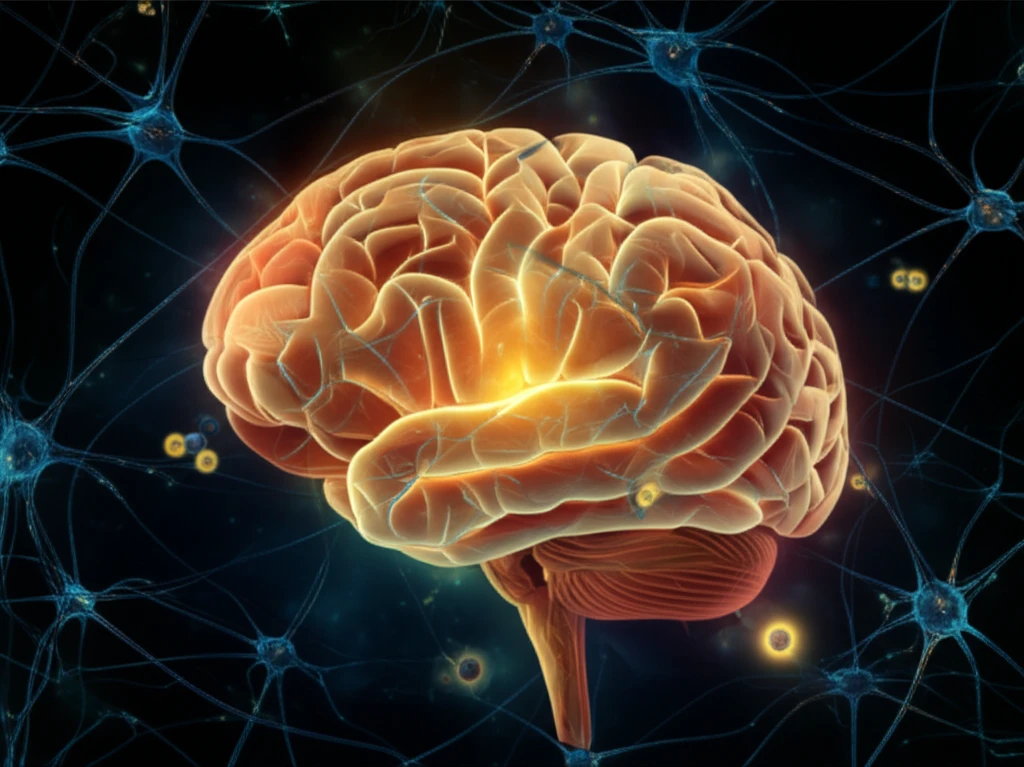
Brain Cell Communication: How Nitric Oxide Impacts Calcium Regulation

"Uncover how nitric oxide fine-tunes calcium levels in brain cells, influencing everything from neuron health to motor skills."
The brain is a complex network where cells constantly communicate. Nitric oxide (NO), a key player in this communication, acts as both a neurotransmitter and neuromodulator, influencing numerous functions within the nervous system. One of its most critical roles is regulating calcium (Ca2+) levels inside brain cells, a process essential for everything from signaling to overall cell health.
Maintaining the right amount of calcium within neurons is a delicate balancing act. Neurons use various channels and receptors to control calcium influx and release. This balance is crucial because disruptions in calcium levels can lead to neuronal dysfunction and even cell death. Researchers are exploring how NO’s influence on calcium regulation might open new avenues for protecting the brain from damage and disease.
Recent research has focused on how NO affects the expression of calcium-binding proteins – molecules that act as calcium buffers within cells. By studying mice lacking neuronal NO synthase (nNOS), the enzyme responsible for producing NO in neurons, scientists are gaining insights into how NO normally interacts with these proteins to maintain calcium homeostasis.
The Calcium-Nitric Oxide Connection: A Balancing Act in the Brain
Calcium (Ca2+) within neurons is tightly controlled. Too much or too little Ca2+ can disrupt cellular processes. This is where calcium-binding proteins (CaBPs) come in; they act like sponges, soaking up excess Ca2+ and releasing it when levels drop too low. Key CaBPs include calbindin-D28k (CB), calretinin (CR), and parvalbumin (PV).
- Calbindin-D28k (CB): Expression significantly increased in the cerebellar cortex of nNOS knockout mice.
- Parvalbumin (PV): Expression also significantly increased in the cerebellar cortex of nNOS knockout mice.
- Calretinin (CR): Expression significantly decreased in the cerebellar cortex of nNOS knockout mice.
Implications and Future Directions
These findings highlight a previously unappreciated mechanism by which nitric oxide exerts its influence in the brain. By modulating the expression of calcium-binding proteins, NO can fine-tune the spatial and temporal dynamics of calcium signaling, impacting neuronal function and potentially offering a pathway for neuroprotection.
The research opens up exciting avenues for further investigation. Understanding how NO specifically regulates the genes responsible for producing calbindin, calretinin, and parvalbumin could lead to targeted therapies for neurological disorders involving calcium dysregulation. Future research could also explore how these findings in the cerebellum extend to other brain regions and influence diverse brain functions.
While this study focused on mice, the implications for human health are significant. Elucidating the precise mechanisms by which NO and calcium-binding proteins interact could pave the way for novel treatments aimed at preventing neuronal damage, improving motor coordination, and potentially alleviating symptoms of neurodegenerative diseases.