
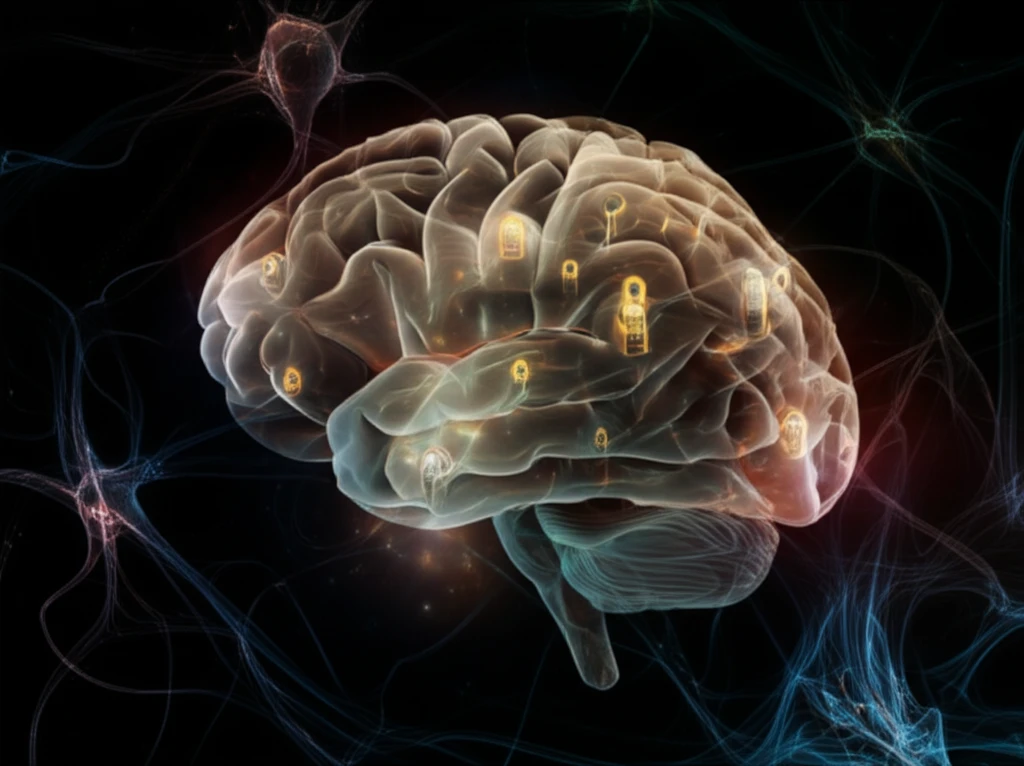
Digital illustration depicting the brain with keyhole-shaped NMDA receptors and glowing keys (allosteric modulators), showcasing the potential of precision mental health treatments.

Brain Breakthrough: How Scientists Are Rewriting the Rules of Mental Health with Tiny Cellular Keys

"Unlocking the Secrets of the Brain: New Research Reveals How Tiny Cellular 'Keys' Could Revolutionize Treatments for Mental Health Disorders."


In the ever-evolving landscape of medical science, breakthroughs often emerge from the most unexpected corners. Recent studies have turned the spotlight on the fundamental building blocks of our brains: receptors. These tiny cellular entities, often described as locks and keys, are pivotal in orchestrating the complex symphony of thoughts, emotions, and behaviors that define us. New research is revealing how we can manipulate these locks and keys to open new doors for mental health treatments.

The focus of this scientific revolution is on a specific type of brain receptor called the NMDA receptor. These receptors are critical for learning, memory, and overall brain function. Scientists are now discovering how they can be precisely targeted with allosteric modulators, which are like specialized keys that can either enhance or inhibit the function of these receptors. This novel approach offers a level of precision and control that could transform the treatment of a wide array of mental health disorders.

This article delves into the latest findings, exploring how these allosteric modulators interact with NMDA receptors. We will unpack the implications of this research, the potential it holds for future treatments, and the impact it could have on the lives of millions who grapple with mental health challenges. We will also explore the cutting-edge techniques scientists are using to understand and manipulate these vital brain components.

The NMDA Receptor: Your Brain's Master Switch

Digital illustration depicting the brain with keyhole-shaped NMDA receptors and glowing keys (allosteric modulators), showcasing the potential of precision mental health treatments.

To fully grasp the implications of this research, it's essential to understand the NMDA receptor. Think of it as a master switch in your brain. This receptor plays a vital role in numerous brain functions, from learning and memory to the regulation of mood and emotion. When the NMDA receptor is activated, it allows the flow of ions, specifically calcium, into the neuron. This influx of ions triggers a cascade of intracellular events crucial for brain plasticity and overall health.

The NMDA receptor is not a simple 'on' or 'off' switch. Instead, it can be modulated by a variety of substances, including glutamate, the brain's primary excitatory neurotransmitter, and glycine. The discovery of allosteric modulators has further complicated the picture, offering the potential to fine-tune receptor activity and make more precise therapeutic interventions.

  • Learning and Memory: NMDA receptors are fundamental to synaptic plasticity, the brain's ability to change and adapt, thus aiding learning and memory.
  • Synaptic Plasticity: The influx of calcium through activated NMDA receptors helps strengthen synapses and promote long-term potentiation (LTP), a key process in memory formation.
  • Mood Regulation: Imbalances in NMDA receptor activity have been linked to mood disorders like depression and anxiety.
The recent research highlights the C-terminal domains (CTDs) of the NMDA receptor, revealing their crucial role in modulating the receptor's activity. The CTDs are intracellular regions of the receptor that, when altered, can significantly impact how allosteric modulators function. This interaction is key to the new avenues of treatments being explored.

The Future of Mental Health Treatment: A New Era of Precision

The implications of this research extend far beyond the laboratory. By understanding and manipulating the intricate mechanisms of the NMDA receptor, scientists and clinicians are paving the way for a new era of precision in mental health treatments. While challenges remain, the potential to create treatments tailored to individual patient needs is a promising step forward, bringing new hope for a future where mental health challenges are better understood and more effectively managed. These findings underscore the incredible complexity of the human brain and the innovative ways scientists are working to unlock its secrets, one receptor at a time.

About this Article -

This article was crafted using a human-AI hybrid and collaborative approach. AI assisted our team with initial drafting, research insights, identifying key questions, and image generation. Our human editors guided topic selection, defined the angle, structured the content, ensured factual accuracy and relevance, refined the tone, and conducted thorough editing to deliver helpful, high-quality information.See our About page for more information.

This article is based on research published under:

DOI-LINK: 10.1016/j.bcp.2018.11.018, Alternate LINK

Title: The Nmda Receptor Intracellular C-Terminal Domains Reciprocally Interact With Allosteric Modulators

Subject: Pharmacology

Journal: Biochemical Pharmacology

Publisher: Elsevier BV

Authors: Kiran Sapkota, Kim Dore, Kang Tang, Mark Irvine, Guangyu Fang, Erica S. Burnell, Roberto Malinow, David E. Jane, Daniel T. Monaghan

Published: 2019-01-01

Everything You Need To Know

1

What are brain receptors and why are they important in mental health?

Brain receptors are tiny cellular entities, acting like locks and keys, crucial for thoughts, emotions, and behaviors. Specifically, the NMDA receptors are vital for learning, memory, and overall brain function. Manipulating these receptors, especially the NMDA receptors, with substances like allosteric modulators, offers new avenues for mental health treatments by precisely controlling brain activity. These receptors, however, are only one aspect of the complex interplay of factors that influence mental health, including genetics, environment, and lifestyle.

2

How do allosteric modulators work with NMDA receptors to impact brain function?

Allosteric modulators are specialized keys that can either enhance or inhibit the function of NMDA receptors. These receptors, functioning as master switches, are modulated by substances like glutamate and glycine. Allosteric modulators offer precise control over receptor activity, influencing the flow of ions into neurons, which is critical for brain plasticity. By targeting the C-terminal domains (CTDs) of the NMDA receptor, allosteric modulators can fine-tune receptor activity, providing new therapeutic interventions. However, the exact mechanisms and long-term effects of these modulators are still under investigation.

3

What role do NMDA receptors play in learning and memory?

NMDA receptors are fundamental to synaptic plasticity, which is the brain's ability to change and adapt, thus aiding learning and memory. When activated, NMDA receptors allow calcium ions to flow into the neuron, strengthening synapses and promoting long-term potentiation (LTP). This LTP process is essential in memory formation. Imbalances in NMDA receptor activity have also been linked to mood disorders, such as depression and anxiety, highlighting their importance in mood regulation. Further research is needed to fully understand the complex interactions and implications of NMDA receptors in cognitive processes.

4

What are the C-terminal domains (CTDs) of the NMDA receptor, and why are they important?

The C-terminal domains (CTDs) are intracellular regions of the NMDA receptor that play a crucial role in modulating the receptor's activity. These domains are significant because alterations in CTDs can significantly impact how allosteric modulators function. This interaction is key to the new avenues of treatments being explored, as it allows for fine-tuning of receptor activity. Understanding and targeting CTDs offer potential for more precise and effective therapeutic interventions. However, the specific mechanisms of CTDs and their interactions with other brain components still require further investigation.

5

How could manipulating NMDA receptors revolutionize mental health treatments?

Manipulating NMDA receptors using allosteric modulators can lead to new precision treatments for mental health disorders. By understanding and controlling the mechanisms of NMDA receptors, clinicians and scientists can potentially tailor treatments to individual patient needs. The ability to fine-tune receptor activity offers hope for better management of mental health challenges. While challenges remain, this innovative approach has the potential to transform the landscape of mental health care. This revolution would rely on continued research and development to understand the intricacies of the brain.

Newsletter Subscribe

Subscribe to get the latest articles and insights directly in your inbox.