
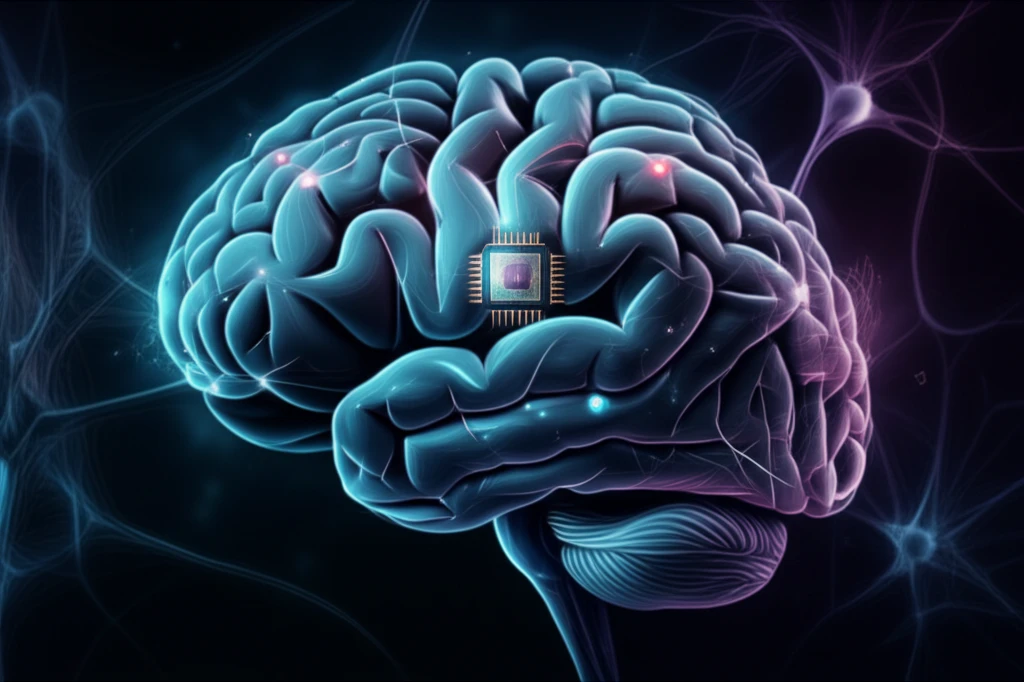
Brain-Boosting Breakthrough: How a Tiny Chip Could Revolutionize Mental Health Treatment

"A new CMOS-based system integrates advanced brain imaging and stimulation techniques, paving the way for personalized treatments for neurological disorders."
In a world grappling with the complexities of mental health and cognitive function, the pursuit of innovative treatments is more crucial than ever. Imagine a future where personalized brain stimulation is a reality, tailored to individual needs and continuously monitored for optimal results. This vision is rapidly becoming tangible, thanks to groundbreaking advancements in bioelectronics.
A team of researchers has developed a CMOS-based bidirectional brain machine interface system that merges two powerful technologies: frequency-domain near-infrared spectroscopy (fdNIRS) and transcranial direct-current stimulation (tDCS). This innovative system, integrated onto a tiny chip, promises to revolutionize the treatment of neurological disorders and enhance cognitive performance.
This article explores the core components of this remarkable system, delving into its capabilities and potential impacts on the future of mental health treatment. From its ability to monitor brain activity in real-time to its capacity for personalized stimulation, this technology offers a glimpse into a future where treatments are as unique as the individuals they serve.
Decoding the Brain: The Power of Integrated fdNIRS and tDCS
At the heart of this innovation lies the integration of fdNIRS and tDCS. fdNIRS, or frequency-domain near-infrared spectroscopy, allows for the continuous monitoring of cerebral oxygenation. It does this by measuring how near-infrared light interacts with brain tissue. This real-time monitoring is crucial for understanding the effects of tDCS, or transcranial direct-current stimulation, which delivers a weak current to the brain to modulate neural activity.
- Real-time Monitoring: fdNIRS provides continuous insights into brain activity.
- Personalized Treatment: tDCS can be adjusted based on individual brain responses.
- Closed-Loop System: The system adapts to the user, optimizing treatment effectiveness.
- Non-Invasive: Both fdNIRS and tDCS are non-invasive, making them safer and more accessible.
The Future of Brain-Based Treatments
This groundbreaking work represents a significant stride towards a future where brain stimulation is precise, personalized, and readily available. As research continues and technology evolves, we can anticipate further refinements and broader applications of this innovative system. The potential to treat neurological disorders and enhance cognitive function offers hope and a new paradigm in mental health care.